
Sonelokimab Shows Promising Long-Term Results for Hidradenitis Suppurativa
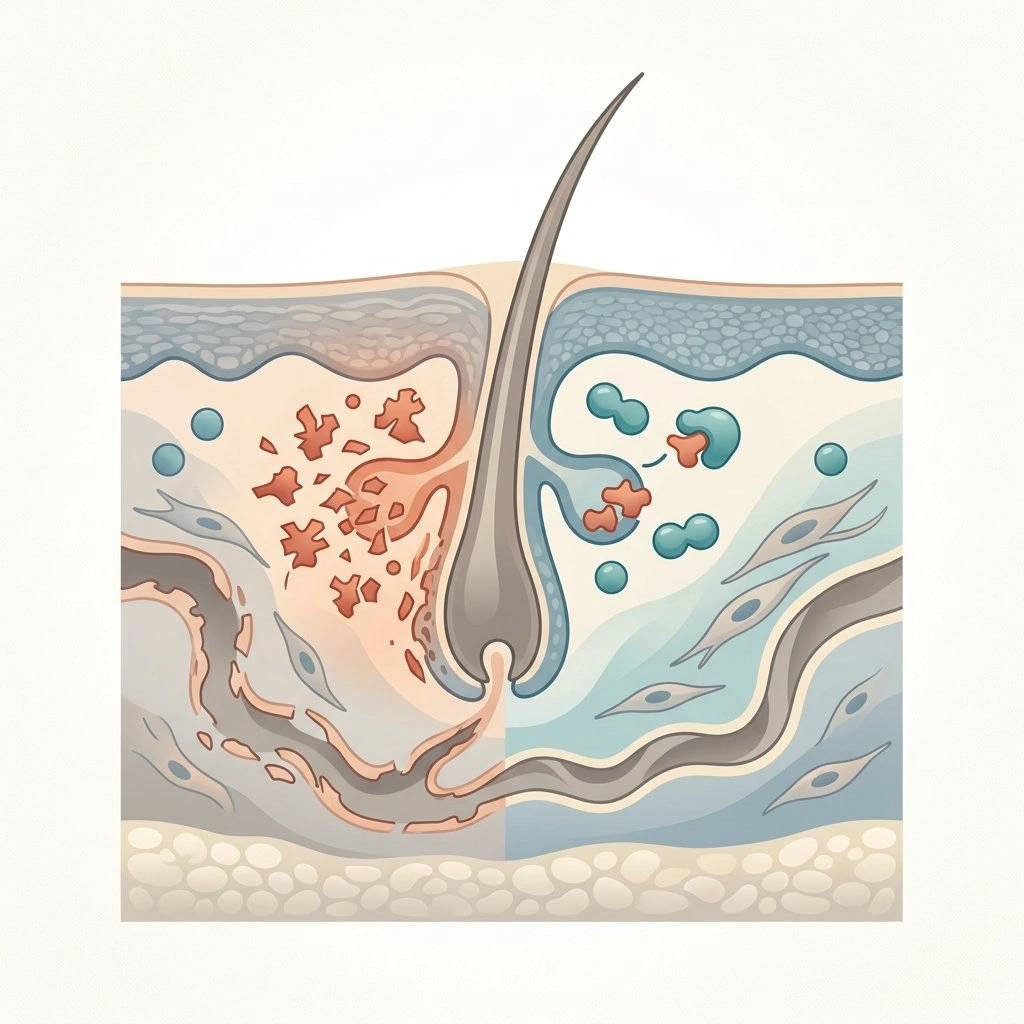
New long-term data for sonelokimab show promising deep responses in hidradenitis suppurativa
“If you don’t get the inflammatory lesions under control early on, they progress to irreversible tissue damage,” said Kristian Reich, MD, PhD, during a session at the 2026 American Academy of Dermatology Annual Meeting in Denver. Early inflammation control is, he emphasized, a key priority for preventing scarring and tunnel formation in patients with hidradenitis suppurativa (HS) (Source: 2026 AAD Annual Meeting presentation).
Who presented and what was discussed
Reich, a dermatologist and founder and chief scientific officer of MoonLake Immunotherapeutics, joined Christopher Bunick, MD, PhD, associate professor of dermatology at Yale School of Medicine, to present and contextualize long-term findings for sonelokimab, an investigational nanobody designed for moderate to severe HS (Source: MoonLake Immunotherapeutics press release; 2026 AAD Annual Meeting presentation).
Size and scope of the dataset
The updated dataset pooled results from more than 800 patients enrolled across two Phase 3 trials, with outcomes reported through roughly week 40 to week 50 — well past the typical regulatory endpoints at weeks 12 or 16 (Source: MoonLake Immunotherapeutics press release).
That extended follow-up was emphasized because, as Reich noted, short-term endpoints don’t always capture the real-world needs of people living with chronic inflammatory conditions; clinicians and patients are most interested in sustained benefit and long-term safety (Source: 2026 AAD Annual Meeting presentation).
How well did sonelokimab perform?
On the standard measures used in HS trials, the results were notable. Reich reported HiSCR75 response rates above 60%, with roughly 30% of patients reaching HiSCR100 — indicating substantial or complete reduction in inflammatory lesion counts for many participants (Source: MoonLake Immunotherapeutics press release; 2026 AAD Annual Meeting presentation).
Perhaps most striking was that about 25% of patients achieved what the investigators called “inflammatory remission” — defined as “no nodule, no abscess, no draining tunnel.” Reich highlighted that this level of clearance addresses a major unmet need, because persistent abscesses and draining tunnels drive much of the pain, odor, and social impact that reduce quality of life but are not fully captured by conventional HiSCR metrics (Source: 2026 AAD Annual Meeting presentation).
What sonelokimab is and why it may behave differently
Sonelokimab is a novel nanobody-based therapeutic engineered as a trivalent construct that targets both IL-17A and IL-17F, and includes an albumin-binding domain to extend its half-life and help localize the drug to inflamed tissue (Source: MoonLake Immunotherapeutics press release).
At about 40 kilodaltons, sonelokimab is much smaller than conventional monoclonal antibodies. Reich explained that this compact size may allow for deeper tissue penetration into fibrotic or tunnel-rich HS lesions where standard-sized antibodies sometimes struggle to reach therapeutic concentrations (Source: 2026 AAD Annual Meeting presentation).
He also noted that the albumin-binding moiety could help the molecule concentrate within inflamed areas, potentially improving effectiveness where it’s most needed (Source: MoonLake Immunotherapeutics press release).
Could this change treatment goals in HS?
Bunick pointed out the possible clinical implications: if higher thresholds such as HiSCR90 or HiSCR100 become realistic targets with new agents, that could shift expectations for what successful treatment looks like in HS (Source: 2026 AAD Annual Meeting presentation).
Reich framed the data against a wider treatment gap: fewer than 4% of the roughly 2.5 million people diagnosed with HS in the United States currently receive biologic therapy, leaving many patients exposed to ongoing inflammation that can progress to permanent scarring and tunnel formation (Source: MoonLake Immunotherapeutics press release).
What this means for patients and clinicians
Taken together, the week 40 data position sonelokimab as a potentially differentiated IL-17–targeting therapy that may address several key lesion types in HS — nodules, abscesses, and draining tunnels — and raise the bar for deep, sustained remission across inflammatory phenotypes (Source: MoonLake Immunotherapeutics press release; 2026 AAD Annual Meeting presentation).
Reich’s takeaway was pragmatic: clinicians should be motivated to control inflammation early to avoid irreversible tissue damage, and therapies that achieve higher levels of lesion clearance could meaningfully change patient outcomes (Source: 2026 AAD Annual Meeting presentation).
Next steps and context
These results were presented as late-breaking and represent important long-term follow-up, but they will need to be considered alongside full safety data, peer-reviewed publication, and regulatory review before sonelokimab could become widely available (Source: MoonLake Immunotherapeutics press release; 2026 AAD Annual Meeting presentation).
For patients and clinicians watching HS research, the take-home is that new therapeutic formats — including smaller, targeted nanobodies that can hit multiple cytokines and localize to inflamed tissue — are advancing and may expand future treatment options (Source: MoonLake Immunotherapeutics press release).
Sources
- MoonLake Immunotherapeutics. “MoonLake announces week 40 results from its phase 3 clinical trials of sonelokimab in hidradenitis suppurativa.” Press release. Accessed March 28, 2026. (Source: MoonLake Immunotherapeutics press release)
- Kimball A. “Sonelokimab in moderate-to-severe HS: long-term results through week 40 of two phase 3 trials.” Presented at: 2026 American Academy of Dermatology Annual Meeting; March 27-31, 2026; Denver, CO. (Source: 2026 AAD Annual Meeting presentation)