
Biogen’s Litifilimab Shows Promise in Phase 2 Trial for Cutaneous Lupus
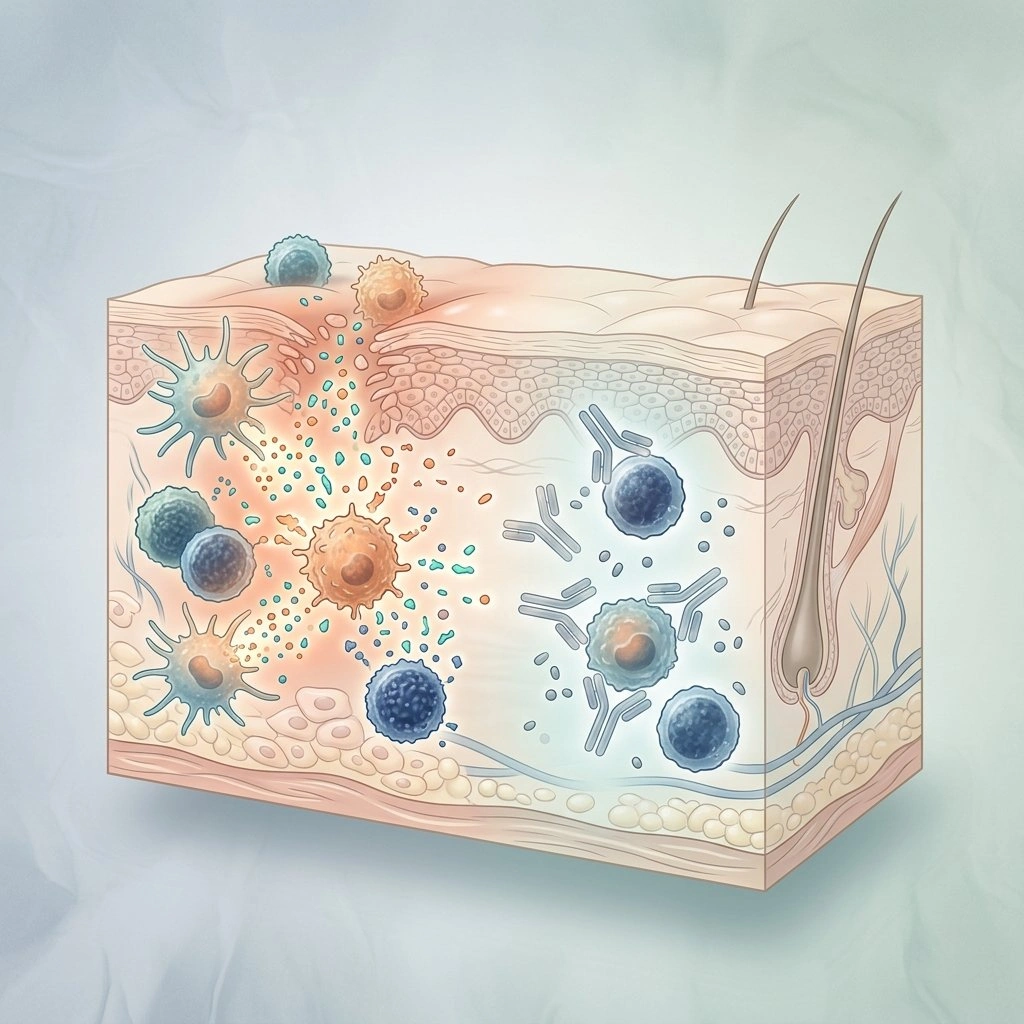
Biogen reports positive phase 2 AMETHYST results for cutaneous lupus — litifilimab shows meaningful skin improvement
At the 2026 Annual Meeting of the American Academy of Dermatology, Biogen announced positive findings from the phase 2 portion of the randomized AMETHYST trial testing the investigational antibody litifilimab in people with cutaneous lupus erythematosus (CLE). (Source: Biogen press release, AMETHYST Phase 2 results)
Why this matters: an unmet need in CLE
Cutaneous lupus erythematosus is a form of lupus that primarily affects the skin and can cause persistent inflammation, scarring, and visible lesions that have major physical and emotional effects for patients. There are currently no approved targeted therapies specifically for CLE, leaving a significant gap in treatment options. (Source: NEJM, LILAC study)
What litifilimab is and how it works
Litifilimab is a humanized IgG1 monoclonal antibody designed to bind BDCA2, a receptor on plasmacytoid dendritic cells. Blocking BDCA2 reduces production of type I interferons and other inflammatory mediators that are thought to drive lupus skin disease, providing a targeted mechanism distinct from broadly immunosuppressive drugs. (Source: Biogen press release, AMETHYST Phase 2 results)
AMETHYST trial design — who was enrolled and how the study was run
The AMETHYST program is an ongoing, global, multicenter, randomized, double-blind, placebo-controlled trial that includes a 24-week placebo-controlled phase (Part A) followed by a phase 3 portion. The phase 2 results reported at AAD reflect Part A. (Source: ClinicalTrials.gov, AMETHYST trial; Biogen press release, AMETHYST Phase 2 results)
Part A enrolled adults with active subacute or chronic CLE who were refractory to or intolerant of antimalarial therapy. The investigators sought a demographically representative population; enrolled participants were 74% women and 33% non-white, consistent with the known epidemiology of CLE. (Source: Biogen press release, AMETHYST Phase 2 results)
How the drug was given
Participants were randomized to receive subcutaneous litifilimab or placebo every four weeks on top of standard-of-care treatments during the 24-week placebo-controlled phase. The prespecified analyses reported cover clinical responses at multiple time points through week 24. (Source: Biogen press release, AMETHYST Phase 2 results; ClinicalTrials.gov, AMETHYST trial)
Primary efficacy outcome — skin clearance at week 16
The trial met its primary endpoint: a significantly greater proportion of patients treated with litifilimab achieved clear or almost clear skin at week 16, defined as a Cutaneous Lupus Activity Investigators’ Global Assessment Revised (CLA-IGA-R) erythema score of 0–1. Specifically, 14.7% of patients on litifilimab reached that outcome versus 2.9% on placebo, an 11.8% treatment difference (95% CI, 1.39–22.27; p < 0.05). (Source: Biogen press release, AMETHYST Phase 2 results)
Secondary outcomes — earlier and deeper responses
Secondary endpoints also favored active treatment, with separation from placebo seen as early as week 4 by CLASI-50 criteria (19.3% litifilimab vs 5.5% placebo). (Source: Biogen press release, AMETHYST Phase 2 results)
This advantage was durable through week 24. By that time, 40.8% of patients receiving litifilimab achieved CLASI-50 compared with 21% on placebo. More stringent responses were more frequent with litifilimab as well: CLASI-70 responses occurred in 21.7% versus 5.8%, and 16.3% of treated patients reached a state of minimal disease activity (CLASI score 0–3) compared with none in the placebo arm. (Source: Biogen press release, AMETHYST Phase 2 results)
Safety and tolerability
Overall safety findings in AMETHYST Part A were consistent with prior clinical experience with litifilimab. Adverse events were reported in 74.6% of patients treated with the drug and in 64.7% of those receiving placebo; most events were described as mild to moderate. (Source: Biogen press release, AMETHYST Phase 2 results)
Serious adverse events occurred in 6.8% of the litifilimab group and 2.9% of the placebo group. The company reported no new safety signals in this phase 2 dataset, supporting the tolerability profile observed in earlier studies. (Source: Biogen press release, AMETHYST Phase 2 results)
Context from earlier studies and regulatory status
Litifilimab previously showed efficacy in the phase 2 LILAC study, which provided early clinical proof-of-concept in CLE and related conditions. Data from LILAC and the new AMETHYST results together were cited in the recent regulatory decision granting Breakthrough Therapy Designation by the U.S. Food and Drug Administration. (Source: NEJM, LILAC study; Biogen press release, FDA Breakthrough Therapy designation)
If the phase 3 portion of AMETHYST confirms these findings, litifilimab could become the first targeted therapy approved for CLE in roughly seven decades of limited targeted development for this condition. The phase 3 portion of AMETHYST is currently underway and remains blinded. (Source: Biogen press release, AMETHYST Phase 2 results; ClinicalTrials.gov, AMETHYST trial)
Voices from the trial and company
Joseph F. Merola, MD, Chair of the Department of Dermatology at UT Southwestern Medical Center, commented that the results are encouraging and support the potential to bring a targeted option to patients with CLE, a disease that currently lacks approved targeted therapies. (Source: Biogen press release, AMETHYST Phase 2 results)
Daniel Quirk, MD, Chief Medical Officer at Biogen, said the company is proud of the science behind the molecule and looks forward to the phase 3 data that will further define litifilimab’s role in CLE. He emphasized the clinical importance of reducing ongoing skin activity, which can prevent permanent scarring and reduce the physical and psychosocial burden of the disease. (Source: Biogen press release, AMETHYST Phase 2 results)
What patients and clinicians should know now
These phase 2 data represent a promising step for a disease with few targeted options. The magnitude of benefit—more patients achieving clear or nearly clear skin and earlier separation from placebo—supports continued study in phase 3 trials, while safety signals will continue to be monitored closely as more patients are treated. (Source: Biogen press release, AMETHYST Phase 2 results)
Clinicians should watch for the forthcoming phase 3 data to determine whether litifilimab’s efficacy and safety profile are confirmed in larger, longer trials and whether it offers a meaningful new option for people living with cutaneous lupus erythematosus. (Source: ClinicalTrials.gov, AMETHYST trial; Biogen press release, AMETHYST Phase 2 results)
Sources
- Biogen press release, “Biogen Announces Second Positive Phase 2 Litifilimab Trial in Cutaneous Lupus Erythematosus at 2026 American Academy of Dermatology Annual Meeting” (AMETHYST Phase 2 results), March 28, 2026. (Source: Biogen press release, AMETHYST Phase 2 results)
- Werth VP, Furie RA, Romero-Diaz J, et al. Trial of anti-BDCA2 antibody litifilimab for cutaneous lupus erythematosus (LILAC study). New England Journal of Medicine. doi:10.1056/NEJMoa2118024. (Source: NEJM, LILAC study)
- ClinicalTrials.gov, AMETHYST: A Study to Evaluate Litifilimab in Adult Participants With Cutaneous Lupus Erythematosus (CLE). (Source: ClinicalTrials.gov, AMETHYST trial)
- U.S. Food and Drug Administration, Breakthrough Therapy designation information (as referenced in company communications). (Source: U.S. Food and Drug Administration, Breakthrough Therapy program)