
Breakout Bulletin: Key Dermatology Advances and AAD 2026 Highlights
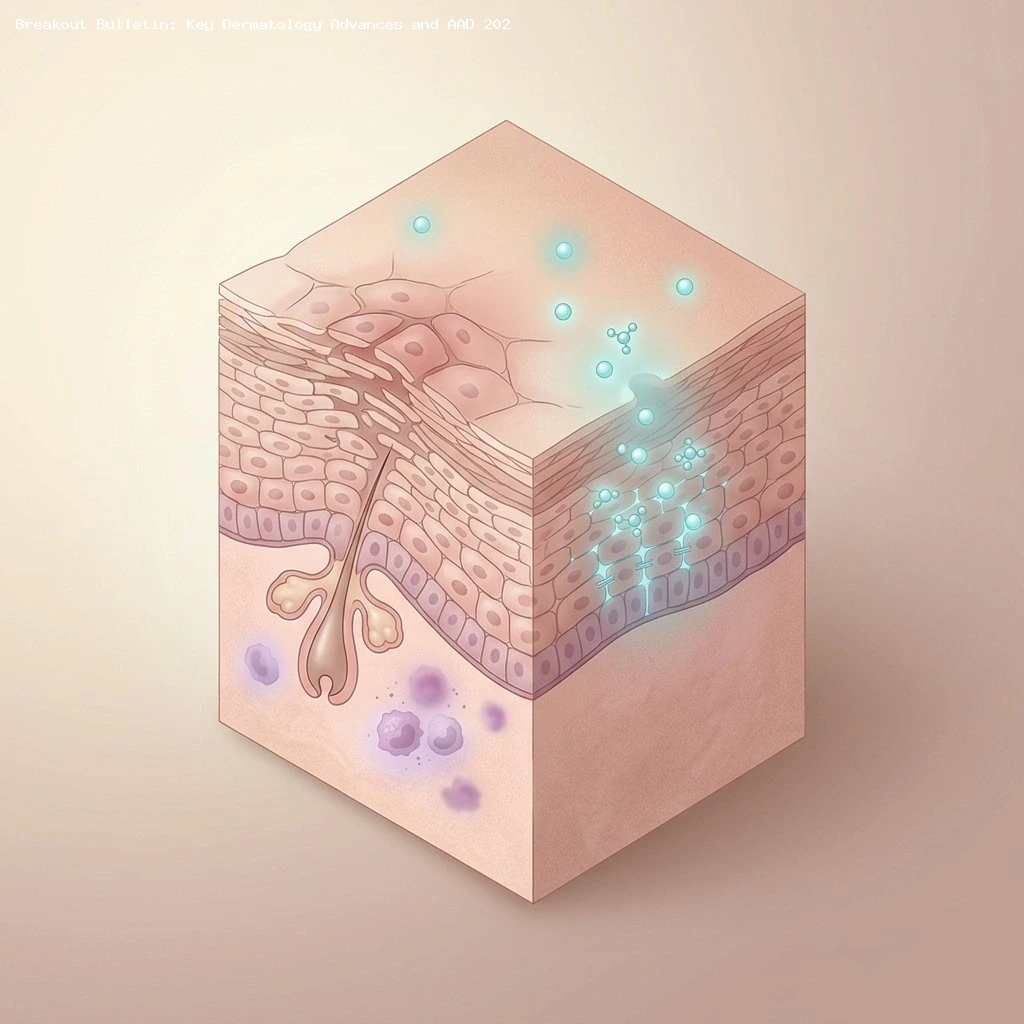
The Breakout Bulletin — AAD 2026 Highlights
Between clinic visits, paperwork, and prior authorizations, keeping up with new studies can feel impossible. The Breakout Bulletin exists to do the heavy lifting: each week we pull the most clinically relevant dermatology updates and explain what matters for practice, patient care, and what to watch next.
This week we’re fresh off AAD 2026 in Denver, and the meeting delivered practice-changing data across several disease areas. Below are the studies and messages most likely to influence how you treat patients in the coming months.
Dermatomyositis Gets Its First Targeted Therapy
Dermatomyositis may be on the verge of a major shift in care. The phase 3 VALOR trial, published in the New England Journal of Medicine, tested brepocitinib 30 mg once daily and reported meaningful improvements in muscle strength, skin disease, physical function, and the ability to reduce steroids over 52 weeks.
Nearly half of treated patients achieved a major overall response, and steroid-sparing effects were striking: 61.7% of patients tapered to ≤2.5 mg prednisone-equivalent at weeks 48–52 versus 34.4% on placebo (Source: Priovant Therapeutics, VALOR trial press release / NEJM publication).
That level of steroid reduction is clinically important because long-term corticosteroid use drives much of the morbidity in dermatomyositis. As Ruth Ann Vleugels, MD, MPH, MBA, framed it: “These findings underscore the need to move beyond the historical paradigm of suboptimal disease control and reliance on systemic corticosteroids toward a patient-centric model focused on rapid, sustained, steroid-sparing efficacy with a modern, targeted therapy.”
The drug is currently under FDA priority review with a projected PDUFA date in Q3 2026, and if approved it would be the first targeted medication specifically labeled for dermatomyositis after decades of off‑label regimens (Source: Priovant Therapeutics, VALOR trial press release / NEJM publication).
Oral Psoriasis Therapies Close the Gap with Biologics
Two late-breaking oral agents presented strong efficacy that challenges the idea “orals are second best.” First, envudeucitinib (ESK-001), a next-generation TYK2 inhibitor, achieved PASI 90 in 65% of patients and complete skin clearance in 40% by week 24 in the Phase 3 ONWARD trials — responses more typical of injectable biologics than older pills (Source: Alumis, ONWARD trial press release).
Clinicians at AAD noted how unusual it is to see an oral with that level of complete clearance; as Andrew Blauvelt, MD, said, “It’s pretty impressive to see an oral drug with 40% of the patients achieving complete clearance.”
The second entrant, icotrokinra (Icotyde), is a once‑daily oral IL‑23 antagonist that produced total skin clearance in 50% of adults at 52 weeks — and 60% in adolescents — with adverse event rates essentially indistinguishable from placebo (within 1.1%) (Source: Johnson & Johnson, ICOTYDE press release).
For the sizable group of patients who decline injections, these pills may become legitimate first‑line systemic options as they approach regulatory approval. Keep a close eye on labeling, contraindications, and long‑term safety signals as they emerge (Source: Alumis, ONWARD trial press release; Source: Johnson & Johnson, ICOTYDE press release).
Hidradenitis Suppurativa: Treat Earlier, Expect Better Results
Three‑year extension data for bimekizumab (Bimzelx) in hidradenitis suppurativa (HS) reinforced two consistent themes: responses deepen the longer patients stay on therapy, and earlier intervention predicts superior long‑term outcomes.
By year 3, HiSCR50 was reached in 90.2% of patients who remained on treatment, and point‑in‑time flare rates fell to 0% among those continuing therapy — suggesting durable control for many patients (Source: UCB, BIMZELX press release).
The most actionable finding for practice was the disease‑duration analysis: patients who began treatment earlier, while disease was still moderate, achieved complete lesion clearance (HiSCR100) at more than twice the rate of those with long‑standing, severe disease. That argues strongly for avoiding therapeutic nihilism and moving to effective agents sooner rather than later.
As Steven Daveluy, MD, observed, “Bimekizumab does work well for HS, and it seems to work better with time… We always do our primary outcomes at week 12 or 16, but we know that’s not how long it takes HS to get better.” This underscores the importance of setting realistic timelines and expectations with patients (Source: UCB, BIMZELX press release).
Atopic Dermatitis: Durability Matters — Four Years and Counting
Long‑term extension data continue to sharpen our view of what sustained biologic therapy can achieve in atopic dermatitis (AD). The ADlong extension for lebrikizumab (Ebglyss) reported up to four cumulative years of follow‑up with impressive maintenance of effect.
At up to four years, 94% of participants reached EASI‑75 and 68% achieved IGA 0/1, with 80% of responders maintaining control without topical corticosteroids on a once‑monthly dosing schedule (Source: Almirall, ADlong extension press release).
For patients who want to know whether long‑term therapy makes sense, these durability data make the case that continuous IL‑13 blockade can sustain near‑complete clearance for many people — information that helps frame conversations about expectations, risks, and the potential need for indefinite therapy.
Why Guidelines Alone Won’t Be Enough
The pace of change across multiple diseases is forcing a different approach to decision‑making. As Brian Kim, MD, put it at the meeting: “I just don’t think it’s going to be guidelines anymore. Because the guidelines will be outdated the moment you print it.”
Instead of relying solely on static guidelines, clinicians will increasingly need to understand mechanisms of action, comparative effectiveness, and how to personalize choices based on comorbidities, patient preferences, and safety priorities. That shift particularly affects nurse practitioners and physician assistants, who are often the primary managers for chronic dermatology patients.
Staying current with trial results, regulatory updates, and real‑world safety data is no longer optional — it’s part of routine clinical care. These AAD 2026 findings provide immediate, practical signals: consider steroid‑sparing targeted options for dermatomyositis if approved, look to new oral agents for patients who decline injectables in psoriasis, treat HS earlier to improve long‑term outcomes, and recognize the growing durability of IL‑13 blockade in AD.
Sources
- Priovant Therapeutics. New England Journal of Medicine publishes positive phase 3 VALOR trial results of brepocitinib in dermatomyositis. (VALOR trial / NEJM publication). https://www.globenewswire.com/news-release/2026/03/28/3264202/34323/en/New-England-Journal-of-Medicine-Publishes-Positive-Phase-3-VALOR-Trial-Results-of-Brepocitinib-in-Dermatomyositis.html
- Alumis. Alumis’ envudeucitinib delivers early and robust improvements in skin clearance, quality of life, and psoriasis symptoms in two phase 3 trials (ONWARD trials). https://investors.alumis.com/news-releases/news-release-details/alumis-envudeucitinib-delivers-early-and-robust-improvements
- Johnson & Johnson. ICOTYDE™ (icotrokinra) one-year results confirm lasting skin clearance and favorable safety profile in once‑daily pill for plaque psoriasis. https://www.investor.jnj.com/investor-news/news-details/2026/ICOTYDE-icotrokinra-one-year-results-confirm-lasting-skin-clearance-and-favorable-safety-profile-and-oncedaily-pill-for-plaque-psoriasis/default.aspx
- UCB. UCB announces new BIMZELX (bimekizumab‑bkzx) data at AAD showing durable symptom control throughout three years in hidradenitis suppurativa. https://www.ucb.com/newsroom/press-releases/article/ucb-announces-new-bimzelxr-bimekizumab-bkzx-data-at-aad-showing-durable-symptom-control-throughout-three-years-in-hidradenitis-suppurativa
- Almirall. Lebrikizumab delivered long‑term disease control for up to four years in patients with moderate-to-severe atopic dermatitis (ADlong extension). https://www.almirall.com/newsroom/news/lebrikizumab-delivered-long-term-disease-control-for-up-to-four-years-in-patients-with-moderate-to-severe-atopic-dermatitis