
EVO301’s Novel IL-18 Targeting Shows Promise for Tough Atopic Dermatitis Cases
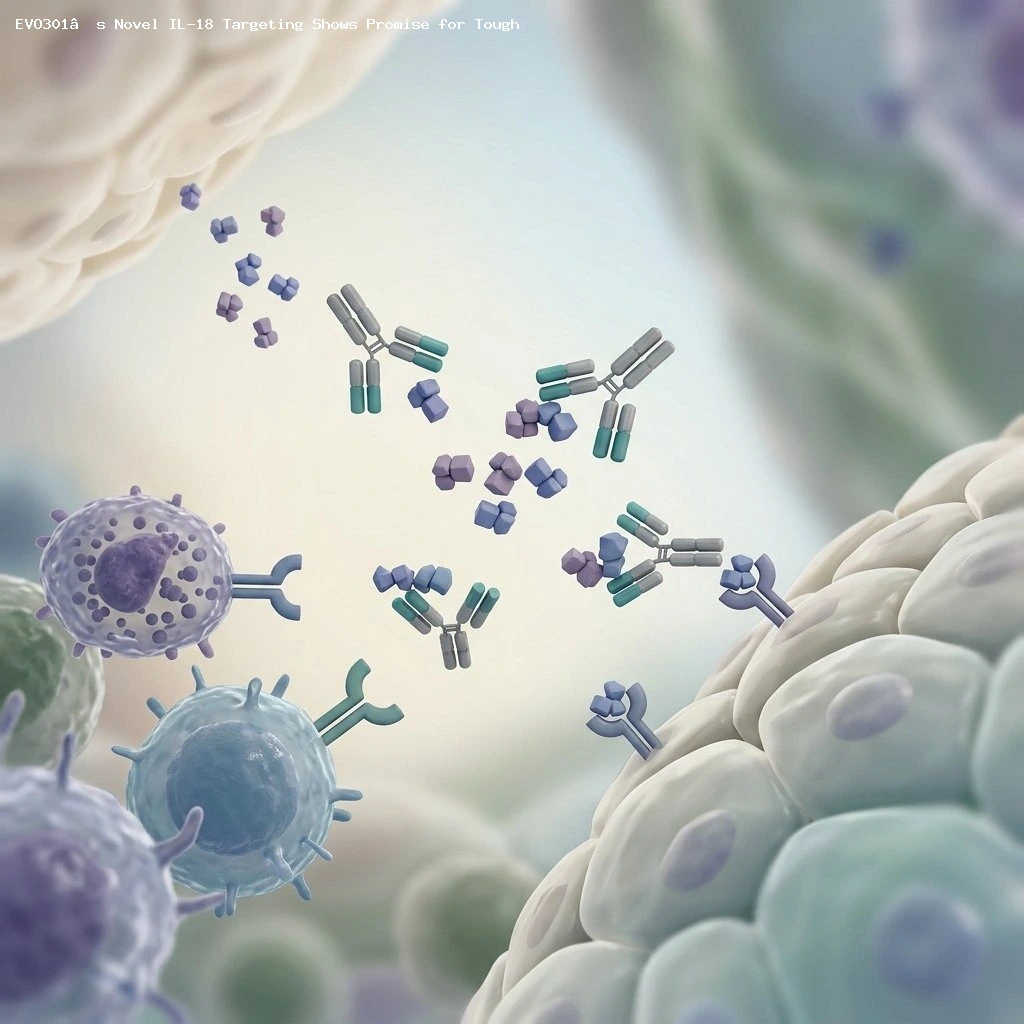
EVO301: A fresh approach to treating moderate-to-severe atopic dermatitis
Meeting the researcher
Mark Jackson, MD, who serves as Senior Vice President of Clinical Development at Evommune and is a clinical professor at the University of Louisville School of Medicine, recently discussed an update on the investigational drug EVO301 and its early clinical findings. (Source: Evommune press release, company clinical update)
Why new options are still needed
Even with several approved therapies available today, many people with moderate-to-severe atopic dermatitis (AD) struggle to achieve sustained control of their disease or to tolerate long-term treatment. (Source: American Academy of Dermatology guidelines)
Current standard options — including IL-4/IL-13 inhibitors and JAK inhibitors — have helped many patients, but clinicians still see a meaningful subset who either don’t reach acceptable skin clearance or experience tolerability problems that limit use. This real-world shortfall is what Evommune and others are trying to address. (Source: American Academy of Dermatology guidelines; Evommune clinical update)
How EVO301 works — a different target and design
EVO301 is designed to target a different immune driver than many existing biologics: it binds interleukin‑18 (IL‑18), a cytokine involved in skin inflammation. The drug uses a novel binding protein meant to mimic the body’s own natural binding interactions, rather than being a conventional monoclonal antibody. (Source: Evommune Phase 2a study data)
To extend how long it stays active and to improve where it goes in the body, EVO301 includes a serum albumin–linked fragment. That design is intended to lengthen half‑life, enhance tissue penetration, and help the treatment localize to inflamed skin — all factors that may improve effectiveness in AD. (Source: Evommune Phase 2a study data)
Evommune also suggests that this structure could reduce the chance of the drug provoking an immune response against itself (less immunogenicity and fewer neutralizing antibodies), which, if confirmed, might translate into more durable and consistent clinical benefit. (Source: Evommune press release)
What the phase 2a results showed
In an early phase 2a trial, EVO301 produced encouraging signals of efficacy even in a population with severe disease. Study participants had extensive skin involvement and high baseline Eczema Area and Severity Index (EASI) scores averaging near 30, indicating substantial disease burden at the start. (Source: Evommune Phase 2a study data)
Notably, patients in that study received only two doses of EVO301. Despite the limited dosing, improvements in signs and symptoms were seen as early as week 2, with statistically significant differences by week 4. Those benefits were reported to be sustained through weeks 8 and 12, even after treatment stopped. (Source: Evommune Phase 2a study data)
Safety and tolerability
Safety signals from the phase 2a study were favorable: investigators reported no cases of conjunctivitis, infusion reactions, or clear systemic safety concerns tied to the drug in this early cohort. If these findings hold up in larger trials, EVO301 could be notable for its tolerability profile. (Source: Evommune Phase 2a study data)
Next steps in development
Evommune plans to move into a phase 2b program that will test a subcutaneous formulation of EVO301 and explore optimized dosing schedules. The goal of those studies will be to boost efficacy while preserving the favorable safety and tolerability seen so far. (Source: Evommune press release, company pipeline)
Where EVO301 might fit in therapy
Dr. Jackson emphasized that EVO301 is intended to broaden options for patients and clinicians, particularly for those who need higher levels of skin clearance or who cannot tolerate existing medicines. The drug is being positioned as a potential first‑line option among targeted therapies, though he noted it doesn’t have to replace current choices. (Source: Evommune press release; Evommune Phase 2a study data)
In his words: “We feel like EVO301 brings a potential new first‑line option. It doesn’t have to be the first‑line option, but we want to bring it forward as a first‑line option based on its safety, tolerability, and efficacy.” (Source: Evommune press release)
Sources
- Evommune press release and company clinical update (EVO301 Phase 2a results and development plans)
- Evommune Phase 2a study data (EVO301 trial population, efficacy timeline, and safety findings)
- Evommune corporate pipeline page (program details and formulation plans)
- American Academy of Dermatology guidelines (context on current atopic dermatitis treatments and unmet needs)