
How Aging Affects Hair Thickness, Color, and Chemical Treatments
Understanding aging hair: looking beyond thinning
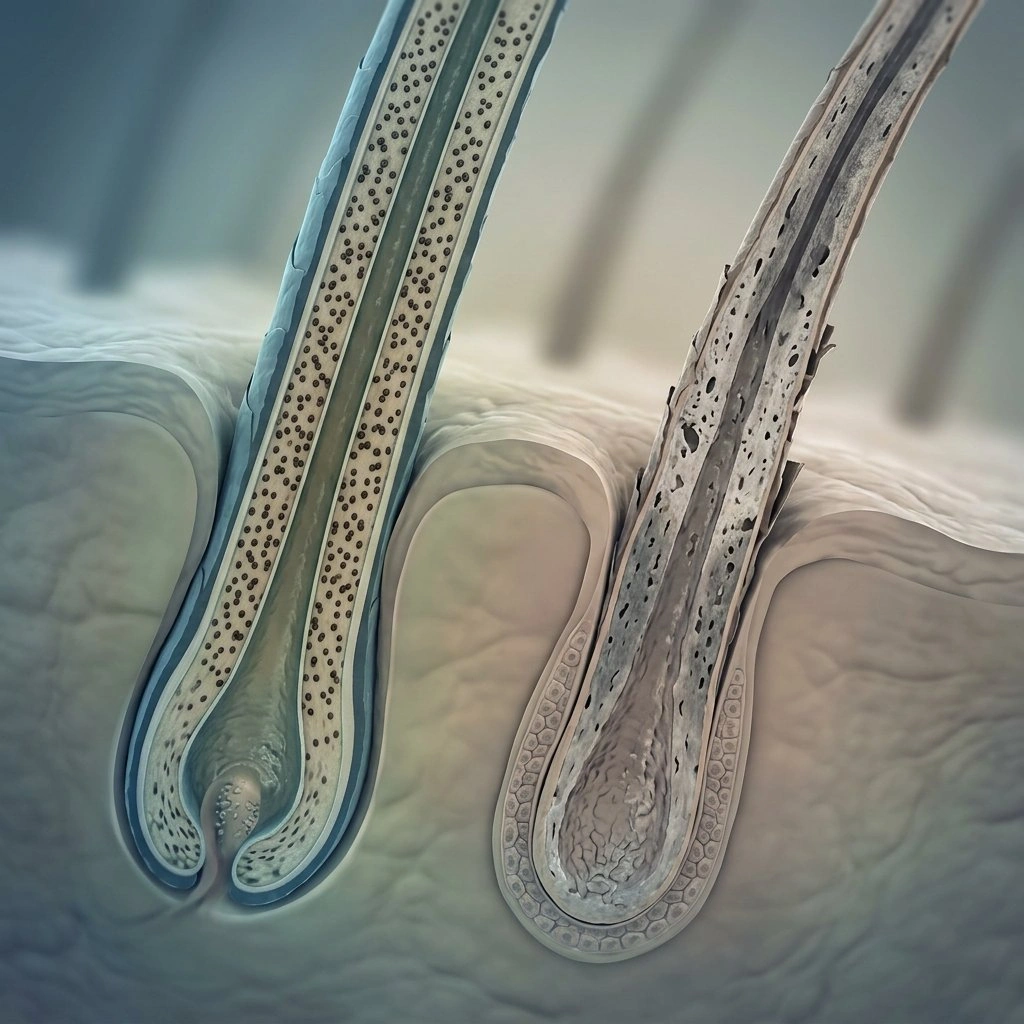
When people come in worried about hair thinning, it’s natural to focus on the number of hairs. But to make a lasting plan, it helps to understand how the hair itself changes with age — not just how much of it you have. The structure and surface of each hair fiber shift over time, and those shifts affect strength, shine, and how hair responds to dyes, styling, and daily grooming (Source: American Academy of Dermatology patient resources, Hair Loss).
What happens to hair as it ages?
One of the most visible changes is graying, which is caused by a reduction in pigment-producing cells in the hair follicle. Alongside color change, the number of hair fibers across the scalp gradually declines with age, contributing to the overall appearance of thinning (Source: PubMed review, “Aging hair”, R. M. Trüeb).
The dimensions of each hair fiber change too: the hair shaft diameter becomes thinner over time. In men this narrowing often begins after puberty; in women, more noticeable reductions in shaft diameter are commonly observed around and after the fourth decade of life (Source: Dermatology literature reviews, female temporal hair changes).
Why diameter matters
Softer, thinner hair shafts react differently to chemicals and mechanical stress than thicker, youthful shafts. Because many hair treatments rely on active agents penetrating the hair, a reduced diameter means the same amount of product can enter the hair more quickly and in greater relative concentration, changing how long a product should safely stay on the hair (Source: International Journal of Cosmetic Science, hair chemistry basics).
Chemical treatments: timing and risk for aging hair
Permanent hair color and permanent waving solutions work by altering the internal hair structure — they must get inside the hair shaft to work. When the shaft is thinner or more porous with age, these chemicals can act faster and can more easily cause structural damage if contact time and strength aren’t adjusted (Source: Cosmetic chemistry reviews, hair shaft permeability).
If chemicals are left on hair too long or are too strong, they can weaken the shaft and lead to breakage. That breakage reduces hair length and visible density, and it can make existing age-related thinning appear worse. For older hair, gentler formulations and shorter processing times are often safer (Source: Journal of Cosmetic Dermatology, chemical processing and hair damage).
Surface changes: lipids, cuticle, and luster
As hair matures it loses some of its natural surface oils — the lipid coating that smooths and protects each shaft. This loss is particularly noticeable in women around menopause, when hormonal changes affect sebum production and scalp oil distribution (Source: Clinical dermatology reviews, sebum and menopause).
The protective hair cuticle — the overlapping scales that give hair a smooth, shiny surface — also becomes more prone to lifting and wear with age. A smooth, tightly overlapping cuticle is key to strength and shine; as it roughens, light scatters and hair appears duller and more frizzy (Source: Trichology and hair structure literature).
Why lifted cuticles and porous shafts matter
When the cuticle lifts and the core of the hair becomes more porous, the fiber loses tensile strength and is more likely to snap during combing and styling. These micro-defects are a major contributor to the look of damaged or thinning hair in older adults (Source: International Journal of Trichology, hair fragility studies).
Conditioners and oils: how they help
Conditioners are designed to replace, at least temporarily, what aging hair has lost. Shower conditioners (rinse-out) and leave-in conditioners deposit a thin coating on the shaft to reduce friction, reduce static, and increase slip and shine (Source: Cosmetic Ingredient Review, conditioning agent functions).
Common conditioning agents include silicone derivatives such as dimethicone and positively charged (quaternary) compounds that cling to the hair surface. These ingredients form a lubricating film that makes combing easier and helps prevent breakage caused by rubbing hairs together or against brushes (Source: Cosmetic science reviews, conditioning polymers).
For cuticle smoothing and extra shine, many people use light hair oils — such as argan oil and other plant-derived oils — in small amounts. These oils can help flatten raised cuticle scales and add reflective gloss, but they work best in combination with proper conditioning products and gentle handling (Source: Journal of Cosmetic Dermatology, argan oil studies).
Why dimethicone is commonly recommended
Dimethicone is often favored in conditioners and serums because it’s effective at smoothing and lubricating the shaft while being low in irritation potential. Cosmetic safety assessments describe dimethicone as generally hypoallergenic and noncomedogenic when used in hair formulations, making it suitable for many people with aging hair (Source: Cosmetic Ingredient Review, Dimethicone Safety Assessment).
Daily care: gentle handling to prevent breakage
Aging hair needs to be treated more like delicate fabric. Because the shaft becomes more porous and structurally inhomogeneous, it’s easier to damage. Avoid pulling, yanking, or aggressive styling; these actions cause mechanical breakage that contributes to the appearance of thin hair (Source: American Academy of Dermatology guidance, Hair Care).
Don’t comb or brush hair when it’s soaking wet. Wet hair stretches and becomes more elastic and fragile, so it’s more likely to break under tension. If you need to detangle wet hair, use a wide-tooth comb or a gentle detangling brush and work from the tips up to the roots, with a conditioner or detangler applied (Source: International Journal of Trichology, hair breakage prevention).
Practical tips for managing aging hair
Limit chemical processes and give hair longer recovery time between services. When coloring or perming, choose gentler formulas and shorten development times when possible — and always consider a strand test to see how the hair reacts before treating the whole head (Source: Journal of Cosmetic Dermatology, chemical processing recommendations).
Use a combination of shampooing with nourishing, pH-balanced formulas and regular use of instant (rinse-out) and leave-in conditioning products. Focus conditioning where friction is highest — mid-lengths and ends — rather than the scalp, unless the scalp needs treatment (Source: Cosmetic ingredient and formulation guidance).
Incorporate small amounts of silicone-based serums or light plant oils for extra slip and shine. Apply a few drops to your palms, rub them together, and finger-comb through the hair to smooth the cuticle and reduce static. Avoid heavy use that can weigh down fine hair (Source: Cosmetic science and product formulation literature).
Finally, treat fragile hair gently: low-tension styles, soft hair ties, minimal heat styling, and protective sleeping habits (silk pillowcases or loose braids) all help preserve length and reduce breakage (Source: Trichology practice recommendations).
Putting it all together
Addressing age-related hair changes means addressing both quantity and quality. By understanding that the hair shaft thins, becomes more porous, and loses some protective lipids, you can make small, practical choices — gentler chemical use, consistent conditioning, and soft handling — that add up to stronger-looking hair (Source: Clinical reviews on aging hair).
These adjustments won’t stop biological aging, but they will optimize hair performance and appearance, especially when thinning is already present. A personalized plan that balances safe salon work with daily protective habits can help hair look fuller, shinier, and healthier for longer (Source: American Academy of Dermatology patient resources, Hair Care).
Sources
- American Academy of Dermatology, Patient Resource: Hair Loss and Hair Care (Source: American Academy of Dermatology, Hair Loss).
- Trüeb RM, “Aging hair” (review) (Source: PubMed review, Aging Hair).
- International Journal of Cosmetic Science, articles on hair shaft permeability and cosmetic processing (Source: International Journal of Cosmetic Science, Hair Chemistry Reviews).
- Journal of Cosmetic Dermatology, studies and reviews on chemical processing and hair damage (Source: Journal of Cosmetic Dermatology, Hair Treatment Studies).
- Clinical dermatology reviews on sebum changes with menopause and effects on hair (Source: Clinical Dermatology Reviews, Sebum and Menopause).
- International Journal of Trichology, research on hair fragility, breakage prevention, and care recommendations (Source: International Journal of Trichology, Hair Breakage Studies).
- Cosmetic Ingredient Review (CIR), Safety Assessment of Dimethicone and common conditioning agents (Source: Cosmetic Ingredient Review, Dimethicone Safety Assessment).
- Journal of Cosmetic Dermatology, research on argan oil and plant oils for hair (Source: Journal of Cosmetic Dermatology, Argan Oil Studies).