
How Patch Testing Uncovers Allergens Causing Hand and Foot Eczema
Introduction
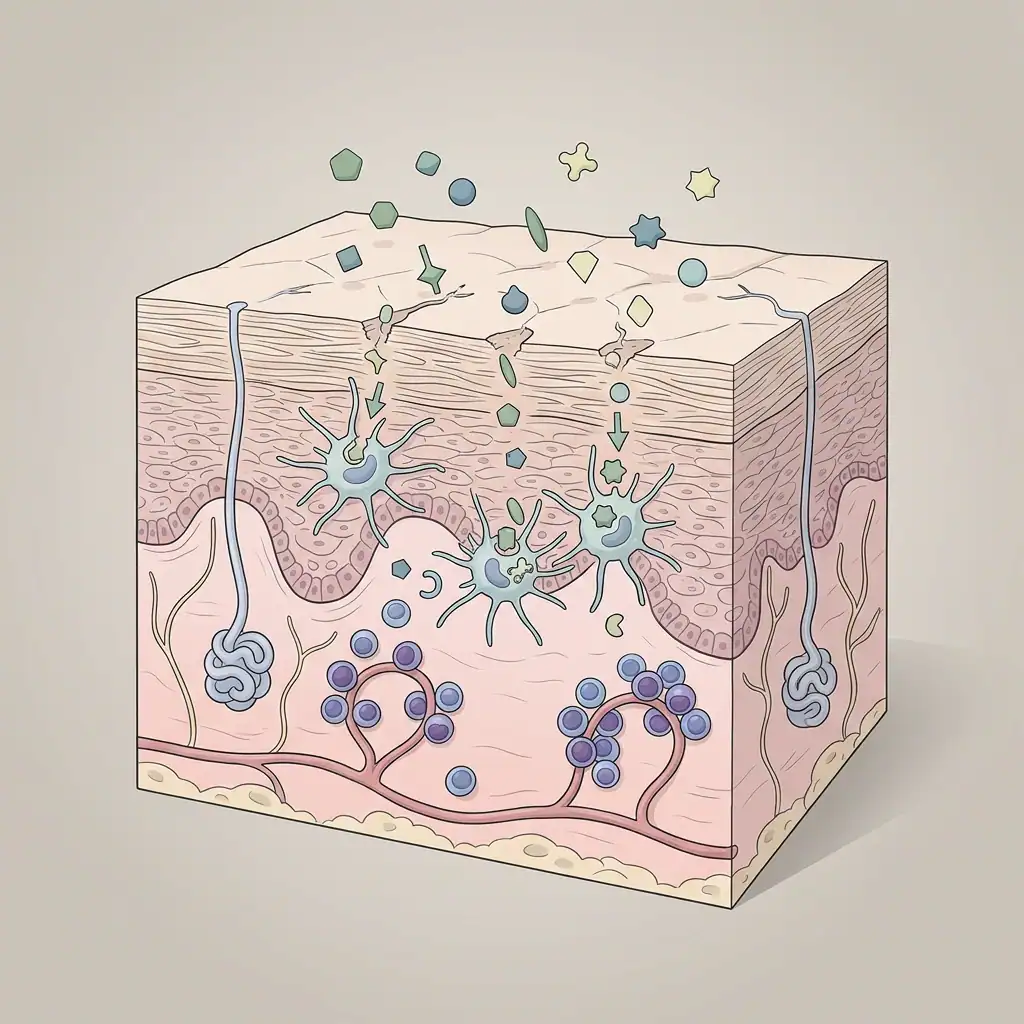
Hand and foot eczema is a common skin problem that many people and clinicians see in outpatient settings, and it often proves tricky to diagnose and treat because it can come from multiple causes at once.
Both internal factors like a personal or family history of atopy and outside exposures such as work-related irritants or allergens can start or keep eczema going, so finding the relevant triggers is a core part of care (Source: Weisshaar E, review article).
What this study set out to do
A team at a tertiary care hospital in Chromepet, Chennai, India, ran a prospective observational study to test how useful patch testing is for people with eczema limited to the hands and/or feet, and to describe the typical clinical patterns and likely causes they saw (Source: Balakumaran et al., A study assessing patch test results).
The researchers aimed to combine clinical assessment with standardized allergen testing to see which exposures were linked to positive reactions and whether patch testing would change management for these patients (Source: Balakumaran et al.).
Study design and methods
The study ran for 18 months, from May 2023 to October 2024, in the dermatology outpatient department of a single tertiary care center in Chennai (Source: Balakumaran et al.).
Investigators enrolled 30 adults who had a clinical diagnosis of eczema affecting the hands, the feet, or both. People were excluded if they had taken systemic immunosuppressive therapy within the past two weeks, taken antihistamines within 72 hours before testing, were pregnant, or had active eczema elsewhere on the body (Source: Balakumaran et al.).
After informed consent, the team collected demographic details and clinical information using a standardized form. That assessment covered symptom timing, lesion appearance, occupational and environmental contacts, history of atopy, and any seasonal patterns reported by patients (Source: Balakumaran et al.).
All participants underwent patch testing with the Indian standard series, a panel of 20 commonly implicated allergens used in regional practice. Test chambers were placed on the upper back and removed after 48 hours (Source: Balakumaran et al.; Source: Indian Standard Series).
Readings were performed at both 48 and 72 hours and graded according to the International Contact Dermatitis Research Group (ICDRG) system to standardize interpretation (Source: International Contact Dermatitis Research Group).
Statistical analysis was carried out with SPSS version 22; the investigators set statistical significance at P < .05 (Source: IBM SPSS Statistics v22; Source: Balakumaran et al.).
Who was in the study
The group included 30 patients: 18 men (60%) and 12 women (40%). Most participants (53.3%) were aged between 41 and 60 years (Source: Balakumaran et al.).
Clinical presentations varied: hand involvement was most common (19 patients, 63.3%), foot-only eczema was seen in 6 patients (20%), and both hands and feet were affected in 5 patients (16.7%) (Source: Balakumaran et al.).
Bilateral disease—meaning both the left and right sides—was present in 25 patients (83.3%), which reflects how hand and foot eczema often shows up symmetrically rather than as a single localized spot (Source: Balakumaran et al.).
Symptoms and morphological patterns
Nearly all patients (96.7%) reported pruritus (itching), making it the most common symptom in the group (Source: Balakumaran et al.).
Other frequent complaints included skin dryness (80%) and visible scaling (63.3%). About a third of patients had blistering (vesiculation) or oozing, while fissures, pain, and redness were less commonly reported (Source: Balakumaran et al.).
When the team categorized lesion types, they found a range of patterns. The most common single morphological subtype was hyperkeratotic hand and foot eczema (20% of patients), which involves thickening of the skin due to chronic rubbing or pressure (Source: Balakumaran et al.).
The next most frequent pattern was keratolysis exfoliativa (16.6%), a peeling condition that often affects the palms and can be mistaken for fungal infection. Less common forms seen in the cohort included fingertip eczema, irritant contact dermatitis, and dyshidrotic eczema (Source: Balakumaran et al.).
Occupational and environmental exposures
Workplace and home exposures were common in this group, highlighting how external contacts can trigger or worsen hand and foot eczema (Source: Balakumaran et al.).
The single most frequently reported exposure was to gloves, mentioned by 50% of patients; detergents were noted by 30%, and cement exposure by 23.3% (Source: Balakumaran et al.).
Other reported contacts included footwear, socks, various plants, and frequent use of hand sanitizers. These kinds of repeated contacts can cause either irritant reactions from harsh substances or allergic contact dermatitis when the immune system becomes sensitized to specific chemicals (Source: Balakumaran et al.; Source: Weisshaar E).
A history of atopy was present in 43.3% of patients, underlining that people with an atopic background may be more susceptible to developing hand or foot eczema or may have more severe flares (Source: Balakumaran et al.; Source: Weisshaar E).
Seasonal worsening was not a major feature in this cohort; only a small number of patients reported flares during winter or the monsoon season (Source: Balakumaran et al.).
Patch test results
Patch testing produced at least one positive reaction in 43.3% of the patients, which means that nearly half had evidence of specific contact sensitization identified by the test (Source: Balakumaran et al.).
Breaking this down: nine patients (30%) had one positive allergen; three patients (10%) reacted to three allergens; and one patient (3.3%) had two positive allergens. However, a majority of the cohort (56.7%) had no positive reactions at the 72-hour reading (Source: Balakumaran et al.).
Among positive tests, the most commonly identified sensitizer was potassium dichromate, which accounted for 25% of positive reactions. This chemical is a well-known component of cement and construction materials and a frequent occupational allergen in building trades (Source: Balakumaran et al.; Source: Weisshaar E).
The next most common allergens were paraphenylenediamine (PPD) and thiuram mix, each implicated in 15% of positive cases. Other allergens that produced reactions in this series included parthenium, black rubber mix, fragrance mix, and chlorocresol (Source: Balakumaran et al.).
Importantly, of the seven patients who reported cement exposure, five showed a positive patch test to potassium dichromate—consistent with the well-established link between chromium exposure and occupational contact dermatitis in construction-related settings (Source: Balakumaran et al.; Source: Weisshaar E).
What these findings mean for patients and clinicians
This study reinforces that hand and foot eczema is rarely caused by a single factor; instead, a mix of internal predisposition and external exposures often plays a role, which is why management must be individualized (Source: Balakumaran et al.; Source: Weisshaar E).
Even though more than half of patients had negative patch tests at 72 hours, the test still provided actionable information for a substantial subset—identifying specific allergens that patients could avoid to reduce flares (Source: Balakumaran et al.).
The high proportion of hand involvement and the frequent reports of glove, detergent, and cement exposure emphasize the strong occupational contribution for many patients. Finding allergens like potassium dichromate and rubber accelerators allows for targeted avoidance strategies, which are a cornerstone of treatment alongside topical therapy and barrier measures (Source: Balakumaran et al.; Source: Weisshaar E).
For clinicians, that means asking detailed questions about work tasks, household products, and hobbies is essential; for patients, it means that simple changes—like switching glove types, using protective liners, avoiding known sensitizers, or requesting different materials at work—can make a meaningful difference (Source: Balakumaran et al.).
Limitations to keep in mind
The authors note several limitations that affect how broadly the results can be applied: the study was relatively small (30 patients) and carried out at a single center, which can limit generalizability to other regions or populations (Source: Balakumaran et al.).
Another limitation is that the team used a standard 20-allergen panel (the Indian standard series), which may not include all region-specific or job-specific allergens that could be relevant in particular workplaces or industries (Source: Balakumaran et al.; Source: Indian Standard Series).
Finally, patch testing can yield false negatives (e.g., if the relevant allergen is not in the panel) and false positives (through irritant reactions), so results must be interpreted alongside clinical history and exposure assessment using a standardized grading system such as that from the ICDRG (Source: International Contact Dermatitis Research Group; Source: Balakumaran et al.).
Conclusion
Hand and foot eczema remains a clinical challenge because it often reflects a mix of internal susceptibility and external triggers that vary between individuals.
In this observational study from Chennai, hand eczema was more common than foot eczema, many patients reported occupational exposures, and patch testing identified relevant allergens in nearly half of the participants—most notably potassium dichromate (Source: Balakumaran et al.).
These results support the continued role of patch testing as a noninvasive diagnostic tool that, when combined with careful history taking, can help guide allergen avoidance and more personalized management of eczema affecting hands and feet (Source: Balakumaran et al.; Source: Weisshaar E).
Sources
- Balakumaran C, Sukanya G, Kumar NA, Megalai AS, Sankeerthana MP, Rajeev K. “A study assessing patch test results in hand and foot eczema patients at a tertiary care hospital.” Niger Postgrad Med J. doi:10.4103/npmj.npmj_167_25 (Source for study methods and results).
- Weisshaar E. Review on hand and foot eczema and occupational contact dermatitis. doi:10.1007/s40257-024-00890-z (Source for background on multifactorial causes and common occupational allergens).
- International Contact Dermatitis Research Group (ICDRG). Grading system and reading recommendations for patch testing (Source for patch test grading methodology).
- Indian Standard Series (ISS). Standard allergen series commonly used in patch testing in India (Source for the test panel used).
- IBM Corp. IBM SPSS Statistics for Windows, Version 22.0. Armonk, NY: IBM Corp. (Source for statistical analysis software).