
New Oral Drug REX-8756 Begins Trials for Inflammatory Skin Diseases
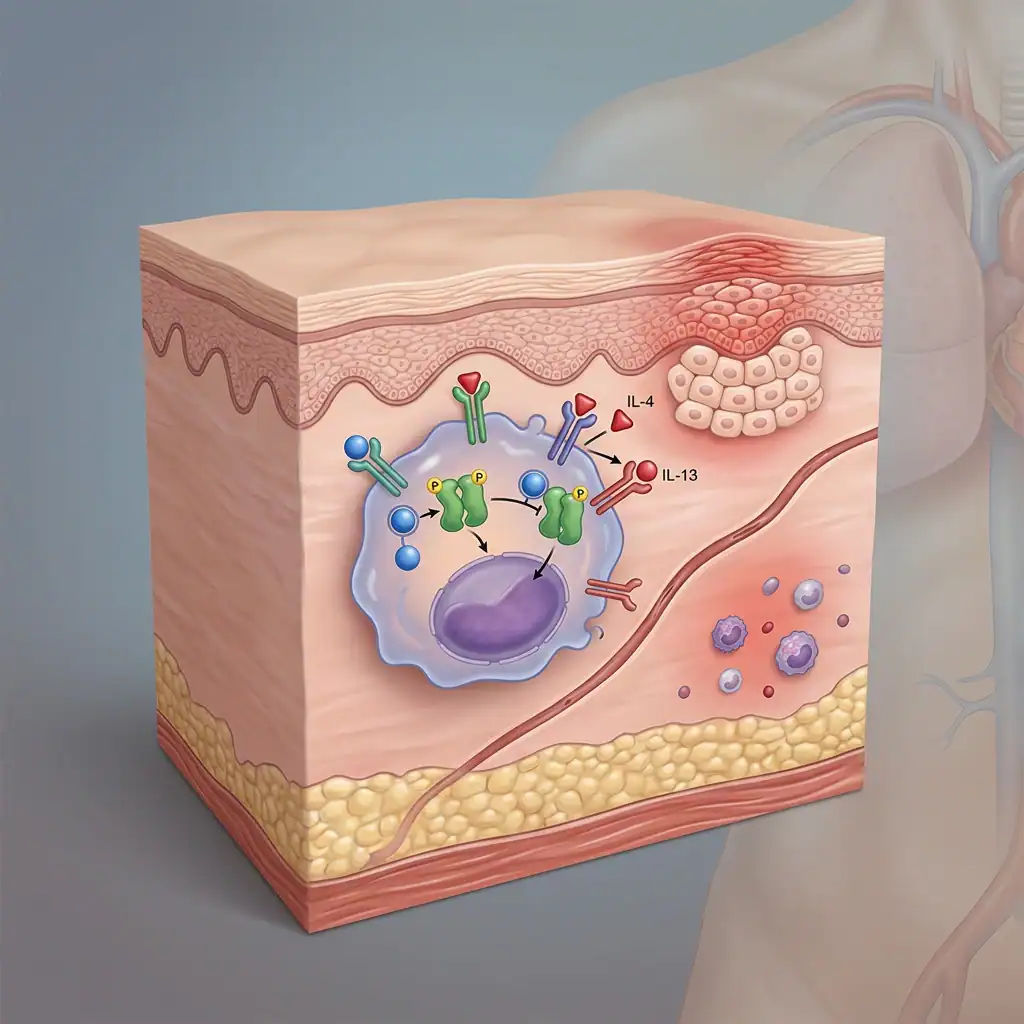
Recludix’s REX‑8756 Starts First‑in‑Human Testing for Type 2 Inflammatory Diseases
Recludix Pharma has begun dosing participants in a first‑in‑human, randomized, placebo‑controlled phase 1 trial of REX‑8756 (SAR448755), an oral small‑molecule designed to inhibit the STAT6 signaling pathway that drives many type 2 inflammatory conditions. (Source: Recludix Pharma press release, REX‑8756 phase 1 trial)
The study opened after the US FDA cleared an Investigational New Drug (IND) application in December 2025, allowing clinical testing of the compound in humans to proceed. The initial trial will enroll about 100 healthy volunteers to evaluate safety, tolerability, and early pharmacologic activity. (Source: Recludix Pharma press release, REX‑8756 phase 1 trial)
Preclinical work showed that REX‑8756 strongly suppressed IL‑4/IL‑13–driven inflammation in laboratory models — pathways that are central to conditions such as atopic dermatitis and chronic spontaneous urticaria. The goal is to reproduce biologic‑like effects with an oral small molecule rather than an injectable biologic. (Source: Recludix Pharma press release, REX‑8756 phase 1 trial)
Under the collaboration with Sanofi, the start of dosing also triggered a milestone payment to Recludix, reported at $20 million — a sign that both companies view the program as clinically and commercially meaningful if early human data are favorable. (Source: Recludix Pharma press release, REX‑8756 phase 1 trial)
Clascoterone 5% Topical Shows Strong Phase 3 Results for Male Hair Loss
Cosmo Pharmaceuticals released topline results from two large phase 3 trials — SCALP 1 and SCALP 2 — testing a 5% topical solution of clascoterone for male androgenetic alopecia (AGA). Together the trials enrolled 1,465 men and reported statistically significant improvements in hair growth compared with vehicle. (Source: Cosmo Pharmaceuticals press release, Phase 3 SCALP trials)
The primary objective included change in Target Area Hair Count, and the companies noted alignment between objective measures and patient‑reported outcomes, meaning men not only had measurable hair increases but also perceived visible improvement. (Source: Cosmo Pharmaceuticals press release, Phase 3 SCALP trials)
Clascoterone works by locally blocking the androgen receptor at the hair follicle, which reduces the follicle’s sensitivity to hormones that shrink hair shafts in AGA. Because it is applied topically, systemic exposure appears minimal, which may help avoid the hormonal side effects seen with some oral treatments. (Source: Cosmo Pharmaceuticals press release, Phase 3 SCALP trials)
Safety in the trials was described as favorable, with rates of treatment‑emergent adverse events similar to vehicle. If regulatory agencies agree with the data, clascoterone 5% could represent a mechanistically distinct, topical option for men — potentially the first new treatment approach for AGA in decades. Cosmo plans regulatory submissions after completing a 12‑month safety follow‑up in Spring 2026. (Source: Cosmo Pharmaceuticals press release, Phase 3 SCALP trials)
Pediatric Psoriasis: Family Priorities and Long‑Term Treatment Considerations
Dr. Mona Shahriari, MD, FAAD, highlights that achieving a 90% improvement in Psoriasis Area and Severity Index (PASI‑90) at 52 weeks can be life‑changing for adolescents, easing both the visible symptoms and the emotional burden that often accompanies teen psoriasis. (Source: Mona Shahriari, MD, FAAD, commentary)
Families often value treatments that preserve quality of life and fit into daily routines; for some, oral, once‑daily medications may offer similar disease control with less disruption compared with injectables, particularly for school schedules and needle anxiety. However, adherence and long‑term safety remain essential considerations when choosing therapy for adolescents. (Source: Mona Shahriari, MD, FAAD, commentary)
Dr. Shahriari stresses that future research in pediatric psoriasis should track growth, immune development, and patient‑reported outcomes over time so clinicians can tailor treatments that are both effective and safe for growing patients. Personalized, long‑term care plans that include family perspectives tend to produce better adherence and overall outcomes. (Source: Mona Shahriari, MD, FAAD, commentary)
RWEAL Study Sheds Light on Real‑World Chronic Hand Eczema
The multinational RWEAL study surveyed nearly 2,000 adults with moderate to severe chronic hand eczema (CHE) across six countries to understand disease causes, severity, and how it’s managed in everyday clinical practice. (Source: RWEAL study)
Findings showed that most patients had long‑standing disease with considerable clinical heterogeneity and frequent multisite involvement, underscoring how CHE can vary widely in presentation and impact. (Source: RWEAL study)
Physicians commonly relied on subjective clinical judgment rather than standardized severity scoring tools, which points to variability in assessment and potential under‑ or over‑treatment between clinics and countries. (Source: RWEAL study)
Etiologies were diverse: the most frequently reported causes were irritant contact dermatitis, followed by atopic and allergic subtypes, with a notable proportion of patients having mixed causes. Many cases were linked to occupational exposures, and comorbid atopic conditions were common — yet a substantial group had no other dermatologic diagnoses, suggesting CHE can be a distinct, primary problem. (Source: RWEAL study)
Overall, the RWEAL data highlight significant unmet needs: variability in real‑world management, a reliance on subjective evaluation, and the value of more standardized, multidisciplinary approaches that bring together dermatology, occupational medicine, and patient education. (Source: RWEAL study)
Seborrheic Dermatitis: What Experts Say About Causes and Treatment Directions
In a recent expert discussion, Christopher Bunick, MD, PhD, and Benjamin Ungar, MD, reviewed current thinking about seborrheic dermatitis (SD), describing it as the result of several interacting factors rather than a single cause. (Source: DermView episode)
The condition appears to arise from an interplay of immune dysregulation, colonization by Malassezia yeast, defects in the epidermal barrier, and activity of the sebaceous glands — all of which contribute to the characteristic redness, scaling, and itching. (Source: DermView episode)
Experts noted that an exaggerated inflammatory response in a lipid‑rich environment and barrier dysfunction help explain why SD tends to be chronic and relapsing. This mechanistic understanding supports use of targeted, non‑steroidal therapies that address yeast overgrowth, inflammation, and barrier repair. (Source: DermView episode)
The panel also discussed evolving research into immune pathways such as Th17/Th22, which may help differentiate SD from other inflammatory dermatoses and guide more precise therapeutic choices in the future. (Source: DermView episode)
What This Means for Patients and Clinicians
The recent activity across trials and real‑world studies points to steady progress in dermatology: companies are testing novel oral small molecules that aim to replace injections, topical medications with new mechanisms are moving through late‑stage trials, and large observational studies are revealing gaps between guidelines and everyday practice. (Source: Recludix Pharma press release; Cosmo Pharmaceuticals press release; RWEAL study)
For patients and families, the key takeaways are practical: follow ongoing safety updates for new therapies, discuss treatment preferences and quality‑of‑life goals with your clinician, and ask whether standardized severity scoring or multidisciplinary care might improve outcomes for chronic problems like hand eczema and pediatric psoriasis. (Source: Mona Shahriari, MD, FAAD; RWEAL study)
Sources
- Recludix Pharma press release, REX‑8756 (SAR448755) phase 1 trial and IND clearance.
- Cosmo Pharmaceuticals press release, Phase 3 SCALP trials (SCALP 1 and SCALP 2) evaluating clascoterone 5% for male androgenetic alopecia.
- Mona Shahriari, MD, FAAD — expert commentary on pediatric psoriasis treatment goals and long‑term considerations.
- RWEAL study — multinational real‑world evaluation of chronic hand eczema etiology, severity, and management.
- DermView episode — expert discussion with Christopher Bunick, MD, PhD, and Benjamin Ungar, MD, on the pathophysiology and management of seborrheic dermatitis.