
Pediatric Allergic Contact Dermatitis: Key Allergens and Screening Tips
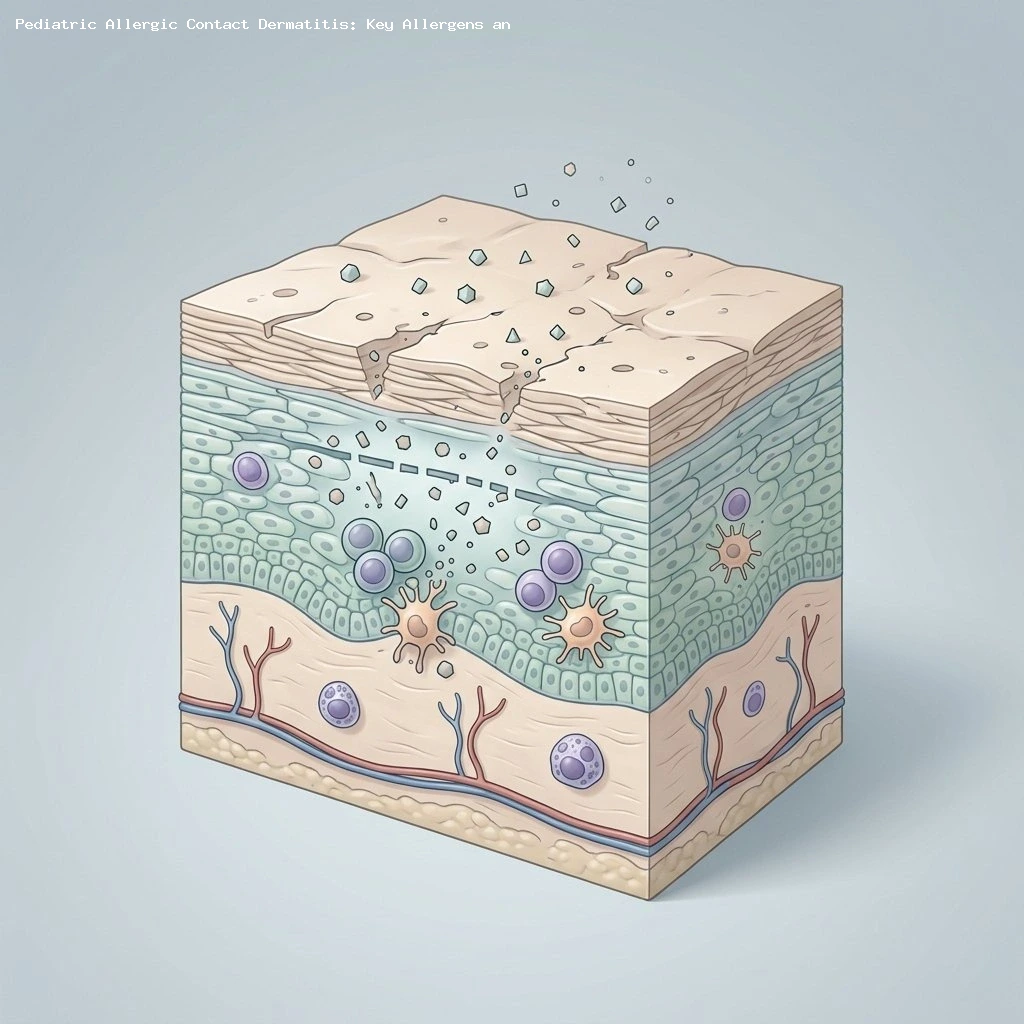
Allergic contact dermatitis in children: a closer look
Allergic contact dermatitis in children is showing up more often than many clinicians have assumed, and missing the diagnosis can have real consequences for young patients, according to a presentation at the 2026 American Academy of Dermatology Annual Meeting (Source: American Academy of Dermatology Annual Meeting 2026).
Jeff Yu, MD, chair of dermatology at Virginia Commonwealth University, told attendees that the clinical picture is shifting: pediatric providers and dermatologists are increasingly recognizing and testing for allergic contact dermatitis in kids, rather than automatically labeling rashes as atopic eczema (Source: Virginia Commonwealth University, Department of Dermatology).
Why this matters: consequences of missing the diagnosis
When an allergic cause is overlooked, children can be steered toward treatments that won’t fix the root problem and may expose them to unnecessary medications.
Yu noted that if a rash is assumed to be atopic dermatitis without considering contact allergy, children may be placed on prolonged courses of topical steroids or even systemic therapies that aren’t addressing ongoing allergen exposure (Source: American Academy of Dermatology Annual Meeting 2026).
Who should be screened for contact allergy
Yu’s main clinical advice is simple and practical: keep allergic contact dermatitis on the radar—especially when a child’s eczema looks atypical or doesn’t respond as expected to standard therapy (Source: American Academy of Dermatology Annual Meeting 2026).
Routine screening isn’t required for every child with eczema, but consider evaluation (including patch testing) when:
-
Rash appears in unusual locations for atopic dermatitis (for example, strictly on the hands or face).
-
The dermatitis is limited to areas that touch specific products, clothing, or jewelry.
-
The child fails to respond to appropriate topical therapy or keeps relapsing despite treatment and avoidance advice.
-
Caregivers report new or changing exposures (new moisturizers, topical products, sports equipment, or adhesives).
Asking focused follow-up questions—what the child comes into contact with daily, what products are used on skin or clothing, and whether any new items were introduced recently—often points clinicians to likely culprits (Source: American Academy of Dermatology Annual Meeting 2026).
Triage and diagnosis: practical steps in clinic
The diagnostic workup usually starts with a careful history and targeted physical exam, followed by patch testing when contact allergy is suspected. Patch tests identify specific allergens that trigger a delayed (type IV) hypersensitivity reaction.
Yu emphasized that patch testing in pediatrics is becoming more common and that results can be highly informative: identifying the allergen allows families to remove the trigger rather than escalating to stronger immunomodulatory drugs (Source: American Academy of Dermatology Annual Meeting 2026).
Treatment: avoidance is the only definitive fix
Yu was clear: the only path to true and lasting resolution of allergic contact dermatitis is allergen avoidance. Once the responsible agent is identified, removing exposure should lead to improvement.
Because avoidance is not always immediately possible or the allergen is unknown at presentation, Yu outlined a practical, tiered approach to controlling symptoms:
-
For mild or localized disease where the allergen hasn’t been identified or cannot yet be avoided, consider topical therapies commonly used in atopic dermatitis, such as topical corticosteroids, topical PDE4 inhibitors (for example, crisaborole), and topical JAK inhibitors (for example, ruxolitinib cream) to reduce inflammation and itching (Source: U.S. Food & Drug Administration; crisaborole and ruxolitinib prescribing information).
-
For severe, widespread, or treatment-refractory cases, systemic options—including biologic therapies and oral JAK inhibitors—may be reasonable while allergen-avoidance strategies are put into place (Source: U.S. Food & Drug Administration; biologic and JAK inhibitor approvals and labeling).
-
Throughout management, patient and caregiver education about reading ingredient labels and recognizing hidden sources of allergens is essential.
Common and sneaky allergens: the lanolin example
Yu used lanolin as a practical example of how a commonly recommended product can perpetuate disease when allergy goes unrecognized.
Lanolin is present in many over-the-counter moisturizers often suggested for children with dry skin. If a child is allergic to lanolin but continues to use lanolin-containing creams, the rash may persist or worsen, prompting clinicians to escalate therapy under the assumption the child has severe atopic dermatitis (Source: American Academy of Dermatology Annual Meeting 2026).
Identifying the allergy via patch testing and removing lanolin-containing products can prevent unnecessary long-term steroid use or systemic immunosuppression.
Gaps in knowledge: what we still don’t fully understand
Yu highlighted that the natural history of contact allergies across a patient’s lifespan remains incompletely described. Once an allergen is identified, clinicians teach avoidance rather than continuing to re-test or track the allergy over time, which limits longitudinal data (Source: Virginia Commonwealth University, Department of Dermatology).
His working assumption is that contact allergies are often stable—especially if exposure continues—but he cautioned that the evidence base is limited and more long-term studies are needed to confirm how sensitization changes with age and changing exposures (Source: American Academy of Dermatology Annual Meeting 2026).
Research and next steps
Yu’s research program at VCU is focused on improving how clinicians diagnose contact dermatitis and on clinical trials across inflammatory skin diseases, with the goal of bringing more precise tools and therapies to patients (Source: Virginia Commonwealth University, Department of Dermatology).
Better diagnostic algorithms, more pediatric-centered patch testing protocols, and studies that follow patients over years would all help clinicians know when an allergy is likely to persist versus when it may fade—information that would change counseling and management strategies.
Practical takeaways for clinicians and caregivers
-
Keep allergic contact dermatitis in your differential when a child’s rash is atypical or not responding to standard treatment (Source: American Academy of Dermatology Annual Meeting 2026).
-
Use targeted history-taking and consider patch testing to identify specific allergens rather than assuming severe or refractory disease requires stronger systemic therapy (Source: American Academy of Dermatology Annual Meeting 2026).
-
Educate families about reading labels and avoiding identified allergens—this is the definitive treatment and can spare children unnecessary medications.
-
Recognize that more research is needed on the long-term behavior of contact allergies in children so follow-up and documentation are important when allergies are diagnosed (Source: Virginia Commonwealth University, Department of Dermatology).
Sources
- American Academy of Dermatology Annual Meeting 2026. Presentation: “Considerations in Allergic Contact Dermatitis in Children,” March 27–31, 2026; Denver, Colorado (Source of presentation by Jeff Yu, MD).
- Virginia Commonwealth University, Department of Dermatology. Jeff Yu, MD — faculty profile and research program (Source: VCU Department of Dermatology).
- U.S. Food & Drug Administration — crisaborole (topical PDE4 inhibitor) prescribing information and approval history (Source: FDA drug approval documents).
- U.S. Food & Drug Administration — ruxolitinib topical (JAK inhibitor) prescribing information and approval history (Source: FDA drug approval documents).
- U.S. Food & Drug Administration — approvals and labeling information for systemic biologic and oral JAK therapies used in atopic dermatitis (examples include dupilumab and oral JAK agents) (Source: FDA drug approval documents).
- American Contact Dermatitis Society — clinical resources on patch testing and common contact allergens in pediatric and adult populations (Source: ACDS clinical resources).