
Photodynamic Therapy Benefits: A Practical Approach to Treating Actinic Keratoses
Photodynamic therapy: a field-first approach for actinic damage
For years, photodynamic therapy (PDT) has been a recognized option for treating actinic keratoses (AKs), but clinicians are increasingly drawn to it not just for effectiveness but for how it fits into modern, field-directed care models (Source: American Academy of Dermatology; Source: Cochrane review, Photodynamic therapy for actinic keratoses).
Dr. Anthony Rossi, MD, FAAD, FACMS, describes PDT as a clinician-controlled therapy that can make treatment simpler for patients while helping ensure the treatment is actually finished as intended (Source: Interview with Anthony Rossi, MD).
From isolated spot treatment to treating the whole field
Traditional lesion-directed options, like cryotherapy, remain useful when you have a single, isolated lesion to remove. But cryotherapy treats only the visible spot and doesn’t do anything for the surrounding sun-damaged skin where subclinical lesions may be forming beneath the surface (Source: American Academy of Dermatology).
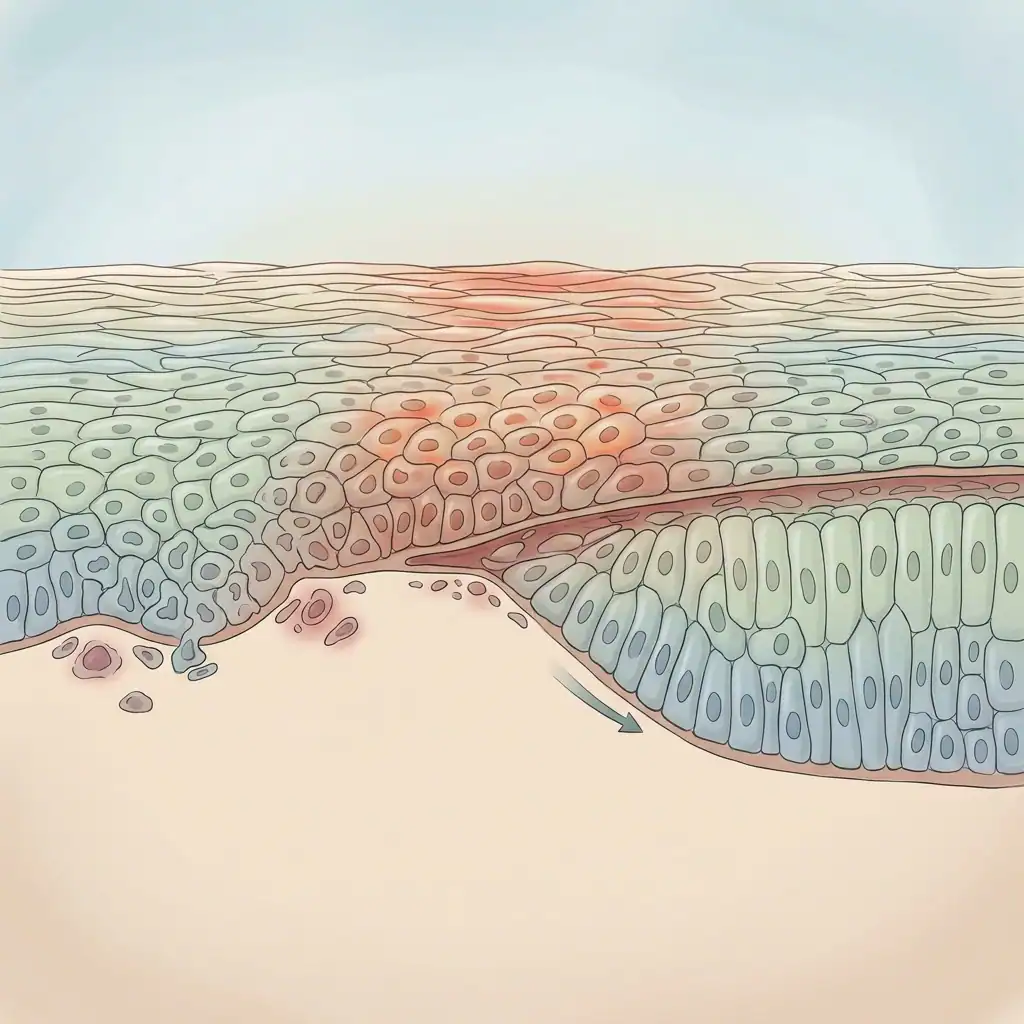
“Yes, we can freeze a single spot,” Rossi says, “but we really need to think holistically about the whole picture.” PDT is designed to address both the visible AKs and the invisible, early changes across a broader area of photodamaged skin by applying a photosensitizing agent across the entire field before light activation (Source: Interview with Anthony Rossi, MD; Source: FDA prescribing information for aminolevulinic acid).
Practical advantages: control, convenience, and adherence
One of the biggest clinical advantages of PDT is that it’s performed in the office, giving clinicians control over dosing and ensuring the treatment is completed under supervision. The typical on-site process uses a photosensitizer—commonly aminolevulinic acid—followed by controlled light activation (Source: FDA prescribing information for aminolevulinic acid).
Topical field therapies such as 5-fluorouracil and imiquimod are effective but often trigger inflammatory responses—redness, crusting, peeling—that can persist for weeks and discourage patients from finishing their regimen. Because those therapies require daily self-application over multiple weeks, interruptions and incomplete courses are common in real-world practice (Source: American Academy of Dermatology; Source: Review on topical therapy adherence).
“With PDT, patients come in, have the procedure, and then go home and heal,” Rossi explains. Most people experience redness, swelling, and crusting that generally resolve within about five to seven days, which many patients find more predictable than a prolonged topical course (Source: Interview with Anthony Rossi, MD; Source: Cochrane review, Photodynamic therapy for actinic keratoses).
How adherence changes the value equation
When you factor in how often patients actually complete a prescribed treatment, cost-effectiveness comparisons can shift. Partial courses of topical therapy or repeated spot treatments with cryotherapy may not deliver the long-term disease control that a properly delivered PDT session can achieve (Source: Health economics reviews of AK treatments).
Put simply, an in-office therapy that’s completed under a clinician’s care can sometimes deliver better real-world outcomes than a cheaper therapy that patients don’t finish. That doesn’t mean PDT is right for everyone, but it’s an important part of the treatment conversation (Source: Interview with Anthony Rossi, MD; Source: Cochrane review).
Where clinicians are using PDT beyond the face
Rossi reports using PDT on a variety of body sites—not only the face and scalp but also the arms, legs, trunk, and in selected cases even more sensitive areas such as the genital region when dealing with superficial lesions (Source: Interview with Anthony Rossi, MD).
Patients often remark on a cosmetic benefit as well: after the healing period, skin can look smoother and refreshed. Those cosmetic improvements are a secondary but meaningful outcome for many people who undergo field-directed PDT (Source: Clinical observations; Source: Patient-reported outcomes in PDT studies).
Technology is widening the practical use of PDT
Recent device advances—particularly larger, uniform red-light panels—allow clinicians to treat bigger areas in a single session, such as both arms or an entire back, which improves workflow and patient convenience (Source: Device manufacturers’ product literature; Source: Interview with Anthony Rossi, MD).
Rossi has also experimented with the activation of photosensitizers as a treatment pathway for inflammatory acne, where targeting sebaceous gland activity can be helpful. While this is an off-label use, clinicians have reported positive results in selected patients (Source: Clinical studies and device literature; Source: Interview with Anthony Rossi, MD).
Using light for more than PDT: photobiomodulation and recovery
Beyond activating a photosensitizer, red light devices have roles in photobiomodulation—low-level light therapies that can support tissue healing and reduce inflammation after procedures like laser resurfacing (Source: MASCC/ISOO clinical practice guidelines for photobiomodulation; Source: Device therapy reviews).
Similar light-based approaches have also been studied and used in oncology-related inflammatory conditions, such as managing oral graft-versus-host disease, pointing to the versatility of light therapies in medical practice (Source: MASCC/ISOO guidelines; Source: Clinical studies on photobiomodulation in mucosal inflammation).
Practical suggestions for clinicians
If you’re considering adding a red-light system to your practice, Rossi advises thinking beyond PDT alone. A versatile device can be used for field-directed PDT, off-label acne protocols in select patients, and post-procedure recovery support, which helps justify the investment and maximizes patient benefit (Source: Interview with Anthony Rossi, MD; Source: Device manufacturers’ clinical usage guides).
As with any treatment plan, patient selection and counseling are key. Discuss expected downtime, possible side effects, and realistic outcomes so patients can choose the approach that best fits their medical needs and lifestyle (Source: American Academy of Dermatology; Source: FDA prescribing information for aminolevulinic acid).
Sources
- American Academy of Dermatology — Clinical guidance on actinic keratosis and treatment options (guideline documents).
- Cochrane Review — “Photodynamic therapy for actinic keratoses” (systematic review of PDT efficacy and outcomes).
- U.S. Food and Drug Administration — Prescribing information for aminolevulinic acid formulations used in PDT (e.g., Levulan Kerastick label).
- Multinational Association of Supportive Care in Cancer / International Society of Oral Oncology (MASCC/ISOO) — Clinical practice guidelines on photobiomodulation for mucositis and related inflammatory conditions.
- Interview with Anthony Rossi, MD, FAAD, FACMS — Comments on clinical use, patient adherence, and device integration (Source: Interview with Anthony Rossi, MD).
- Manufacturers’ clinical and product literature — Information on modern red-light devices and larger-panel treatment options (device technical briefs and usage guides).