
Understanding the Bone–Vascular Link in Psoriasis: Impact on Heart and Bone Health
Introduction
Psoriasis is often thought of as a skin disease, but growing evidence shows it affects the whole body — including bones and blood vessels.
This article reviews the emerging idea of a bone–vascular axis in psoriasis, and summarizes how today’s targeted therapies may affect both skeletal integrity and cardiovascular risk (Source: Zeng H et al., The Impact of Targeted Therapies on the Bone-Vascular Axis in Psoriasis).
The material below builds on a recent narrative review that searched PubMed, MEDLINE, and Embase for studies up to January 2026 and places those findings into practical context for clinicians and patients (Source: Zeng H et al., The Impact of Targeted Therapies on the Bone-Vascular Axis in Psoriasis).
Overview of the bone–vascular axis in psoriasis
Psoriasis as a systemic disease
Psoriasis is increasingly recognized as a systemic, immune-mediated condition rather than a purely skin-limited disorder.
People with psoriasis have higher rates of related conditions such as psoriatic arthritis (PsA), osteoporosis, and cardiovascular disease, reflecting shared inflammatory biology (Source: Zeng H et al., The Impact of Targeted Therapies on the Bone-Vascular Axis in Psoriasis).
The “calcification paradox”
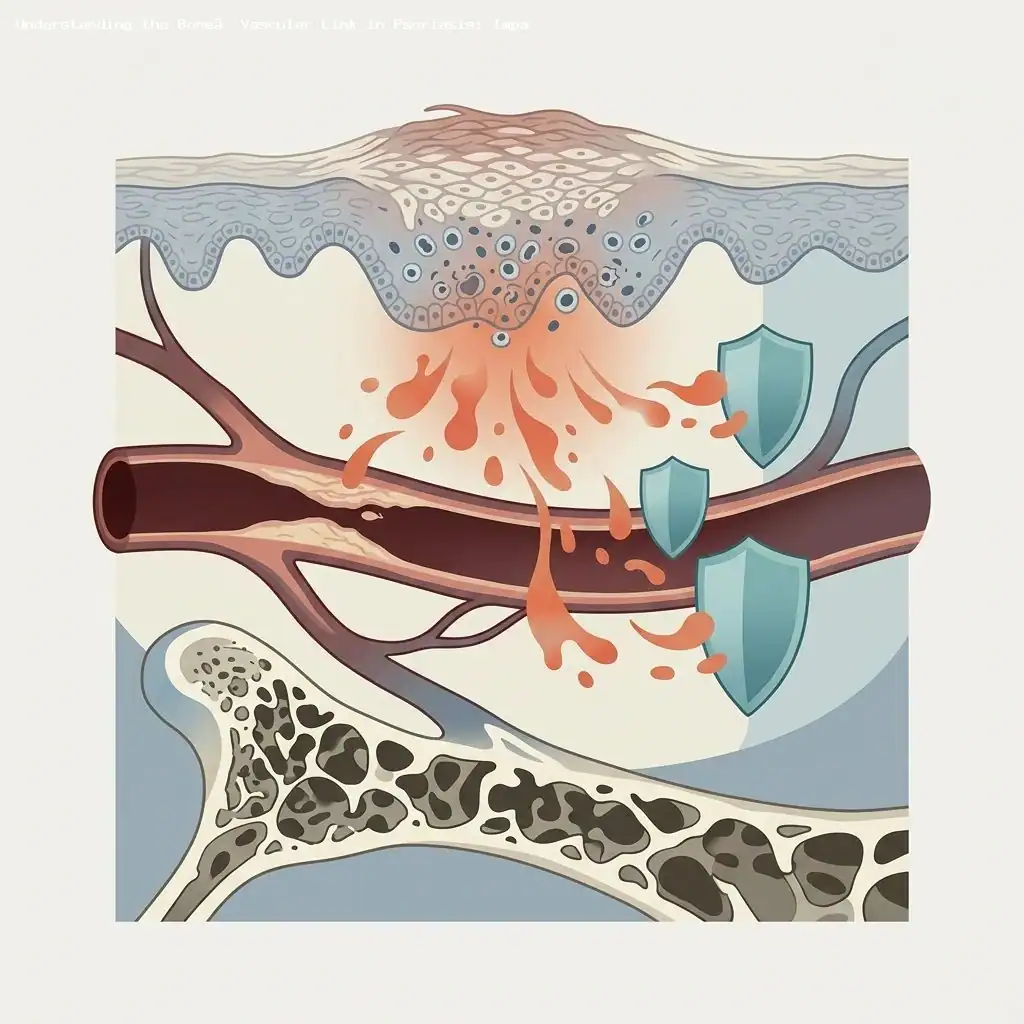
One key concept linking bone and vessels is the so-called calcification paradox — the coexistence of lower bone mineral density and increased vascular calcification in the same patient.
This paradox suggests the two processes are connected through common inflammatory pathways rather than occurring independently (Source: Zeng H et al., The Impact of Targeted Therapies on the Bone-Vascular Axis in Psoriasis).
Inflammation as a common driver
At the molecular level, the IL-23/IL-17 axis and chronic activation of Th17 immune pathways stand out as central drivers linking skin, bone, and vessels.
Activated Th17 cells increase levels of pro-inflammatory cytokines such as IL-17A, IL-17F, TNF-α, and IL-6, which have downstream effects on both bone turnover and vascular biology (Source: Zeng H et al., The Impact of Targeted Therapies on the Bone-Vascular Axis in Psoriasis).
How inflammation affects bone and blood vessels
In bone, these cytokines disturb the balance between receptor activator of nuclear factor kappa-B ligand (RANKL) and osteoprotegerin (OPG), tipping the scale toward osteoclast formation and accelerated bone resorption (Source: Frontiers in Immunology, Biology of the RANKL-RANK-OPG System in Immunity, Bone, and Beyond).
In the vasculature, the same inflammatory signals promote an osteogenic shift in vascular smooth muscle cells — a process driven by signaling pathways such as NF-κB and Wnt/β-catenin — that leads to vascular calcification and stiffness (Source: Zeng H et al., The Impact of Targeted Therapies on the Bone-Vascular Axis in Psoriasis).
Efficacy of targeted therapies on joints, bone, and vessels
Biologic therapies and their promise
Biologic drugs that block specific immune pathways have revolutionized psoriasis care and appear to influence elements of the bone–vascular axis.
By targeting upstream drivers of the Th17 pathway, biologics can reduce inflammation systemically, which may translate into benefits for joints and potentially for bone and vascular health (Source: Zeng H et al., The Impact of Targeted Therapies on the Bone-Vascular Axis in Psoriasis).
IL-23 inhibitors
IL-23 inhibitors such as guselkumab and risankizumab suppress the pathway that feeds Th17 cells and have shown reduced radiographic progression in clinical studies of PsA patients, indicating protection against structural joint damage (Source: Zeng H et al., The Impact of Targeted Therapies on the Bone-Vascular Axis in Psoriasis).
IL-17 inhibitors and dual blockade
IL-17 inhibitors provide strong control of inflammation in both skin and joints, and newer agents that block both IL-17A and IL-17F (for example, bimekizumab) may offer even greater inhibition of structural joint damage in PsA (Source: Zeng H et al., The Impact of Targeted Therapies on the Bone-Vascular Axis in Psoriasis).
Radiographic progression and joint preservation
Clinical trials consistently report low rates of radiographic progression and preservation of joint structure with these targeted agents, supporting their disease-modifying potential in PsA (Source: Zeng H et al., The Impact of Targeted Therapies on the Bone-Vascular Axis in Psoriasis).
Effects on systemic bone mineral density (BMD)
The impact of biologics on whole-body or spine bone mineral density (BMD) is less clear than their effects on joint structure.
Some studies have shown modest improvements in lumbar spine BMD after anti-TNF therapy, while others report little or no change; this variability likely reflects the slow, multifactorial nature of bone remodeling and the need for longer follow-up and attention to non-inflammatory contributors such as nutrition and exercise (Source: Zeng H et al., The Impact of Targeted Therapies on the Bone-Vascular Axis in Psoriasis; Frontiers in Immunology, Biology of the RANKL-RANK-OPG System in Immunity, Bone, and Beyond).
Risk stratification, cardiovascular safety, and monitoring
Cardiovascular disease in psoriasis
Chronic inflammation in psoriasis contributes to increased cardiovascular risk, and imaging studies have documented higher vascular inflammation in people with psoriasis even when traditional risk factors are absent (Source: Zeng H et al., The Impact of Targeted Therapies on the Bone-Vascular Axis in Psoriasis).
Targeted therapies and vascular inflammation
Some targeted agents appear to reduce vascular inflammation as measured by imaging surrogate markers, suggesting possible cardiovascular benefit, but hard evidence showing reductions in major adverse cardiovascular events (MACE) remains limited (Source: Zeng H et al., The Impact of Targeted Therapies on the Bone-Vascular Axis in Psoriasis).
Because most studies report changes in biomarkers or imaging rather than clinical event reductions, clinicians should interpret vascular imaging improvements cautiously (Source: Zeng H et al., The Impact of Targeted Therapies on the Bone-Vascular Axis in Psoriasis).
JAK inhibitors and cardiovascular caution
JAK inhibitors such as tofacitinib and upadacitinib are effective for PsA, but safety concerns have been raised about increased cardiovascular events in other inflammatory populations.
The U.S. Food and Drug Administration highlighted safety signals from the ORAL Surveillance trial of tofacitinib in rheumatoid arthritis, prompting careful cardiovascular risk assessment when using these agents in higher-risk patients (Source: U.S. Food and Drug Administration, ORAL Surveillance safety communication).
TYK2 inhibition and deucravacitinib
The TYK2 inhibitor deucravacitinib (SOTYKTU) works through a more selective intracellular mechanism and, in long-term extension studies, has shown a favorable cardiovascular safety profile with stable adverse event rates and minimal impact on lipids to date (Source: Bristol Myers Squibb, SOTYKTU prescribing information and long-term data).
Despite these reassuring signals, large cardiovascular outcome trials are still needed to confirm safety across diverse patient groups (Source: Zeng H et al., The Impact of Targeted Therapies on the Bone-Vascular Axis in Psoriasis).
Limitations of traditional risk tools and better stratification
Traditional cardiovascular risk calculators can underestimate risk in inflammatory diseases because they do not account for inflammation-driven factors.
Adding disease-specific elements — such as inflammatory biomarkers (for example, GlycA) and advanced imaging — can improve risk stratification for patients with psoriasis (Source: Zeng H et al., The Impact of Targeted Therapies on the Bone-Vascular Axis in Psoriasis).
Adjunctive cardiometabolic therapies
Incorporating established cardiometabolic treatments can add benefit: for example, statins reduce atherosclerotic risk in people with elevated cardiovascular risk, and GLP-1 receptor agonists have demonstrated weight and cardiometabolic benefits in large outcome trials (Source: American College of Cardiology/American Heart Association cholesterol guidelines; major GLP-1 cardiometabolic outcome trials).
Combining systemic psoriasis control with aggressive management of traditional cardiometabolic risk factors offers the best chance to lower long-term cardiovascular events (Source: Zeng H et al., The Impact of Targeted Therapies on the Bone-Vascular Axis in Psoriasis).
Clinical implications and practical recommendations
Think beyond skin clearance
Effective psoriasis care should aim for more than clear skin: clinicians and patients should consider the broader inflammatory burden and its effects on bone and vascular health.
Individualized, multidisciplinary care
A multidisciplinary approach — involving dermatologists, rheumatologists, primary care physicians, cardiologists, and where appropriate, endocrinologists or bone specialists — helps address the multiple domains affected by psoriasis.
Individualized treatment plans should balance skin and joint control, bone health considerations, and cardiovascular risk management (Source: Zeng H et al., The Impact of Targeted Therapies on the Bone-Vascular Axis in Psoriasis).
Monitoring and prevention strategies
Practical steps include regular assessment of fracture risk and BMD where indicated, cardiovascular risk scoring adjusted for inflammatory burden, lifestyle counseling (nutrition, smoking cessation, exercise), and use of adjunctive medications such as statins when appropriate (Source: Zeng H et al., The Impact of Targeted Therapies on the Bone-Vascular Axis in Psoriasis; American College of Cardiology/American Heart Association guidelines).
Future research priorities
To refine care for the bone–vascular axis in psoriasis, the review calls for prospective, long-term studies that track both clinical events (fractures, MACE) and validated biomarkers over time (Source: Zeng H et al., The Impact of Targeted Therapies on the Bone-Vascular Axis in Psoriasis).
Key research needs include:
-
Endpoint-driven clinical trials that measure fractures and cardiovascular events rather than surrogate markers (Source: Zeng H et al., The Impact of Targeted Therapies on the Bone-Vascular Axis in Psoriasis).
-
Validated biomarkers and composite risk tools that integrate inflammation into cardiovascular and bone-risk prediction (Source: Zeng H et al., The Impact of Targeted Therapies on the Bone-Vascular Axis in Psoriasis).
-
Longitudinal studies of BMD and bone quality following initiation of targeted therapies, accounting for lifestyle and metabolic factors (Source: Frontiers in Immunology, Biology of the RANKL-RANK-OPG System in Immunity, Bone, and Beyond).
Conclusion
Psoriasis is more than skin deep. Systemic inflammation connects the health of bones and blood vessels through shared immune pathways, creating real clinical consequences for fractures and cardiovascular disease.
Targeted therapies that block key inflammatory pathways can protect joints and may influence bone and vascular outcomes, but current evidence is strongest for structural joint benefits and more limited for clear cardiometabolic event reduction.
A comprehensive, individualized care plan that pairs effective anti-inflammatory treatment with attention to bone health and cardiovascular risk factors offers the best path to improving long-term outcomes for people living with psoriasis (Source: Zeng H et al., The Impact of Targeted Therapies on the Bone-Vascular Axis in Psoriasis).
Sources
- Zeng H, Chen Y, Yang L. The Impact of Targeted Therapies on the Bone-Vascular Axis in Psoriasis: A Narrative Review. Clinical, Cosmetic and Investigational Dermatology. 2026;19. https://doi.org/10.2147/CCID.S595065 (Source used throughout for review findings).
- Frontiers in Immunology. Biology of the RANKL-RANK-OPG System in Immunity, Bone, and Beyond. Published 2014 Oct 20. doi:10.3389/fimmu.2014.00511 (Source for bone biology and RANKL/OPG mechanisms).
- U.S. Food and Drug Administration. ORAL Surveillance Trial Safety Communication and Labeling Updates (tofacitinib). (Source for JAK inhibitor cardiovascular safety signals).
- Bristol Myers Squibb. SOTYKTU (deucravacitinib) prescribing information and long-term safety data. (Source for TYK2 inhibitor safety profile).
- American College of Cardiology / American Heart Association. Cholesterol Management and Cardiovascular Risk Guidelines. (Source for statin guidance and cardiometabolic risk management).