
New Oral TYK2 Inhibitors Offer Promising Alternative to Biologics for Psoriasis
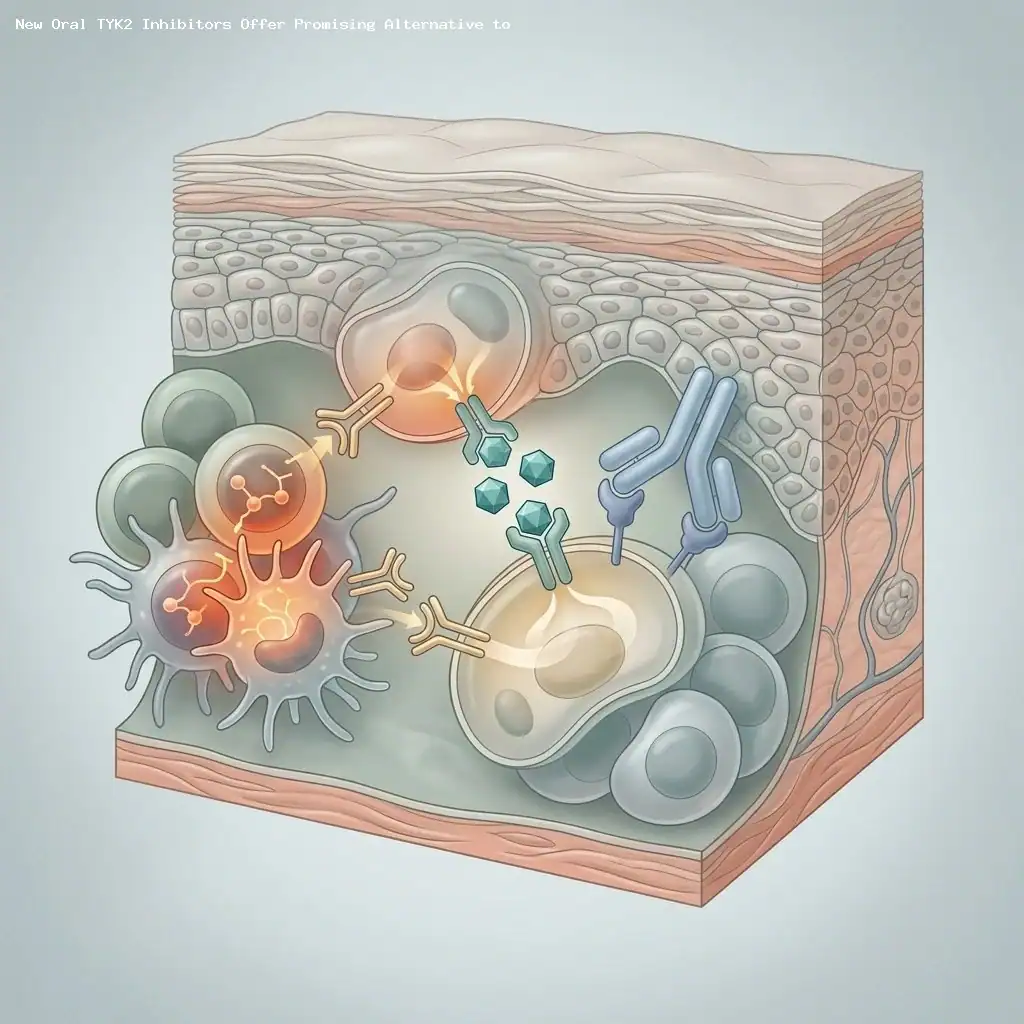
Big changes coming in psoriasis care: oral pills that act more like biologics
The 2026 American Academy of Dermatology meeting highlighted an important shift: a new generation of oral medicines may finally narrow the long-standing gap between pills and injectable biologics for moderate to severe plaque psoriasis treatment.
Two drugs at the center of this change are envudeucitinib and zasocitinib, both members of the next-generation TYK2 inhibitor class. Their phase 3 results show levels of skin clearance, speed of response, and tolerability that deserve attention from clinicians who counsel patients about systemic options (Source: Alumis Inc., ONWARD trials; Source: Takeda, LATITUDE trials).
The rise of high-efficacy oral TYK2 inhibitors
TYK2 is one of the enzymes in the Janus kinase family that helps drive psoriasis inflammation, and new drugs are designed to block TYK2 specifically while avoiding broader JAK1/2/3 blockade associated with earlier safety concerns.
Both envudeucitinib and zasocitinib are described as selective TYK2 inhibitors that aim to reduce immune signaling tied to psoriasis without the wider effects seen with some pan-JAK inhibitors (Source: Alumis Inc., press release; Source: Takeda, press release).
Envudeucitinib: focused design and deep clearance
Envudeucitinib, developed by Alumis Inc., is an allosteric TYK2 inhibitor—meaning it binds in a way intended to selectively alter TYK2 activity rather than blocking multiple JAK family members.
In the phase 3 ONWARD program, envudeucitinib produced rapid and substantial skin improvements: about PASI 75 responses in roughly 75% of patients by week 16 and around 80% by week 24, with PASI 90 rates near 60–65% and complete clearance (PASI 100) around 40% at week 24 (Source: Alumis Inc., ONWARD trials press release).
Those numbers are noteworthy because they bring an oral therapy closer to the levels of complete or near-complete clearance that clinicians have historically reserved for biologics, making oral options more competitive when efficacy is the main concern (Source: Alumis Inc., ONWARD trials press release).
Rapid symptom relief: what patients often feel first
Aside from visible skin changes, patients taking envudeucitinib reported relief of itching and improvements in quality of life as early as week 2—often before maximal skin clearance was reached.
This early symptomatic benefit is meaningful: patients who “feel better” quickly are more likely to continue treatment through the first weeks, which can improve long-term adherence and satisfaction, particularly for people with troublesome pruritus or sleep disruption (Source: Alumis Inc., ONWARD trials press release).
Zasocitinib: once-daily convenience meets strong outcomes
Zasocitinib (TAK-279), developed by Takeda, is another selective TYK2 inhibitor that has shown similarly impressive results, with the practical advantage of once-daily dosing.
In the phase 3 LATITUDE trials, zasocitinib delivered high rates of skin clearance: roughly 70% of patients reached sPGA 0/1 (clear or almost clear) at week 16, with PASI 90 responses exceeding 50% and rising above 60% in some groups; complete clearance (PASI 100) was achieved in up to one-third of patients in certain cohorts (Source: Takeda, LATITUDE trials press release).
Those outcomes place a once-daily oral pill squarely within the range clinicians usually associate with injectable therapies, and they highlight the growing viability of pills for patients who prefer to avoid injections (Source: Takeda, LATITUDE trials press release).
Durability and safety: what clinicians need to know
Durability—how long responses last—is a central concern when choosing an oral systemic drug.
Zasocitinib demonstrated lasting benefit in trial follow-up: more than 90% of responders maintained their response through week 60, addressing a weakness seen with some earlier oral options (Source: Takeda, LATITUDE trials press release).
Safety profiles for both agents were generally consistent with expectations for selective TYK2 inhibition. For zasocitinib, most adverse events were mild and included things like upper respiratory infections and acne, with no new major safety signals reported in the trials (Source: Takeda, LATITUDE trials press release).
Envudeucitinib also showed a reassuring safety profile in ONWARD, with no signals for major adverse cardiovascular events, tuberculosis reactivation, or meaningful laboratory abnormalities in the data released so far (Source: Alumis Inc., ONWARD trials press release).
Taken together, these safety and durability findings support the idea that TYK2 selectivity may offer an effective balance of potency and tolerability compared with less selective JAK inhibition (Source: Alumis Inc.; Source: Takeda).
Putting these drugs into practice: counseling, choices, and algorithms
For clinicians, the arrival of high-efficacy oral TYK2 inhibitors expands real choices for patients who either cannot or would prefer not to use injectables.
Common barriers to biologics—such as needle aversion, travel or storage challenges, and personal preference for oral medication—can now be addressed without necessarily giving up high levels of skin clearance (Source: Alumis Inc.; Source: Takeda).
These drugs may also change the treatment pathway. Rather than moving from topical therapy directly to an injectable biologic after failure of older orals, dermatology teams may consider a TYK2 inhibitor as a potent oral step with outcomes approaching biologics.
Shared decision-making becomes more nuanced: patients can weigh route of administration, dosing frequency, the likelihood of complete clearance, onset of symptom relief, and safety in an individualized plan. For some, a once-daily pill like zasocitinib will be decisive; for others, the slightly higher complete-clearance rates seen with envudeucitinib may tip the balance (Source: Takeda; Source: Alumis Inc.).
Practical counseling points
-
Explain that symptom relief (less itch, better sleep) can precede full visible clearance, so early improvement is a good sign (Source: Alumis Inc., ONWARD trials press release).
-
Discuss dosing: once-daily pills may improve adherence compared with more frequent dosing regimens (Source: Takeda, LATITUDE trials press release).
-
Review safety monitoring and expected mild side effects so patients know what to watch for and when to report concerns (Source: Alumis Inc.; Source: Takeda).
-
Consider patient priorities—complete clearance vs convenience vs route of administration—when recommending an option (Source: Alumis Inc.; Source: Takeda).
Bottom line for clinicians
Next-generation TYK2 inhibitors are reshaping expectations for oral psoriasis therapy: envudeucitinib offers deep clearance with rapid symptom benefit, while zasocitinib combines strong efficacy with once-daily convenience (Source: Alumis Inc., ONWARD trials press release; Source: Takeda, LATITUDE trials press release).
Both agents demonstrate a combination of efficacy, tolerability, and durability that makes oral therapy a realistic alternative to biologics for many patients, and they are likely to influence how clinicians approach systemic treatment of moderate to severe plaque psoriasis as they move through regulatory review and into practice (Source: Alumis Inc.; Source: Takeda).
Sources
-
Alumis Inc., “Alumis’ envudeucitinib delivers early and robust improvements in skin clearance, quality of life, and psoriasis symptoms in two phase 3 trials” (ONWARD trials press release). Accessed March 28, 2026. https://investors.alumis.com/news-releases/news-release-details/alumis-envudeucitinib-delivers-early-and-robust-improvements
-
Takeda, “Takeda’s zasocitinib delivered rapid and durable skin clearance in a convenient once-daily pill” (LATITUDE trials press release). Published March 28, 2026. Accessed April 6, 2026. https://www.takeda.com/newsroom/newsreleases/2026/zasocitinib-phase3-clinical-trial-results/