
FDA Approves Secukinumab for Teens with Moderate to Severe HS
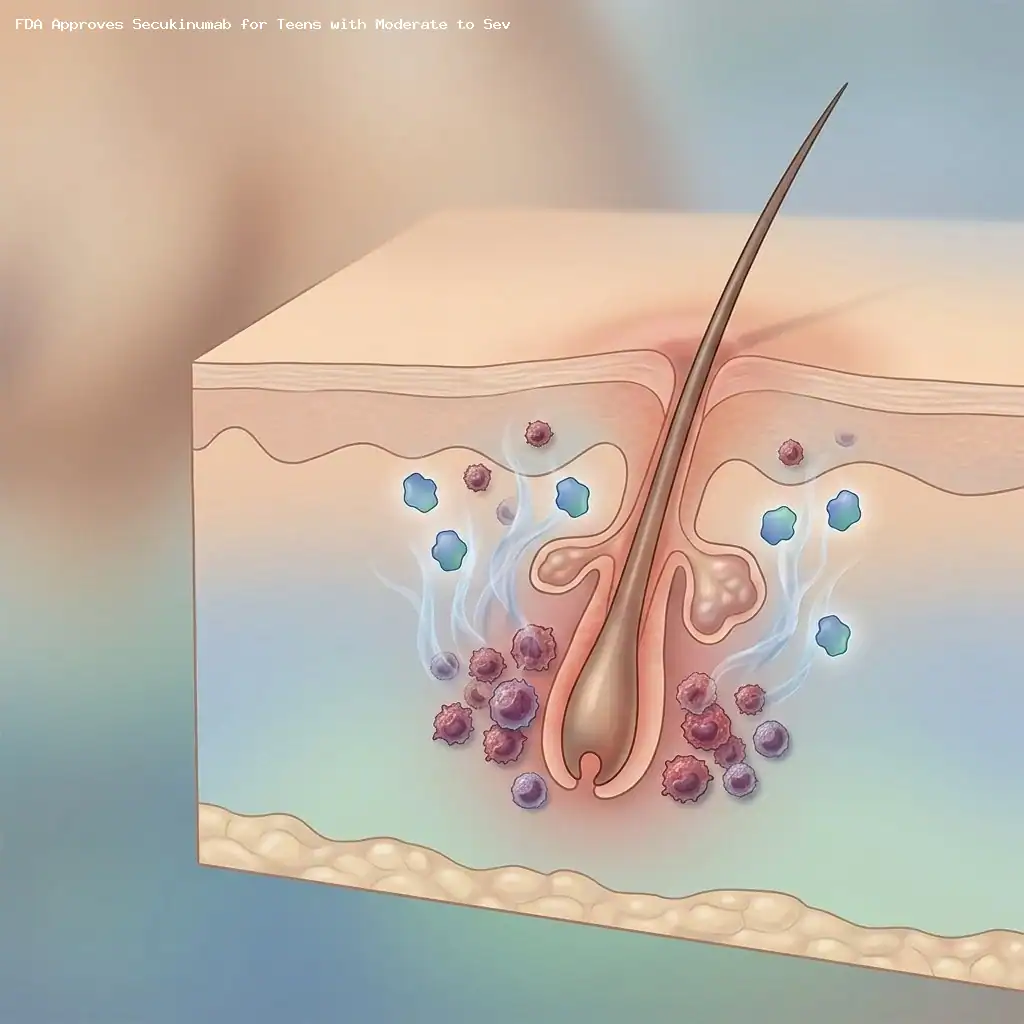
FDA approval opens a new path: secukinumab for teens with hidradenitis suppurativa
The recent U.S. Food and Drug Administration decision to approve secukinumab for adolescents aged 12 and older with moderate to severe hidradenitis suppurativa (HS) marks an important moment for young people and the doctors who treat them (Source: U.S. Food and Drug Administration, press release).
To understand what this change means in day-to-day care, we spoke with Dr. Steven Daveluy, MD, an associate professor and program director in Detroit, about how clinicians may use this newly approved option, when to start biologic therapy, and how it could affect long-term outcomes for teens living with HS.
How this approval changes treatment choices for adolescents
Before this authorization, clinicians had one on-label biologic option for adolescents with HS and often faced hurdles trying to get insurance coverage for alternative biologics when the first one didn’t work.
With secukinumab now approved, physicians and families effectively have two first-line biologic options for teenagers with moderate to severe disease—meaning more flexibility to switch mechanisms of action if one drug doesn’t control the inflammation (Source: Novartis press release).
That matters because HS is an unpredictable disease: what works beautifully for one person may not help another. Having a second approved biologic reduces the delay between treatment failure and trying another evidence-based therapy.
Practical effect in clinic
For clinicians, the approval simplifies conversations with families. Instead of a lengthy off-label prior-authorization process, providers can recommend an FDA-approved alternative and explain dosing, safety, and expected outcomes with clearer regulatory backing (Source: U.S. Food and Drug Administration, press release).
Can earlier biologic therapy prevent scarring and tunnels?
One of the most important clinical questions is whether early use of a highly effective biologic can prevent the painful scarring, sinus tracts (tunnels), and long-term tissue damage that make HS so devastating for some patients.
We don’t yet have pediatric-specific long-term data proving that early biologic use prevents scarring and tunnel formation in teens, but adult trial data show that gaining control of inflammation reduces progression and the development of tunnels (Source: Novartis Phase 3 trials and related data).
Because HS behaves similarly in adolescents and adults clinically, it’s reasonable to expect that controlling inflammation earlier will similarly reduce the chance of permanent damage in younger patients.
That expectation is why many experts emphasize not waiting until tunnels form; the goal is to stop inflammation before structural damage begins. Delays in effective therapy are associated with disease progression and reduced responsiveness to later treatments, so avoiding that delay preserves future options and can limit the need for surgery (Source: Novartis clinical data and expert consensus statements).
How clinicians decide when to start a biologic
Biologics are indicated for moderate to severe HS, and clinicians use scoring tools to objectify that threshold. One commonly used tool is the IHS4 (International Hidradenitis Suppurativa Severity Score System).
Using the IHS4, the presence of three inflammatory lesions—such as abscesses or nodules—at the same time qualifies as moderate disease even before a tunnel has formed, and that is a reasonable point to discuss biologic therapy with patients and families (Source: International HS clinical guidance).
Why IL-17A inhibition with secukinumab matters
Secukinumab targets interleukin-17A (IL-17A), an immune signaling protein implicated in HS. Research shows increased IL-17 activity in HS lesions and the surrounding skin, which suggests IL-17 contributes to the inflammation and tunnel biology clinicians see in patients (Source: peer-reviewed research and mechanistic studies).
Because HS is heterogeneous—different immune pathways may dominate in different people—having a therapy that targets IL-17A complements options that block other pathways such as tumor necrosis factor-alpha (TNFα).
In practice, some patients respond best to an IL-17 inhibitor like secukinumab, while others do better on a TNF inhibitor such as adalimumab. The availability of both mechanisms increases the chance of finding an effective, tolerable regimen for an individual patient (Source: clinical trial results and expert experience).
Combination therapy is often needed
Monotherapy with a biologic may be sufficient if treatment begins early and the disease is caught before significant tissue damage. However, many adolescents present with advanced or stubborn disease, and combination therapy—adding non-biologic medications or local treatments—is common.
Clinicians frequently use adjunctive medicines to help control inflammation while the biologic takes full effect or to address hormonal or metabolic contributors that can worsen HS (Source: clinical practice patterns and guideline summaries).
Common adjunct therapies that may be combined with a biologic include:
-
Spironolactone or other anti-androgen agents for hormonally influenced disease.
-
Finasteride in select patients where androgen modulation is helpful.
-
Metformin when insulin resistance or metabolic factors are present.
-
Courses of oral antibiotics for short-term control of flares or secondary infection.
-
Combined surgical and medical approaches when tunnels or large symptomatic lesions are present.
Weight-based dosing and practical adolescent considerations
The pediatric dosing regimen for secukinumab is weight-based and relatively straightforward to administer, but adolescents grow quickly, so dosing must be reassessed at each visit according to weight thresholds (Source: Cosentyx prescribing information, Novartis).
For patients who weigh 90 kg (about 198 lb) or more, dosing follows the adult schedule: 300 mg weekly for five weeks, then every four weeks, with an option in some cases to increase frequency to every two weeks if needed.
For patients who weigh between 30 kg and 89 kg, the schedule is the same but at a half dose of 150 mg. Because adolescents can cross the 90 kg threshold as they grow, clinicians should check weight regularly and adjust dosing to the adult regimen when appropriate (Source: Cosentyx prescribing information, Novartis).
Wider effects: quality of life for teens
HS is not only physically painful but also emotionally and socially burdensome, especially during adolescence when body image and peer relationships are central. Effective early therapy can reduce the visible and painful aspects of the disease and help teens regain confidence and participation in school and social activities.
Having an additional approved biologic reduces the fear around off-label prescribing for both families and clinicians and provides a clear, regulated option when one therapy fails. That reassurance can shorten the time to effective disease control and reduce the emotional toll of trial-and-error treatment (Source: FDA approval announcement; Novartis communications).
Importantly, increasing awareness that adolescents can experience severe HS helps reduce delays in diagnosis. Faster diagnosis and earlier treatment initiation give young patients a better chance to avoid the chronic, scarring course that affects some adults with long-standing untreated disease (Source: expert commentary and clinical guidance).
Bottom line for clinicians and families
The FDA approval of secukinumab for adolescents with moderate to severe HS expands the toolkit for treating a tough disease. It offers another on-label mechanism of action, which may be the key to disease control for some patients.
Clinicians should consider earlier intervention with a biologic in adolescents who meet criteria for moderate disease—especially before tunnels or significant scarring develop—and use objective tools like the IHS4 to guide that decision (Source: international HS scoring guidance).
When initiating therapy, remember practical issues: use weight-based dosing, reassess growth and weight at each visit, and take a flexible approach that may include combination therapy to reach meaningful control of inflammation.
For teens and their families, two approved biologic options mean more hope—and a clearer path—toward controlling HS and reducing its physical and emotional consequences.
Sources
- U.S. Food and Drug Administration, press release announcing approval of secukinumab for adolescents with hidradenitis suppurativa (FDA press release).
- Novartis, Cosentyx (secukinumab) press release and product communications on pediatric approval for hidradenitis suppurativa (Novartis press release).
- Cosentyx (secukinumab) US Prescribing Information — dosing and pediatric weight-based guidance (Novartis Cosentyx Prescribing Information).
- Phase 3 clinical trial data and registries for secukinumab in hidradenitis suppurativa (Phase 3 clinical trials; ClinicalTrials.gov entries and Novartis trial summaries).
- Peer-reviewed research and mechanistic studies documenting elevated IL-17 signaling in hidradenitis suppurativa lesions (selected dermatology research literature and review articles).
- International HS clinical scoring guidance and consensus statements on using IHS4 to define moderate disease and guide treatment decisions (international HS clinical guidance documents).