
Understanding Skin Conditions in Down Syndrome: New Insights and Care Tips
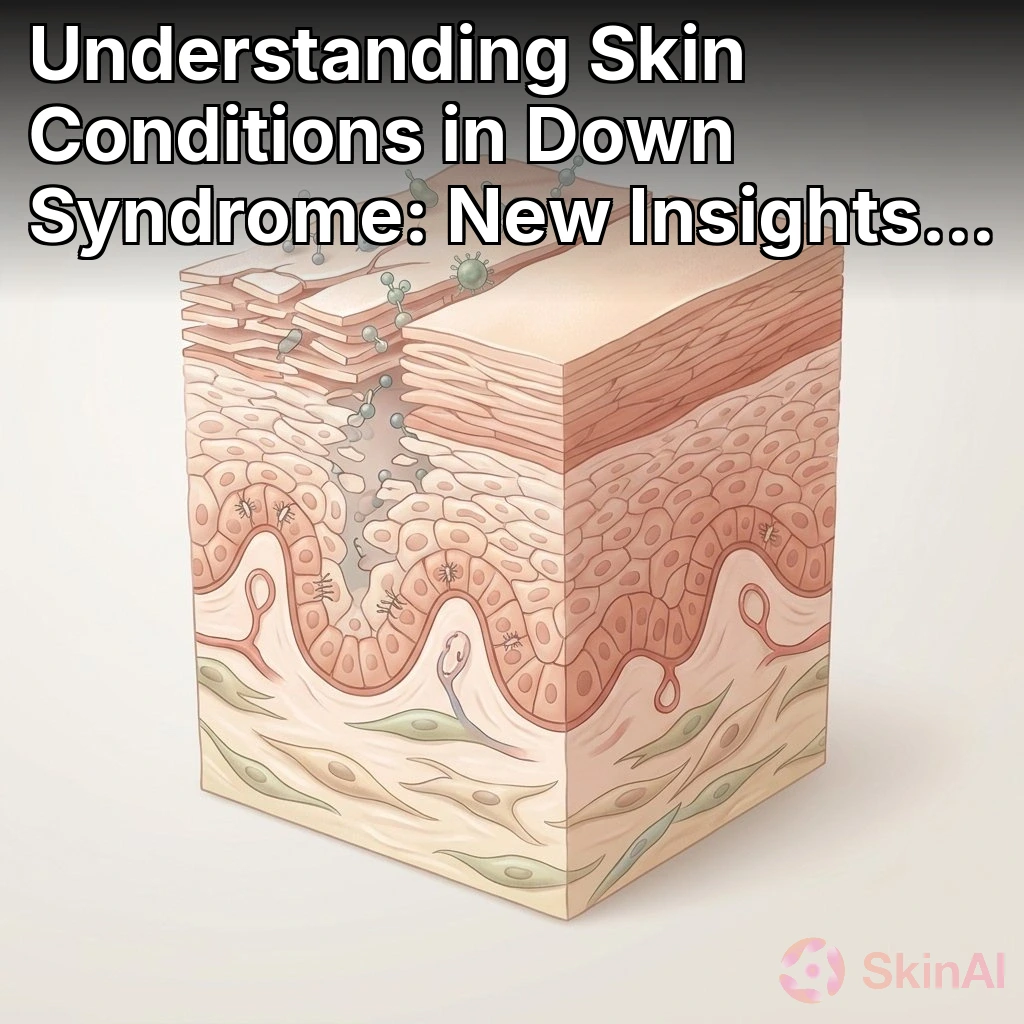
Don’t Be Rash: Exploring the Skin Connections of Down Syndrome
In this episode of Don’t Be Rash, host Andrew C. Krakowski, MD, speaks with pediatric dermatologist Jillian Rork, MD, about a fast-growing area of interest in skin medicine: the unique and sometimes underrecognized cutaneous manifestations of Down syndrome.
How a clinical passion took shape
Dr. Rork describes how early experiences caring for patients with intellectual and developmental disabilities gradually focused her work on the dermatologic needs of people with Down syndrome.
She shares that part of the motivation came from seeing how often meaningful skin disease was missed or dismissed in this population, and from a desire to both improve clinical recognition and to pursue research that could clarify underlying causes.
Common skin conditions seen in Down syndrome
Many dermatologists are already aware of several conditions that occur more frequently in people with Down syndrome, but recognizing the full pattern remains important for everyday practice.
-
Alopecia areata
-
Hidradenitis suppurativa–like and follicular inflammatory disorders
-
Elastosis perforans serpiginosa
-
Early-onset onychomycosis (nail fungal infection)
Being alert to these patterns helps clinicians spot problems earlier and tailor management more appropriately for patients with trisomy 21.
Moving from lists to mechanisms
A central theme of the conversation is that dermatology is shifting from listing associations to trying to explain why those associations exist — in other words, to discover the mechanistic drivers behind skin disease in Down syndrome.
That shift has important implications: when we understand the biology behind a condition, we can choose treatments that target the root causes rather than just treating symptoms.
Gene dosage: the idea of a 1.5x effect
Dr. Rork and Krakowski discuss the basic genetic concept that underpins many clinical observations: with trisomy 21, nearly every gene on chromosome 21 exists in three copies instead of two, which is often described as a roughly 1.5× gene dose for those genes.
This altered genomic landscape can change how cells behave and how the immune system responds, and those shifts are increasingly tied to inflammatory and autoimmune problems seen in people with Down syndrome (Source: National Human Genome Research Institute).
Interferon signaling and immune dysregulation
One of the most discussed pathways is interferon signaling, because several interferon receptor genes are located on chromosome 21.
Specifically, four interferon receptor–related genes — IFNAR1, IFNAR2, IFNGR2, and IL10RB — map to chromosome 21, and their increased dosage is a plausible contributor to an amplified interferon response in trisomy 21 (Source: NCBI Gene: IFNAR1, IFNAR2, IFNGR2, IL10RB).
Researchers have linked heightened interferon activity to a proinflammatory state and to greater susceptibility to certain autoimmune and follicular inflammatory disorders in people with Down syndrome (Source: Sullivan KD et al., 2016, eLife).
Other chromosome 21 pathways: APP and more
Chromosome 21 also carries the amyloid precursor protein (APP) gene, which has been implicated in early-onset Alzheimer disease seen more commonly in adults with Down syndrome.
Dr. Rork points out that genes like APP and other chromosome 21–linked pathways may likewise play roles in nonneurologic tissues, including the skin, although those connections are still under investigation (Source: NCBI Gene: APP; Source: Alzheimer’s Association).
Rethinking familiar diagnoses
For practicing dermatologists, these discoveries mean that conditions once treated as isolated clinical curiosities are now being reframed as parts of a broader immunogenetic picture.
Krakowski notes how quickly the field has moved from asking whether an association exists to probing why it exists, with translational research beginning to fill in many knowledge gaps.
Focus on follicular disease and hidradenitis-like presentations
Some of the most active areas of translational inquiry involve folliculitis and hidradenitis-like disease in people with Down syndrome.
Investigators are paying more attention to the pathophysiology — immune signaling, microbiome differences, and genetic contributors — and how that knowledge could guide targeted treatments rather than one-size-fits-all approaches.
Clinical implications for dermatologists
Clinically, the emerging framework encourages dermatologists to be more proactive about screening for and recognizing skin disease in patients with Down syndrome, and to consider how altered immune biology may influence both presentation and response to therapy.
It also opens the door to future therapeutics that aim at specific pathways — for example, approaches that modulate interferon signaling — although such treatments require careful validation and study.
The broader shift: descriptive to mechanism-based dermatology
Ultimately, this episode highlights a broader movement across dermatology: moving beyond descriptive diagnosis to a mechanism-based understanding of disease.
In the context of Down syndrome, the intersection of genomics, immunology, and clinical observation is starting to give clinicians a clearer roadmap for recognizing conditions earlier and imagining new treatment strategies for the future.
Resources and collaboration
Don’t Be Rash is produced in collaboration with the Society for Pediatric Dermatology (SPD), and the episode directs listeners to SPD resources for families and clinicians who want more information about skin care in patients with Down syndrome (Source: Society for Pediatric Dermatology).
If you have a topic you think the podcast should cover or want to join the conversation, email the show at DTeditor@mmhgroup.com.
Sources
- National Human Genome Research Institute (NHGRI), Down syndrome factsheet. (Source: NHGRI)
- Sullivan KD, et al., “Trisomy 21 consistently activates the interferon response,” eLife, 2016. (Source: Sullivan KD et al., 2016, eLife)
- NCBI Gene — IFNAR1 entry. (Source: NCBI Gene)
- NCBI Gene — IFNAR2 entry. (Source: NCBI Gene)
- NCBI Gene — IFNGR2 entry. (Source: NCBI Gene)
- NCBI Gene — IL10RB entry. (Source: NCBI Gene)
- NCBI Gene — APP (amyloid precursor protein) entry. (Source: NCBI Gene)
- Alzheimer’s Association — information on APP and early-onset Alzheimer disease risk in Down syndrome. (Source: Alzheimer’s Association)
- Society for Pediatric Dermatology — resources for patients and clinicians regarding dermatologic care in Down syndrome. (Source: Society for Pediatric Dermatology)
- National Down Syndrome Society (NDSS) — health conditions and medical concerns in Down syndrome. (Source: NDSS)