
How Microbial Balance Is Revolutionizing Skin Care: Insights from Epicutis CEO Maxwell Stock
Why the skin microbiome is getting more attention — and what it means for your skin
If you’re worried about redness, acne, or other skin flare-ups, you’ve probably heard the word “microbiome” pop up more than once. Maxwell Stock, founder and CEO of Signum Biosciences and Epicutis Skincare, explains that new biotech tools aimed at the skin’s microbiome are changing how we think about skin health. (Source: Signum Biosciences)
Key takeaways
Microbiome means the community of tiny microbes (bacteria, fungi, and others) that live on your skin. Keeping that community in balance is becoming a big focus in skincare.
Researchers and companies are moving away from treatments that simply “strip and suppress” microbes toward ones that support a healthy balance.
Signum has developed a compound called TCP, part of a class called isoprenyl cysteine analogs (IPCs), which aims to reduce inflammation and help restore microbial balance without wiping out microbes entirely. (Source: Signum Biosciences)
In simple terms: your skin is an ecosystem
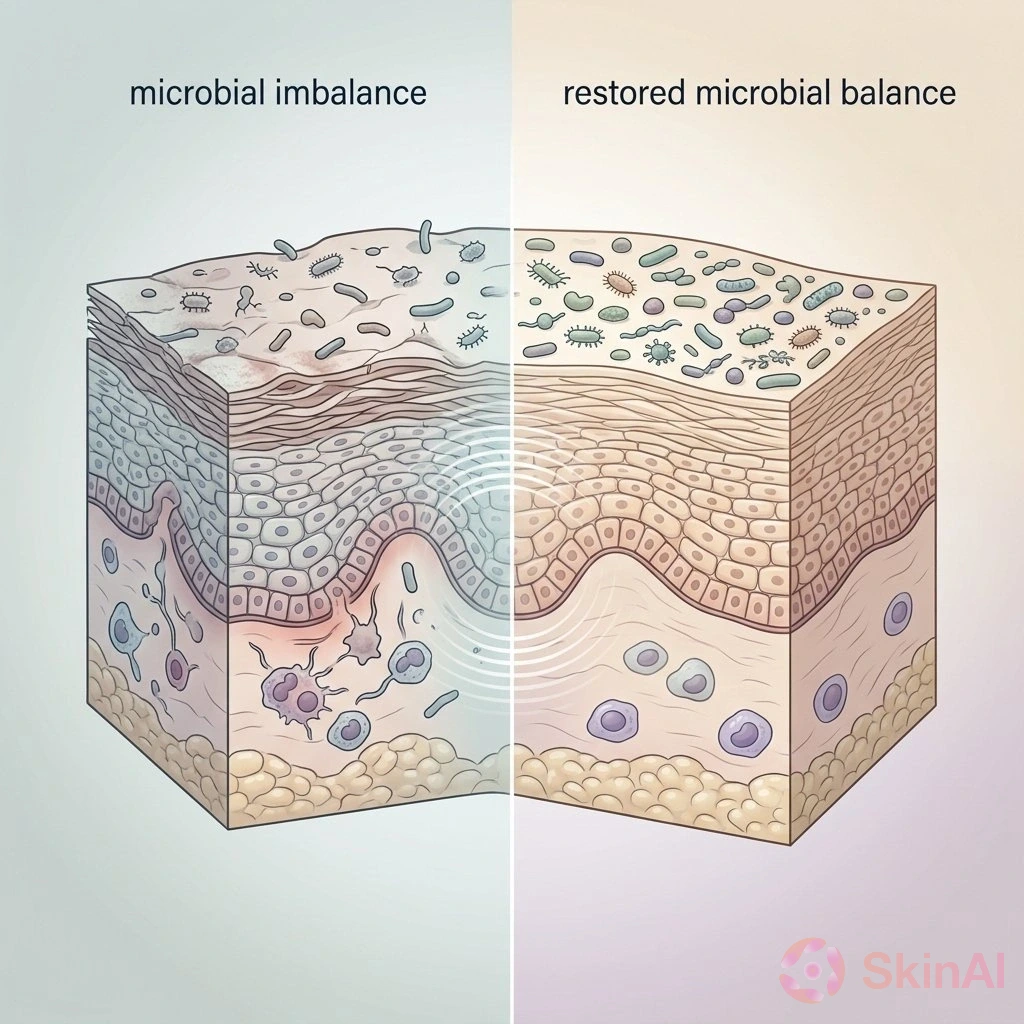
Your skin isn’t just a flat surface. It’s a living ecosystem where different microbes, skin cells, and your immune system all interact. When that ecosystem is in balance, your skin is more likely to look and feel healthy.
When the ecosystem gets out of balance — a state called dysbiosis — one type of microbe can grow too much and trigger inflammation or other problems. Researchers are finding that many common inflammatory skin issues tie back to this kind of imbalance. (Source: Signum Biosciences)
Why this matters for everyday skincare
For years, many acne and skin treatments used a “kill everything” approach: strong cleansers, harsh antibacterials, and powerful spot treatments that reduce microbes indiscriminately. While those can work short-term, they can also disrupt the skin’s natural community when overused.
Now, there’s growing interest in products and treatments that help restore and maintain microbial balance rather than wipe it out. That shift aims to support healthier, longer-lasting skin, not just treat symptoms for a while. (Source: Signum Biosciences)
How Signum’s approach differs
Signum says it develops both medical dermatology treatments and skin care technologies using lab research that focuses on inflammatory skin disease and microbiome balance. The company looks at how to calm inflammation and nudge the microbial community back toward a healthy mix. (Source: Signum Biosciences)
Instead of blasting microbes with aggressive agents like benzoyl peroxide (which can be useful but is broad and can disturb the microbiome), their goal is to reduce the microbes that cause problems while leaving beneficial ones in place.
What is TCP and how does it work?
TCP is Signum’s proprietary molecule and is part of a family called isoprenyl cysteine analogs (IPCs). These molecules are designed to do two things at once: calm inflammation and encourage a healthier microbial balance. (Source: Signum Biosciences)
To explain the biology simply: our skin’s immune system uses sensors to notice trouble. One of these sensors is called toll-like receptor 2 (TLR2), and when it gets overactive it can promote inflammation. IPCs are designed to dial down that overactive signaling. They also lower certain inflammatory messengers, like IL-8 and IL-1 alpha, which are chemicals the body makes that increase redness and swelling. In plain language, TCP aims to reduce the “fire” of inflammation while helping the microbial community rebalance. (Source: Signum Biosciences)
What the research shows so far
Signum points to published research that ranges from lab studies explaining how TCP works to human clinical testing in people with acne-prone skin. Those studies reported improvements in skin clarity and balance while using a gentler formulation compared with aggressive microbe-killing approaches. (Source: Signum Biosciences)
That said, results can vary between people, and more independent research will continue to clarify how these kinds of treatments perform across different skin types and conditions.
When to see a doctor
If you have persistent acne, painful or spreading redness, sore bumps, or scarring, it’s a good idea to see a dermatologist. They can help determine whether a topical product, prescription medicine, or a combination of approaches is best for your skin.
Also see a doctor if an at-home treatment causes worsening irritation, severe allergic reactions, or any signs of infection.
Short disclaimer
This article explains research and company-reported findings in plain language and is for informational purposes only. It is not medical advice. Talk with a healthcare professional before starting new treatments or if you have concerns about your skin.
Sources
- Signum Biosciences
- Epicutis Skincare