
New Phase 3 Results Elevate Oral TYK2 Inhibitors in Psoriasis Treatment
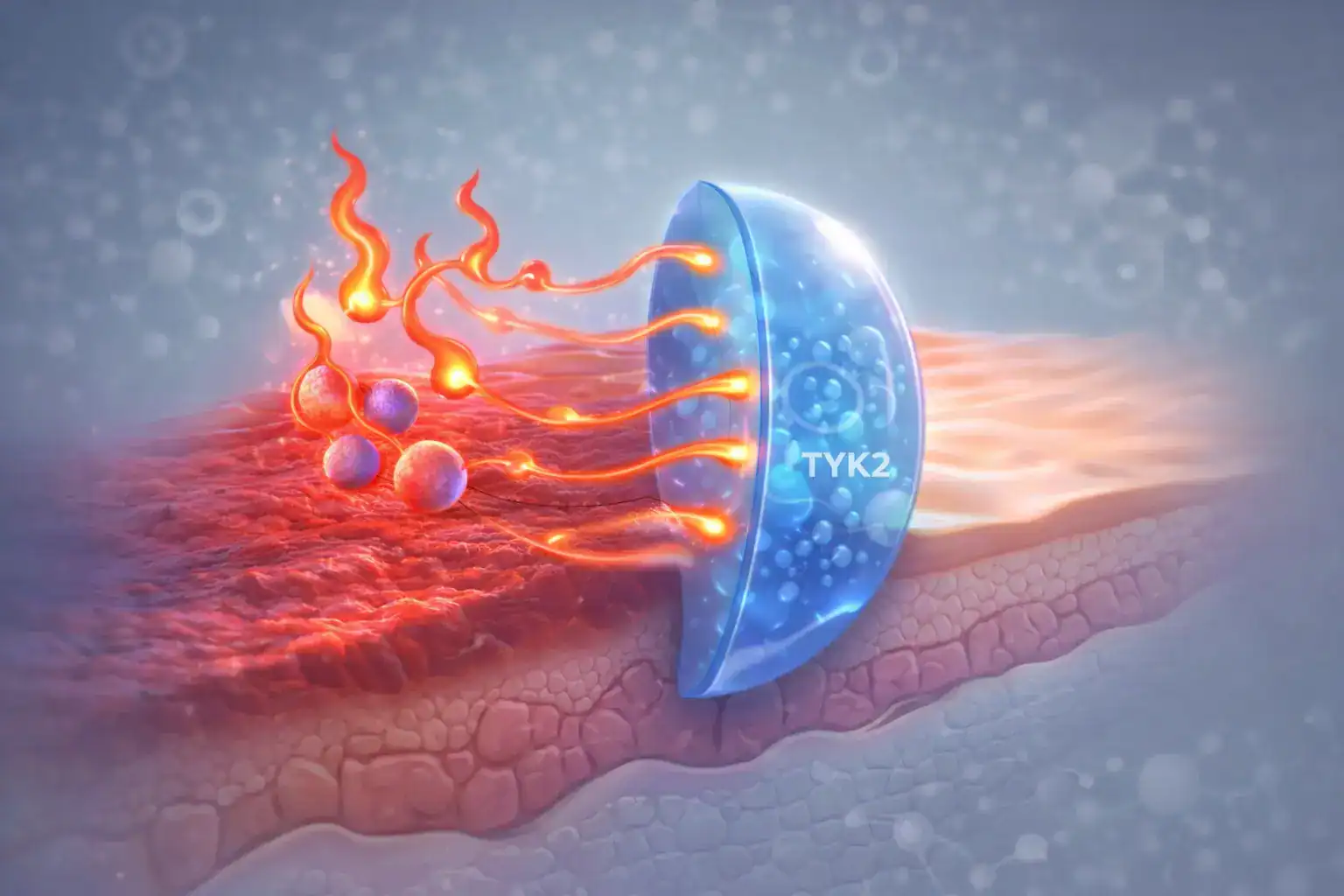
Advancements in Psoriasis Treatment: The Rise of Zasocitinib
The landscape of psoriasis treatment has undergone significant transformation with the introduction of biologic therapies that specifically target tumor necrosis factor, IL-17, and IL-23. These therapies have established remarkably high standards for achieving skin clearance in psoriasis patients. In contrast, traditional oral systemic agents have often been perceived as less effective, primarily due to concerns regarding tolerability (Source: Takeda press release, Phase 3 results). The recent development of selective tyrosine kinase 2 (TYK2) inhibitors has sparked considerable enthusiasm among healthcare professionals who are in search of oral alternatives that can match the efficacy of biologics.
Introduction of Zasocitinib
Takeda’s recent disclosure of promising top-line results from phase 3 clinical trials for zasocitinib (TAK-279) positions this investigational treatment at the forefront of the ongoing discussion regarding advanced psoriasis therapies (Source: Takeda press release). The clinical evaluation of zasocitinib was conducted across two large, global, randomized, double-blind phase 3 trials involving adults diagnosed with moderate to severe plaque psoriasis.
Study Design and Outcomes
Both trials were rigorously controlled, employing both placebo and active comparator designs, with apremilast serving as the oral comparator. Takeda reported that the trials successfully met their co-primary endpoints: the Psoriasis Area and Severity Index (PASI) 75 and the static Physician Global Assessment (sPGA) 0/1 by week 16.
Notably, all 44 ranked secondary endpoints were also achieved, which included more stringent response metrics such as PASI 90, PASI 100, and sPGA 0 when compared to both placebo and apremilast. “As we approach the end of 2025 and step into 2026, the dermatology field is entering a noteworthy phase,” remarked Christopher G. Bunick, MD, PhD, associate professor of dermatology at Yale School of Medicine and editor-in-chief of Dermatology Times. “The results from the long-anticipated phase 3 clinical trials for the next-generation TYK2 inhibitor, zasocitinib, are impressive. This oral therapy has achieved PASI 90 in over 50% of participants by week 16 and PASI 100 in approximately 30% of patients by the same time point.”
Early Efficacy Signals
While comprehensive data sets are still pending presentation, Takeda has shared several promising efficacy indicators likely to resonate with dermatologists in practice. By week 16, around 50% of patients receiving zasocitinib attained PASI 90, indicating clear or nearly clear skin, while about 30% achieved PASI 100, reflecting complete clearance. Early responses were apparent, with a notable superiority in PASI 75 compared to placebo evident as early as week 4, with improvements continuing through week 24.
Safety and Tolerability Profile
Safety remains a paramount concern, especially considering the broader class issues associated with Janus kinase (JAK) inhibition. Zasocitinib is engineered to selectively inhibit TYK2, sparing JAK1, JAK2, and JAK3 signaling pathways, a distinction that could be clinically significant (Source: Takeda press release). Throughout the phase 3 psoriasis program, the safety profile observed through week 24 aligned with findings from previous studies, including earlier phase 2 trials.
In an interview, Graham Heap, PhD, vice president and head of the TYK2 franchise at Takeda, noted, “The safety profile we encountered was consistent with our prior trials, and we did not identify any new safety signals, which is encouraging.” Although this information is reassuring, long-term safety data will be crucial as TYK2 inhibitors are increasingly integrated into treatment protocols.
Clinical Implications and Patient Access
Beyond efficacy and safety, factors such as access and patient preference play a crucial role in influencing treatment choices in real-world settings. Despite the availability of highly effective biologics, only a small percentage of patients with moderate to severe psoriasis currently benefit from advanced systemic therapies.
Oral targeted agents like zasocitinib have the potential to bridge this gap, particularly for individuals hesitant to begin injectable treatments or for those facing logistical challenges with in-office administration. Heap emphasized this unmet need, stating, “Both patients and physicians have expressed the desire for convenient, safe, and effective oral therapies. Currently, about one-third of patients with moderate to severe psoriasis have access to advanced therapies.” He further added that while the data remains preliminary, “we believe the findings are very promising and indicate that zasocitinib could emerge as one of the leading oral therapies in the future.”
Conclusion
The phase 3 results for zasocitinib foster a sense of optimism along with critical inquiries for clinicians. The compelling top-line efficacy signals, particularly for an oral agent, are noteworthy; however, thorough examination of the complete data sets will be essential for determining how this therapy measures up against existing and forthcoming treatment options across diverse patient demographics.
Long-term safety, response durability, and real-world effectiveness will ultimately dictate zasocitinib’s role in clinical practice. As Heap concluded, “The promise of TYK2 began long ago, and the data we are now beginning to share are very encouraging. This suggests that it could indeed become a leading option for patients if approved.” For the time being, zasocitinib remains a closely monitored candidate in the evolving sphere of psoriasis care, potentially redefining the capabilities of oral targeted therapies.
Sources
- Takeda’s zasocitinib landmark phase 3 plaque psoriasis data show promise to deliver clear skin in a once-daily pill, catalyzing a new era of treatment.
- Potestio L, Tommasino N, D’Agostino M, et al. Biologics and small molecules for psoriasis: current and future progress. doi:10.7573/dic.2025-8-4