
This Month in Derm: April 2026 Podcasts
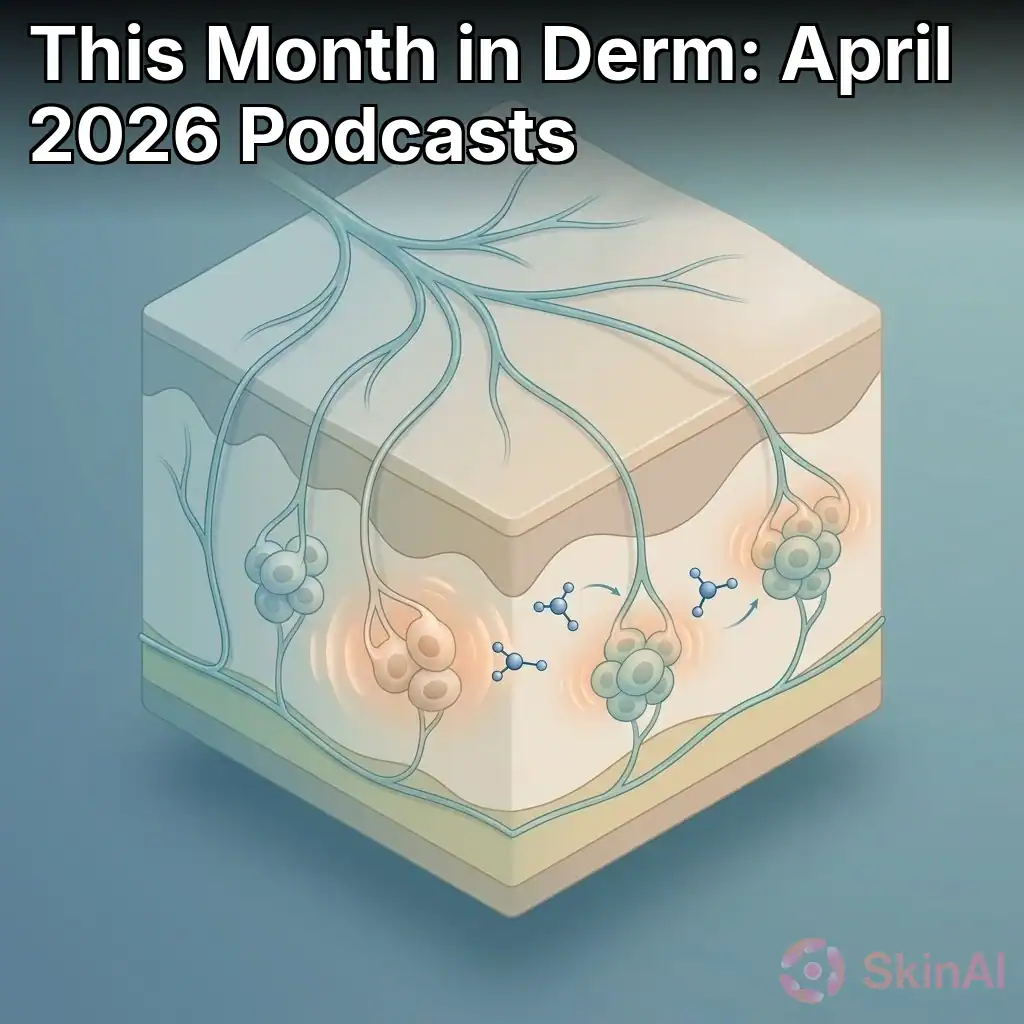
From psychodermatology to emerging systemic therapies and evolving pediatric care, this month’s podcasts spotlight the growing complexity—and opportunity—within dermatology. Across specialties, a common thread emerges: better outcomes depend on broader thinking, whether that means integrating mental health, reexamining long-held assumptions, or collaborating across disciplines.
Skin & Psych: The Rise of Psychodermatology Interest in psychodermatology continues to expand, as highlighted in a recent Skin & Psych episode featuring Mohammad Jafferany, MD. The discussion underscores the importance of recognizing the bidirectional relationship between skin disease and mental health, often described as the psychoneurocutaneous loop.
Practical tools like PHQ-9 and GAD-7 screening are emphasized as simple ways to bring psychological assessment into routine dermatologic care. With growing global collaboration and research, the field is moving toward a more integrated, patient-centered model—one that acknowledges both the physical and psychosocial burden of chronic skin disease.
MORE FROM OUR SISTER PUBLICATION PSYCHIATRIC TIMES GLP-1 Agonists: A New Frontier in Inflammatory Skin Disease? In this episode of The Cutaneous Connection, Daniel Walker, MD, explores the emerging role of GLP-1 receptor agonists beyond metabolic disease.
While still off-label in dermatology, early evidence suggests these agents may offer anti-inflammatory benefits in conditions like psoriasis and hidradenitis suppurativa. The conversation highlights the broader connection between skin disease and systemic health, particularly obesity and cardiovascular risk.
Although not a replacement for biologics, GLP-1 therapies may become valuable adjuncts—pointing to a future where dermatologic care increasingly intersects with whole-patient management. MORE ON GLP-1s Don’t Be Rash: A New Look at Pediatric Dermatology The debut episode of Don’t Be Rash takes a step back to examine pediatric dermatology as a whole—its evolution, defining breakthroughs, and ongoing clinical questions.
From the introduction of propranolol for infantile hemangiomas to the rise of biologics in atopic dermatitis and psoriasis, the field has undergone major shifts in treatment expectations. The episode also explores how innovation is adopted in practice, often shaped as much by mentorship and experience as by formal guidelines, and highlights emerging questions that continue to refine everyday care.
MORE ON PEDIATRICS Derm Dispatch: Bridging Allergy and Dermatology On Derm Dispatch, Zachary Rubin, MD, joins Renata Block, DMSc, PA-C, to tackle common misconceptions in atopic disease—particularly the role of food elimination in atopic dermatitis.
Evidence suggests dietary restriction alone rarely leads to meaningful improvement and may even carry risks, especially in children. The discussion also dives into the atopic march, the gut-lung-skin axis, and emerging therapies, while reinforcing the importance of patient education and cross-specialty collaboration in managing complex allergic disease.
MORE FROM DERMATOLOGY TIMES NP/PA CONNECT The Bottom Line This month’s conversations reflect a dermatology landscape that is increasingly interdisciplinary, data-driven, and patient-centered—where treating the skin often means thinking far beyond it.
Like our podcasts, have suggestions, or want to participate in future episodes? Contact our team at DTEditor@mmhgroup.com.