
Topical QTORIN Rapamycin Cuts Bleeding in Cutaneous Venous Malformations
New skin treatment may cut bleeding from rare venous birthmarks — early trial results
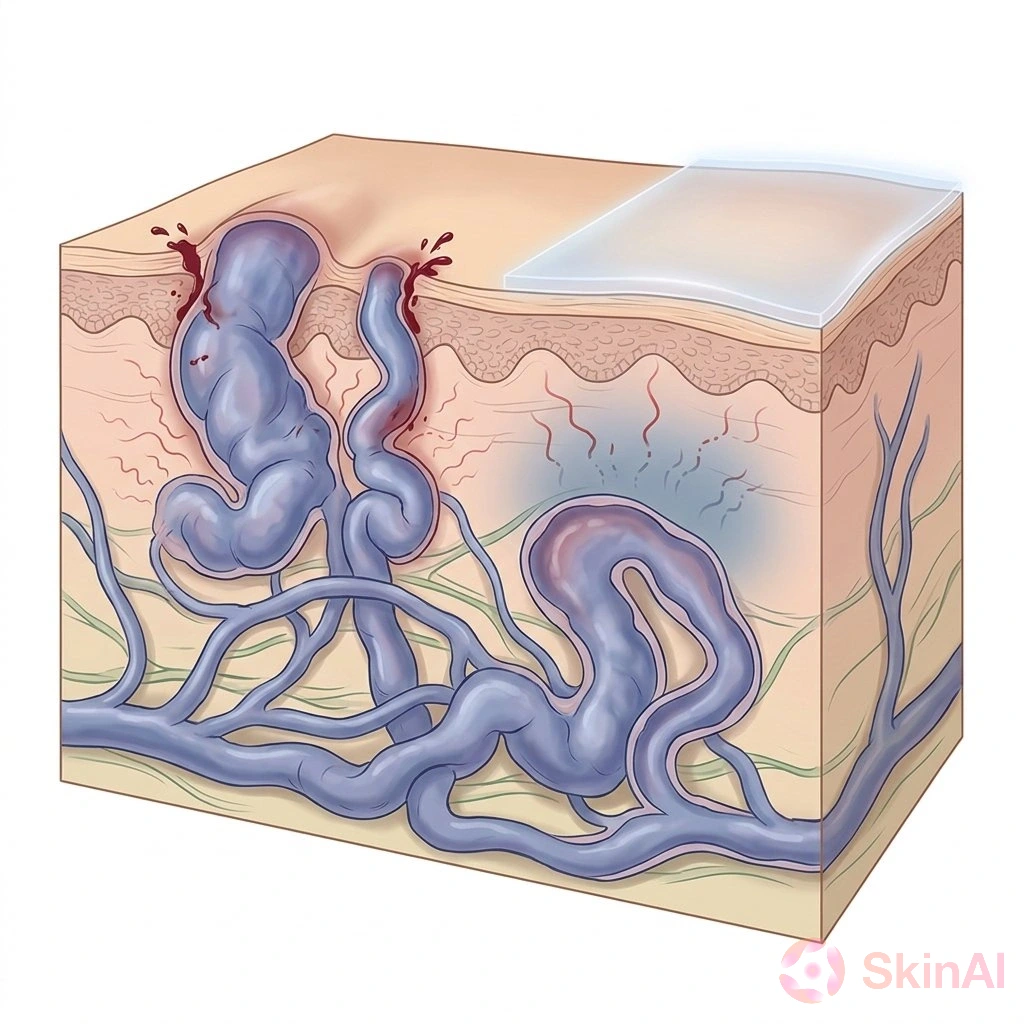
If you or a loved one has a visible, bluish, sometimes painful vascular lesion on the skin, you may be familiar with cutaneous venous malformations. These are uncommon collections of abnormal veins in or under the skin that can cause swelling, pain, discoloration and sometimes repeated bleeding or leaking. There are currently no FDA-approved medicines made specifically for these lesions, so new research is of interest to people living with them.
What the study looked at
Palvella Therapeutics reported new results from a Phase 2 trial called TOIVA testing a once-daily gel form of QTORIN rapamycin, a medicine applied to the skin. The study ran an initial 12-week treatment period to look for benefit, followed by a 12-week extension. The trial was single-arm and open-label, meaning every participant used the gel and both patients and study teams knew what was being used. (Source: Palvella Therapeutics, TOIVA study press release)
The trial enrolled people with cutaneous venous malformations and collected both doctor-assessed and patient-reported outcomes to see whether the gel changed bleeding, appearance, size, pain and daily functioning. Earlier topline results from December 2025 were also reported by the company. (Source: Palvella Therapeutics press release)
Key findings in plain language
Among the people in the trial who were bleeding from their lesion when the study began, all showed improvement in bleeding by week 12. Doctors used a seven-point scale that ranges from “Very Much Worse” to “Very Much Improved.” In this small subgroup (four people), the average improvement was 2.5 points on that scale at 12 weeks, a change the study reported as statistically significant (p = 0.003). At week 12, every person in that group was rated either “Much Improved” or “Very Much Improved” for bleeding. (Source: Palvella Therapeutics, TOIVA study press release)
Patients also reported being satisfied with the treatment. In the same subgroup of people who had bleeding at the start, all said they were either “satisfied” or “very satisfied” with the treatment at week 12.
The company also reported improvements in how lesions looked and their height in many participants, and researchers said clinical improvements tracked with patient-reported benefits like less pain or better daily functioning. (Source: Palvella Therapeutics, TOIVA study press release)
What patients told researchers
Alongside the main trial, the team did a qualitative interview substudy to hear directly from patients about what matters to them. This used the FDA’s Patient-Focused Drug Development approach to capture symptoms and goals that are most important to patients. Participants described a range of concerns beyond what a doctor sees on exam, including:
- bluish skin discoloration and visible protrusions
- swelling, pain or discomfort, and episodes of bleeding or leakage
- limits on physical activity and problems at work or school
- social and emotional distress related to how the lesion looks
People said the most meaningful treatment goals were improving appearance, reducing pain, and shrinking the lesion. The interviews highlighted that what patients care about may not always match standard clinical severity scales, which is why patient-reported outcomes were included in the study. (Source: Palvella Therapeutics, TOIVA study press release)
What this does and does not show
These results suggest that topical QTORIN rapamycin may help reduce bleeding and improve some patient-reported measures in people with cutaneous venous malformations. The findings were presented at the 83rd Annual Meeting of the Society for Investigative Dermatology in Chicago. (Source: Palvella Therapeutics press release)
It’s important to remember the trial was small and had no placebo or comparison group. It was also open-label and led by the company developing the medication. Those facts mean the results are encouraging but preliminary. Larger, controlled studies will be needed to confirm benefit and safety before any treatment could be considered a standard option. The product is not FDA-approved for this use. (Source: Palvella Therapeutics press release)
What’s next
Palvella says it is also studying QTORIN rapamycin for other rare skin and lymphatic conditions, and a related product for a different skin disorder. Both investigational products are not yet approved by the FDA. The company reports the TOIVA results as supportive of further development, but more research is needed to know how well and for whom the treatment works. (Source: Palvella Therapeutics press release)
When to see a doctor
If you have a skin lesion that bleeds, grows quickly, becomes infected, causes increasing pain, or interferes with daily life, see a healthcare provider. Changes in color, size, or surface texture should be checked. Talk with a dermatologist or vascular anomalies specialist about treatment options and whether clinical trials might be appropriate for you.
If you want to keep an eye on a visible lesion, a simple, short record of photos over time can help you notice changes and be prepared to show your doctor. This can be useful information during an appointment.
Disclaimer
This article summarizes company-reported findings from a Phase 2 clinical trial and does not offer medical advice. If you have questions about diagnosis or treatment, speak with your healthcare provider. For serious symptoms such as heavy bleeding, signs of infection, or rapid growth, seek care promptly.
Sources
- Palvella Therapeutics Announces New Data from the Phase 2 TOIVA Trial of QTORIN™ Rapamycin in Cutaneous Venous Malformations Presented at the 83rd Annual Meeting of the Society for Investigative Dermatology. Published May 15, 2026. Accessed May 15, 2026. (Source: Palvella Therapeutics, press release) https://www.globenewswire.com/news-release/2026/05/15/3295760/0/en/palvella-therapeutics-announces-new-data-from-the-phase-2-toiva-trial-of-qtorin-rapamycin-in-cutaneous-venous-malformations-presented-at-the-83rd-annual-meeting-of-the-society-for-.html
- Palvella Therapeutics Announces Positive Topline Results from Phase 2 TOIVA Clinical Trial of QTORIN™ 3.9% Rapamycin Anhydrous Gel (QTORIN™ rapamycin) for the Treatment of Cutaneous Venous Malformations, a Serious, Rare Genetic Disease with No FDA-approved Therapies. Palvella Therapeutics. Published December 15, 2025. Accessed May 15, 2026. (Source: Palvella Therapeutics, press release) https://ir.palvellatx.com/news-releases/news-release-details/palvella-therapeutics-announces-positive-topline-results-phase-0