
Breaking Atopic Dermatitis Myths: How Allergy Insights Improve Skin Care
The Cutaneous Connection: Debunking Allergy Myths and the Future of Atopic Dermatitis Treatment
In a recent conversation between host Renata Block, DMSc, MMS, PA-C, and allergist and author Zachary Rubin, MD, the crossroads of allergy and dermatology took center stage.
Their discussion explored common misconceptions, the immune links between skin and other organ systems, and new therapies that are reshaping how clinicians think about atopic dermatitis and related allergic diseases.
Why this cross-specialty conversation matters
Dermatologists and allergists often see overlapping patients: children and adults with chronic eczema who also have food sensitivities, nasal allergies, or asthma.
Rubin emphasized that bringing both perspectives together helps clinicians and families understand the broader immune picture, so care plans are safer, more targeted, and more likely to improve quality of life.
Food elimination and atopic dermatitis: separating myth from evidence
One of the most persistent ideas Rubin and Block addressed is the belief that strict food elimination diets will cure or substantially improve eczema.
Parents and patients commonly suspect a food trigger when eczema flares, and in some cases an offending food does exist — but the evidence shows that broad dietary removal rarely produces meaningful skin improvement for most people with atopic dermatitis. (Source: Cochrane review, dietary exclusions for atopic eczema)
Importantly, several landmark trials have shown that early, regular introduction of allergenic foods can reduce the chance of developing a true food allergy later on, rather than increase it.
Two large, well-known studies illustrated this principle: the LEAP trial for peanut and the EAT study evaluating multiple allergens; both support early introduction to lower long‑term allergy risk. (Source: Learning Early About Peanut Allergy [LEAP] trial, N Engl J Med; EAT Study Group, Lancet)
Conversely, unnecessary avoidance may raise the risk of developing food allergy by preventing immune tolerance from forming during early life — a nuance that often surprises families who assume avoidance is protective. (Source: LEAP trial; EAT Study Group)
How to approach food concerns in practice
Rubin recommended a measured approach: evaluate for true IgE‑mediated allergy with history and testing when warranted, but avoid broad, prolonged elimination diets unless clear, reproducible reactions justify them.
For families worried about foods and eczema, thoughtful counseling, targeted testing, and, when needed, referral to an allergist for supervised oral food challenges are safer than informal elimination at home.
The atopic march: one immune thread through many organs
Rubin explained the concept of the atopic march — the typical progression from infantile eczema to food allergy, allergic rhinitis, and later asthma in many patients.
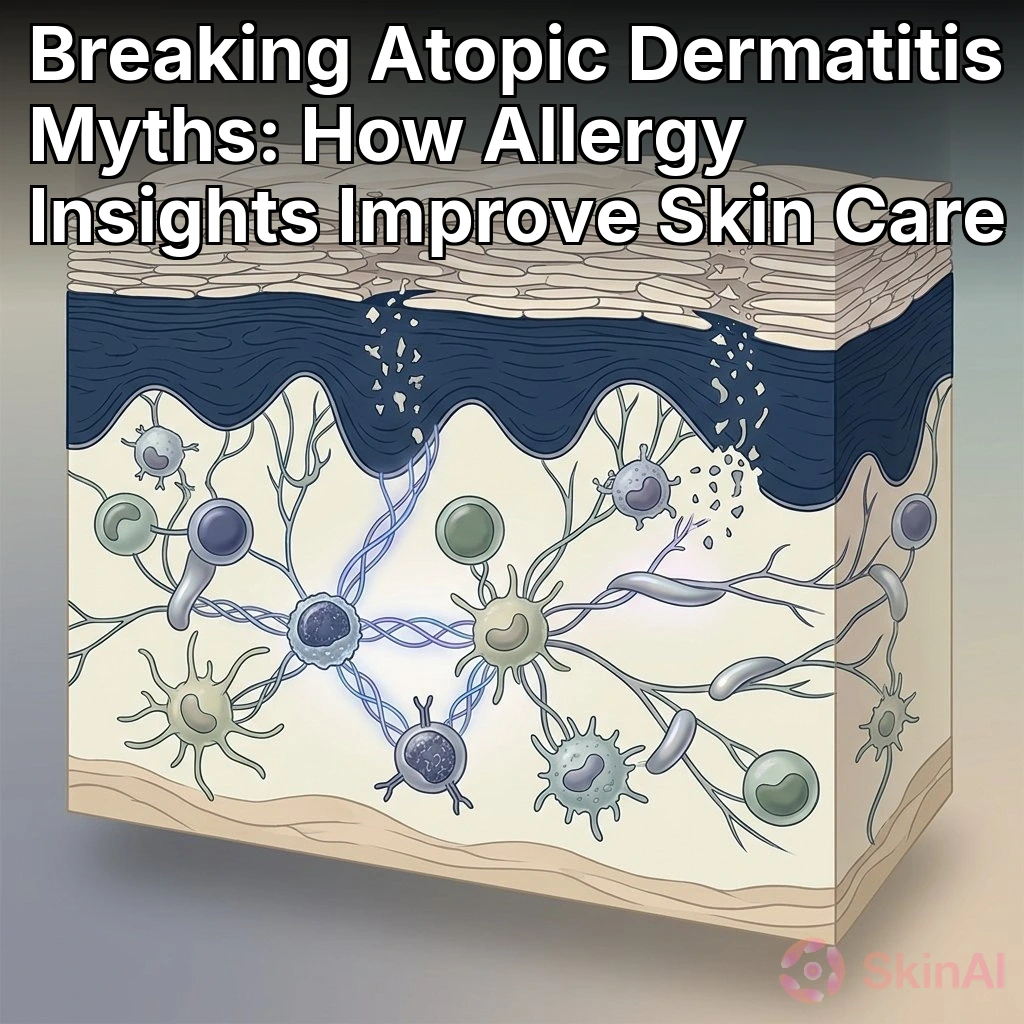
This pattern is driven largely by a Th2‑skewed immune response that promotes production of IgE antibodies and inflammation not only in the skin, but also in the gut, nose, and lungs. Understanding that trajectory helps clinicians anticipate and prevent downstream problems. (Source: American Academy of Allergy, Asthma & Immunology review on the atopic march)
Seeing eczema as a possible early sign of systemic allergic vulnerability empowers families to work with clinicians proactively — for example, monitoring for respiratory symptoms, being judicious about allergy testing, and discussing early introduction of allergenic foods when appropriate.
Emerging and expanding treatments: what’s on the horizon
Rubin highlighted several therapeutic advances that are changing the landscape for people with severe eczema and related allergic disease.
JAK inhibitors have expanded rapidly as treatment options for atopic dermatitis; drugs such as upadacitinib and abrocitinib are now FDA‑approved for moderate‑to‑severe disease in certain populations and offer oral alternatives to biologics for some patients. (Source: U.S. Food and Drug Administration approvals for upadacitinib and abrocitinib)
Beyond JAK inhibitors, the anti‑IgE monoclonal antibody omalizumab (Xolair) is being evaluated more broadly in food allergy settings, including studies that pair omalizumab with oral immunotherapy to improve safety and success rates for desensitization. These studies suggest a role for targeted biologic therapy in making food desensitization safer for select patients. (Source: ClinicalTrials.gov, omalizumab and food allergy trials)
Rubin also mentioned early‑phase work looking at agents that deplete or alter IgE‑producing plasma cells as a possible route to durable remission of food allergy; one example discussed during the interview was a pilot trial of linvoseltamab in severe eczema patients as an exploratory strategy to impact IgE biology. Because this approach is experimental, it’s currently being evaluated in small or early‑phase trials. (Source: Derm Dispatch interview with Zachary Rubin, video episode; ClinicalTrials.gov where available)
What this means for patients
These advances don’t mean every patient with eczema needs aggressive systemic therapy.
But for those with severe, refractory disease or overlapping allergic conditions, the growing number of targeted options — from topical and biologic agents to orally administered JAK inhibitors — means clinicians can tailor treatment more precisely to disease mechanisms and patient priorities. (Source: FDA drug information pages)
Indolent systemic mastocytosis: underrecognized but important
The conversation also touched on indolent systemic mastocytosis, a form of mast cell disorder that can present with broad, nonspecific symptoms such as flushing, itching, GI upset, and anaphylaxis in some cases.
Rubin noted that mastocytosis is often underrecognized in both allergy and dermatology clinics because its symptoms can overlap with more common conditions; raising suspicion and making timely referrals for hematology or specialized testing can change management for affected patients. (Source: European Competence Network on Mastocytosis, clinical reviews)
Myths about hypoallergenic dog breeds
A perennial question in clinics is whether any dog breed is truly hypoallergenic.
Rubin reiterated the consensus from allergy societies: no dog breed is guaranteed to be non‑allergenic for everyone, because allergic reactions are commonly triggered by dander, saliva, and urine proteins — all of which are present across breeds. Families should be cautious of breed‑based promises and consider supervised exposure before adoption if allergy is a concern. (Source: American College of Allergy, Asthma & Immunology position statements)
Practical takeaways for patients and clinicians
Cross‑specialty communication matters: dermatologists, allergists, and primary care clinicians benefit patients when they share perspectives on testing strategies, dietary decisions, and systemic therapies.
Avoid broad elimination diets unless there is a clear medical indication; consider targeted testing and allergy specialist referral for suspected IgE‑mediated reactions. (Source: Cochrane review; LEAP and EAT trials)
Recognize the atopic march as a useful framework for anticipatory guidance — early eczema may warrant counseling about food introduction and monitoring for allergic airway disease. (Source: AAAAI review)
Finally, keep an eye on novel therapies and clinical trials. For patients with severe or refractory disease, referral to a center that offers access to advanced biologics, JAK inhibitors, or clinical trials may be appropriate. (Source: U.S. FDA; ClinicalTrials.gov)
Want to follow up or participate?
If you have suggestions for future discussions or are interested in participating in upcoming episodes or interviews, you can contact the production team at [email protected].
Sources
- Learning Early About Peanut Allergy (LEAP) trial — N Engl J Med (LEAP Study)
- EAT Study Group — Enquiring About Tolerance (EAT) study, Lancet
- Cochrane review on dietary exclusions for atopic eczema (Cochrane Database of Systematic Reviews)
- U.S. Food and Drug Administration — approval information for upadacitinib (Rinvoq) for atopic dermatitis
- U.S. Food and Drug Administration — approval information for abrocitinib (Cibinqo) for atopic dermatitis
- ClinicalTrials.gov — listing(s) for omalizumab in food allergy and related trials
- Derm Dispatch interview with Zachary Rubin, MD (video episode discussing linvoseltamab and other investigational approaches)
- European Competence Network on Mastocytosis — clinical reviews and consensus statements on mastocytosis
- American College of Allergy, Asthma & Immunology — guidance on pet allergies and hypoallergenic breeds