
Corabotase Demonstrates Sustained Efficacy and High Patient Satisfaction in Phase 2 Glabellar Lines Study
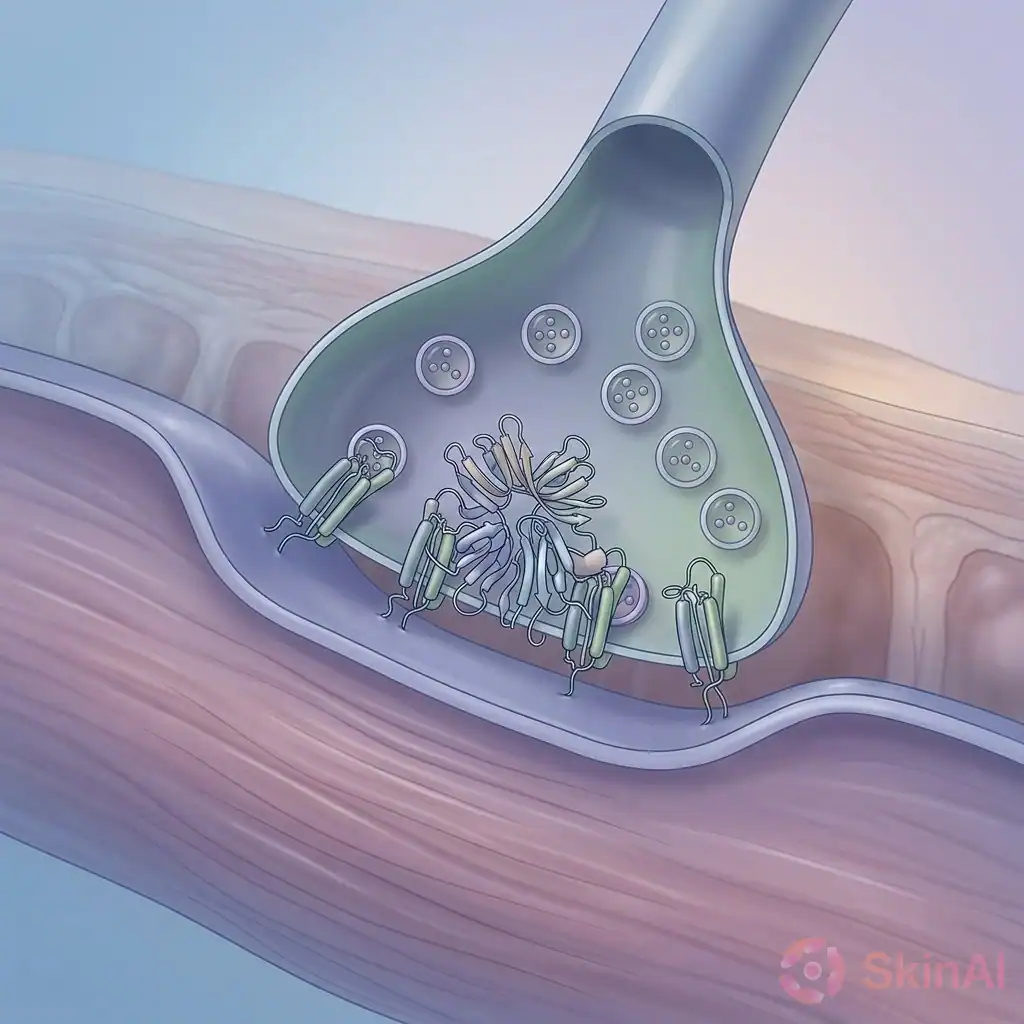
Ipsen recently announced new phase 2 data showing that its investigational recombinant neuroinhibitor corabotase may have a prolonged effect in moderate to severe glabellar lines.1 The findings, presented in a late-breaking session at the 2026 SCALE Symposium in Nashville, Tennessee, showed that 60.8% of patients receiving corabotase 50 ng had an investigator-rated glabellar line severity score of none or mild at week 24, compared with 36.7% for abobotulinumtoxinA (Dysport; Ispen) and 0.2% for placebo.1 “Corabotase is a cutting-edge, rationally engineered recombinant neuroinhibitor that combines an active catalytic domain (from botulinum toxin type A) with a much stronger binding domain (from botulinum toxin type B) to enable advantages over naturally occurring botulinum toxins.
Those advantages may be increased or optimized receptor affinity, uptake into target cells, and resistance to degradation,” said Christopher Bunick, MD, PhD, associate professor of dermatology at Yale School of Medicine and Dermatology Times editor in chief, in an exclusive statement.
Results The results come from stage 1 of the phase 1/2 LANTIC program evaluating corabotase across upper facial lines. Ipsen said the proof-of-concept glabellar analysis was based on 183 patients from step 3 of stage 1, within a larger trial enrolling 727 participants across glabellar, forehead, and lateral canthal lines.
In the reported glabellar cohort, the primary end point was a composite response at week 4, defined as at least a 2-grade improvement. Ipsen reported that 66.0% of patients treated with corabotase 50 ng met that end point compared with 0% of patients given placebo (P=.0001); the company also reported a 54.3% response rate for Dysport.1 Beyond the primary end point, Ipsen highlighted durability and patient-reported outcomes.
The company stated that onset of action with corabotase 50 ng was 0.84 days and that 82.8% of treated patients were satisfied or very satisfied on the Subject Level of Satisfaction scale at week 24. The data also showed corabotase continued to show greater line-severity response than Dysport at week 36, although no detailed statistical analysis for that time point was included in the release.1 “The recent phase 2 data investigating corabotase in moderate to severe glabellar lines shows a remarkably quick onset of action, magnitude of response (66% of patients with 2 grade or more improvement compared to zero for placebo at week 4), and duration of response through week 24,” Bunick said.
Safety According to the data, corabotase was “well-tolerated” in stage 1 and the adverse event frequency was comparable across corabotase, Dysport, and placebo arms, with no significant safety concerns reported across evaluated doses.
However, the release did not provide event rates, specific adverse events, discontinuations, or immunogenicity findings, all of which will be important for clinicians assessing the relevance of a longer-acting neuromodulator.
Future Outlook Glabellar lines are a well-established indication for botulinum toxin products, including onabotulinumtoxinA (Botox; AbbVie), abobotulinumtoxinA, incobotulinumtoxinA (Xeomin; Merz Aesthetics), and daxibotulinumtoxinA-lanm (Daxxify; Revance Therapeutics).2-4 Future data may explore whether a new agent can offer meaningfully longer duration without added trade-offs in brow heaviness, asymmetry, ptosis, diffusion, or other adverse effects.
Daxxify, approved by the FDA for glabellar lines in 2022, entered the market with a duration-focused value proposition supported by phase 3 data.3,4 Corabotase appears to be aiming for a similar clinical niche, although it is earlier in development and uses a different engineered recombinant platform.1 “Consulting with patients and delving into the research landscape are both important parts of my role as a physician and throughout my experience, I’ve discussed the benefits that injectables can bring for overall appearances and the aging process,” said Martina Kerscher, MD, study presenter and professor of dermatology and head of cosmetic sciences at the University of Hamburg, in the news release.
“First data are encouraging for patients, based on the overall satisfaction results, and I look forward to following the corabotase journey.” Corabotase is described as a recombinant neuroinhibitor built from engineered catalytic and binding domains intended to increase receptor affinity, uptake, and resistance to degradation.
That proposed mechanism could plausibly support a longer duration of action, but whether those design features translate into clinically meaningful advantages will require fuller public data, including head-to-head methodology, dose selection rationale, and longer-term safety follow-up.1 Ispen reported that the 50-ng dose has been selected for phase 3 testing in the LAURITE program and that additional proof-of-concept data in forehead and lateral canthal lines are expected later this year.1 References Ipsen presents first-in-class late-breaking Phase II corabotase data in glabellar lines showing sustained duration of effect reinforced by consistently high patient satisfaction.
Accessed May 18, 2026. https://www.ipsen.com/press-release/ipsen-presents-first-in-class-late-breaking-phase-ii-corabotase-data-in-glabellar-lines-showing-sustained-duration-of-effect-reinforced-by-consistently-high-patient-satisfaction-3296217/ Sundaram H, Signorini M, Liew S, et al.
Global aesthetics consensus: botulinum toxin type A—evidence-based review, emerging concepts, and consensus recommendations for aesthetic use, including updates on complications. 2016;137(3):518e-529e.
doi:10.1097/01.prs.0000475758.63709.23 Daxxify (daxibotulinumtoxinA-lanm) prescribing information. US Food and Drug Administration. Accessed May 18, 2026. https://www.accessdata.fda.gov/drugsatfda_docs/label/2022/761127s000lbl.pdf Solish N, Burgess CM, Weinkle SH, et al.
Efficacy and safety of daxibotulinumtoxinA for injection in the treatment of glabellar lines by age and race: subgroup analysis of the SAKURA clinical trials. doi:10.1093/asj/sjac246