
Exploring BDCA2 Inhibition: A New Hope for Cutaneous Lupus Treatment
Exploring Therapeutic Gaps in Cutaneous Lupus Erythematosus: Insights from Dr. Victoria Werth
Dr. Victoria Werth, a distinguished professor of Dermatology and Medicine at the University of Pennsylvania and the Chief of Dermatology at the Philadelphia VA Medical Center, recently shared her insights on the persistent therapeutic challenges associated with cutaneous lupus erythematosus (CLE). In her discussion, she highlighted the promising potential of litifilimab, an investigational therapy targeting BDCA2.
Challenges in Current Treatment Approaches
Dr. Werth pointed out that despite years of clinical experience in managing CLE, advancements in treatment options have remained stagnant. Many of the therapies currently employed, including topical and systemic corticosteroids and hydroxychloroquine, were established based on historical precedent rather than through rigorous contemporary clinical trials.
While hydroxychloroquine is still regarded as the first-line treatment, Dr. Werth noted that only approximately half of the patients achieve satisfactory disease control. For those who do not respond adequately, there is often a need to escalate treatment to systemic immunosuppressants such as methotrexate or mycophenolate mofetil. These options come with significant risks, including increased susceptibility to infections, potential malignancy, and the necessity for ongoing laboratory monitoring.
Moreover, alternatives that are considered to be safer during pregnancy, like azathioprine, frequently exhibit limited effectiveness for managing the cutaneous symptoms of lupus. Consequently, patients often find themselves in a dilemma between achieving suboptimal control of their condition and the possibility of enduring the side effects associated with more toxic medications.
The Need for Innovative Treatments
“This is a field that is really young and desperately needs new treatments,” Dr. Werth stated. She expressed optimism about the potential of litifilimab, suggesting that it may fill a crucial gap in available therapies, potentially offering rapid and safer options compared to those currently in use.
Mechanism of Action of Litifilimab
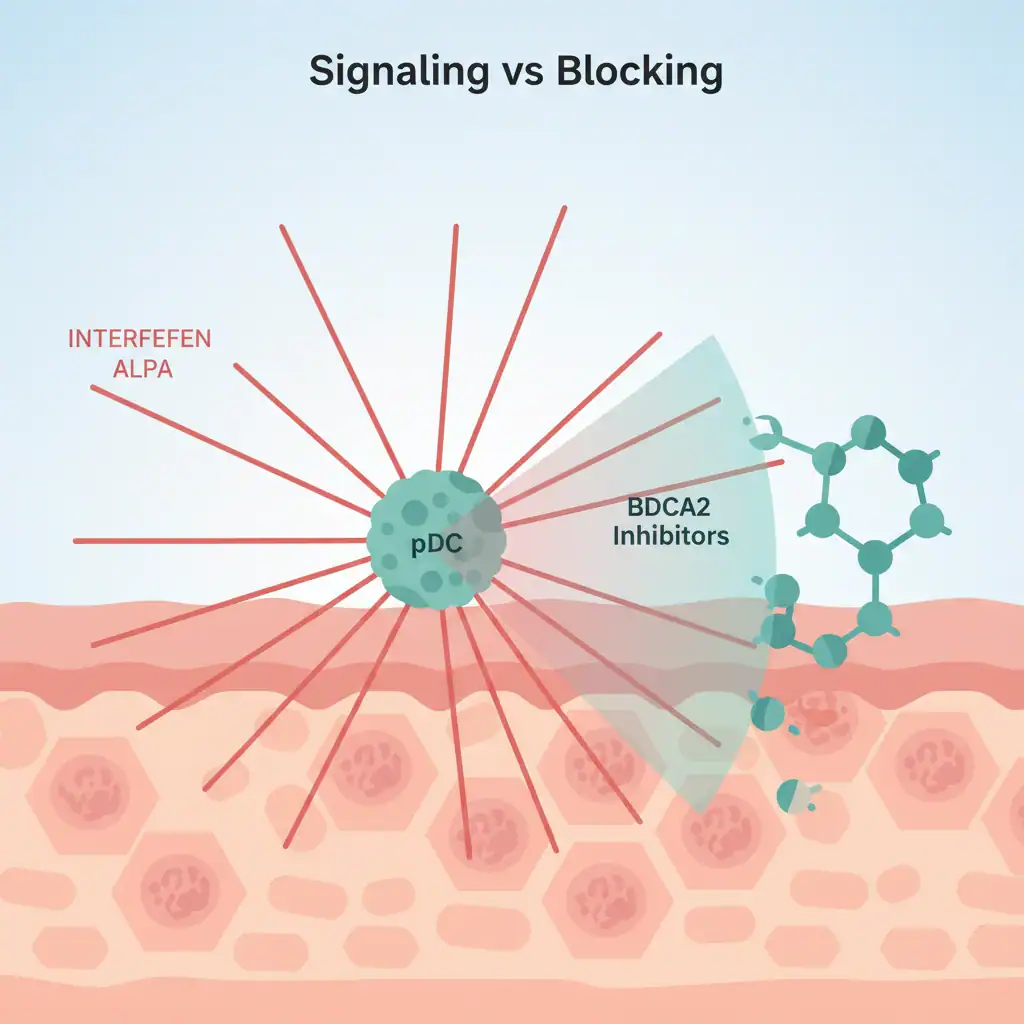
Litifilimab operates through a unique immunological mechanism that sets it apart from many existing and emerging treatment modalities. This investigational drug specifically inhibits blood dendritic cell antigen 2 (BDCA2) on plasmacytoid dendritic cells (pDCs), which are pivotal in the production of type I interferons—a key player in the pathogenesis of CLE.
By targeting the source of interferon production, BDCA2 inhibition modulates a central inflammatory pathway instead of broadly suppressing the immune system. Dr. Werth emphasized that this approach is distinct from conventional therapies that primarily focus on blocking cytokine receptors or downstream signaling pathways.
Potential Advantages of BDCA2 Inhibition
By targeting interferon production at an earlier stage, it is possible to diminish the inflammatory triggers of skin disease while potentially sidestepping some of the adverse effects associated with generalized immunosuppression. Dr. Werth also proposed that modulation at the level of pDC activity could provide advantages in disease management without prompting significant rebound effects if treatment is halted, although comparative data will be essential to validate these hypotheses.
Conclusion
In summary, the inhibition of BDCA2 represents a strategically targeted approach that corresponds with the evolving comprehension of interferon biology in cutaneous lupus erythematosus. This innovative therapy may significantly broaden the therapeutic options available for patients who currently struggle with inadequately controlled disease.
Sources
- University of Pennsylvania, Department of Dermatology, Expert Interview with Dr. Victoria Werth
- Clinical Trials.gov, Litifilimab Study Protocols
- American College of Rheumatology, Guidelines on Lupus Management