
How Dermatologists Navigate Dermocosmetic Labels and Ingredient Complexity
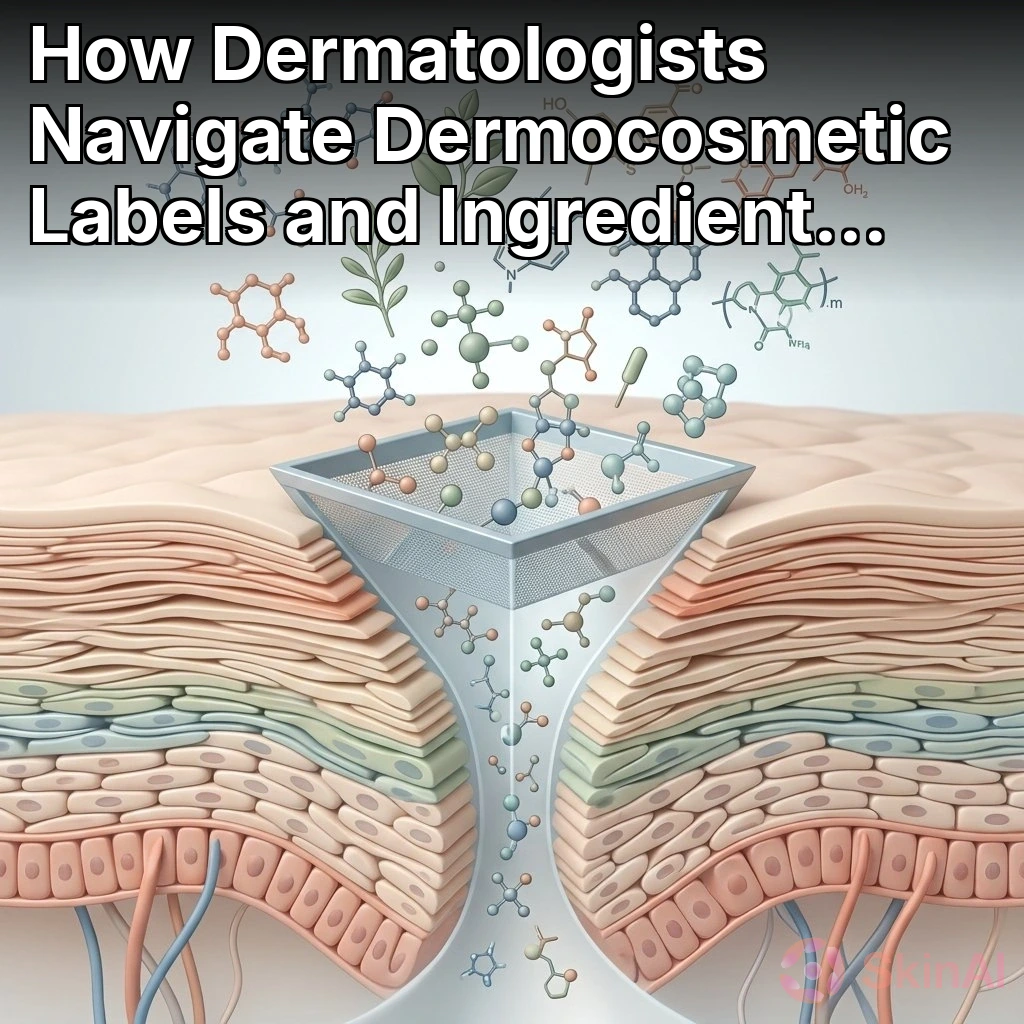
Dermocosmetics in the clinic: where labels, science, and practice collide
The growing presence of dermocosmetics in everyday dermatology care has created new challenges for clinicians trying to separate useful, evidence-based products from marketing messages that don’t help patient care.
A recent Brazilian study offers a close look at how dermatologists read labels, interpret claims, and make product recommendations — and it reveals gaps that could affect both prescribing habits and patient safety (Source: Vendruscolo CW et al., “Information Gaps and Practical Barriers in the Recommendation of Cosmetic Products by Dermatologists,” Dermatological Reviews, 2025).
Study design and approach
The investigators used a structured interview tool to capture real-world practice: 118 dermatologists completed a 29-question instrument that mixed multiple-choice and open-ended items to collect both numbers and nuanced views (Source: Vendruscolo et al., Dermatological Reviews, 2025).
This design allowed the researchers to quantify prescribing patterns while also exploring practical barriers such as label clarity, information sources, and understanding of common cosmetic terms (Source: Vendruscolo et al., 2025).
How often dermatologists recommend dermocosmetics
The study reinforces that cosmetic recommendations are now routine in dermatology: 85.6% of respondents said they prescribe dermocosmetics to more than three-quarters of their patients (Source: Vendruscolo et al., 2025).
The most frequently recommended product categories were sunscreens, cleansers, and anti-aging formulations — reflecting a preventive approach that emphasizes photoprotection, barrier care, and reducing extrinsic aging effects (Source: Vendruscolo et al., 2025).
Technical barriers and regulatory ambiguity
Despite widespread use, dermatologists reported consistent difficulty interpreting product labels: 84.7% said label information is important for their recommendations, yet 77.1% found that the information is not consistently clear (Source: Vendruscolo et al., 2025).
Participants ranked ingredient lists as the most influential factor in deciding which products to recommend (78.8%), but they also named ingredient lists as the single most difficult part of a label to interpret (30.2%) (Source: Vendruscolo et al., 2025).
One root cause is the technical nomenclature used for ingredients, notably the International Nomenclature of Cosmetic Ingredients (INCI). Although INCI provides standardized names, it does not communicate clinically critical details such as concentration, bioavailability, stability, or tolerability, leaving clinicians with incomplete information (Source: Personal Care Products Council, INCI system documentation).
The absence of harmonized definitions for marketing terms like “natural,” “organic,” and “hypoallergenic” further muddies the waters; these labels may suggest safety or purity but are not consistently tied to scientific criteria or regulatory thresholds (Source: Vendruscolo et al., 2025).
Why label gaps matter
Because labels often omit concentration and clinical data, dermatologists cannot always judge whether a product will be effective or safe for a given patient based on the package alone, especially for vulnerable groups such as pregnant people or those with sensitive skin (Source: Vendruscolo et al., 2025).
That uncertainty can lead to variation in recommendations between clinicians and increase the risk of suboptimal choices for patients seeking evidence-based care (Source: Vendruscolo et al., 2025).
Knowledge gaps and where clinicians get information
The study also probed conceptual understanding of common cosmetic terms and found inconsistent interpretation even among experts: all participants reported understanding “SPF 30,” but only 66% could correctly define the term when asked (Source: Vendruscolo et al., 2025).
Likewise, 93% said they were familiar with the word “serum,” yet fewer than half could explain its technical meaning in terms of formulation or expected performance (Source: Vendruscolo et al., 2025).
Industry communication plays a major role in shaping recommendations: 94.9% of dermatologists reported relying on medical representatives for product information, while scientific congresses and publications were cited by 81.4% and 73.7% of respondents, respectively (Source: Vendruscolo et al., 2025).
Importantly, 39% of the clinicians said they lacked access to reliable reference materials that would support cosmetic recommendations; in their absence many turn to the internet (22%) or industry-provided materials (16.9%), sources that can be uneven in objectivity and rigor (Source: Vendruscolo et al., 2025).
Practical consequences of information gaps
When dependable, independent resources are missing, clinicians may adopt inconsistent practices or lean on promotional materials that highlight benefits without clear clinical evidence — a situation that can undermine patient safety and trust (Source: Vendruscolo et al., 2025).
Perceptions of “natural” products and the risk of greenwashing
The survey showed wide variation in how dermatologists define and judge natural products. While 61.6% viewed natural products as being as safe as conventional cosmetics, what “natural” actually meant ranged from fully plant-derived formulations to partially natural compositions (Source: Vendruscolo et al., 2025).
This inconsistency mirrors broader regulatory ambiguity and raises concern about greenwashing — marketing that implies environmental or safety advantages not substantiated by product composition or testing (Source: Vendruscolo et al., 2025).
Most dermatologists in the study prioritized scientific validation over ingredient origin when assessing safety; 52.8% identified clinical testing as the most important criterion for judging whether a product is safe and effective (Source: Vendruscolo et al., 2025).
What dermatologists want: clearer evidence and harmonized terms
Across the board, clinicians expressed a strong desire for better, standardized information from the cosmetic industry. High-priority needs included clearer disclosure of ingredient composition, active concentrations, mechanisms of action, and documented efficacy and safety data — especially for special populations such as pregnant patients (Source: Vendruscolo et al., 2025).
Respondents called for transparent clinical data reporting and harmonized definitions of commonly used marketing terms so that label claims match scientific reality and clinicians can make confident, consistent recommendations (Source: Vendruscolo et al., 2025).
Practical takeaways for clinicians and industry
-
Clinicians should be aware that INCI names do not indicate concentration or clinical performance, and extra scrutiny is needed when evaluating labels (Source: Personal Care Products Council, INCI system documentation).
-
When possible, seek out peer-reviewed evidence or independent testing data rather than relying solely on promotional literature and representative briefings (Source: Vendruscolo et al., 2025).
-
Advocate for clearer labeling that includes active concentrations, clinical endpoints, and tolerability information to support safer, more standardized recommendations (Source: Vendruscolo et al., 2025).
Conclusion
This Brazilian study spotlights a gap between the central role of dermocosmetics in dermatology and the limited, sometimes confusing information available to guide safe, effective recommendations (Source: Vendruscolo et al., 2025).
Improved transparency from manufacturers, harmonized terminology, and better independent educational resources would help clinicians translate product labels into reliable care decisions — ultimately improving patient outcomes and confidence in recommendations (Source: Vendruscolo et al., 2025).
We welcome your perspectives and experiences. You can share feedback by emailing the editorial office at DTEditor@mmhgroup.com.
Sources
- Vendruscolo CW, Bagatin E, Leonardi GR. “Information Gaps and Practical Barriers in the Recommendation of Cosmetic Products by Dermatologists: Evidence From a Brazilian Study.” Dermatological Reviews 6 (2025): 1-8. https://doi.org/10.1002/der2.70059 (Source: Vendruscolo et al., Dermatological Reviews, 2025).
- Personal Care Products Council. International Nomenclature of Cosmetic Ingredients (INCI) system documentation and guidance (Source: Personal Care Products Council, INCI system documentation).