
How White Noise and Music Ease Pain During First-Time Botox Injections
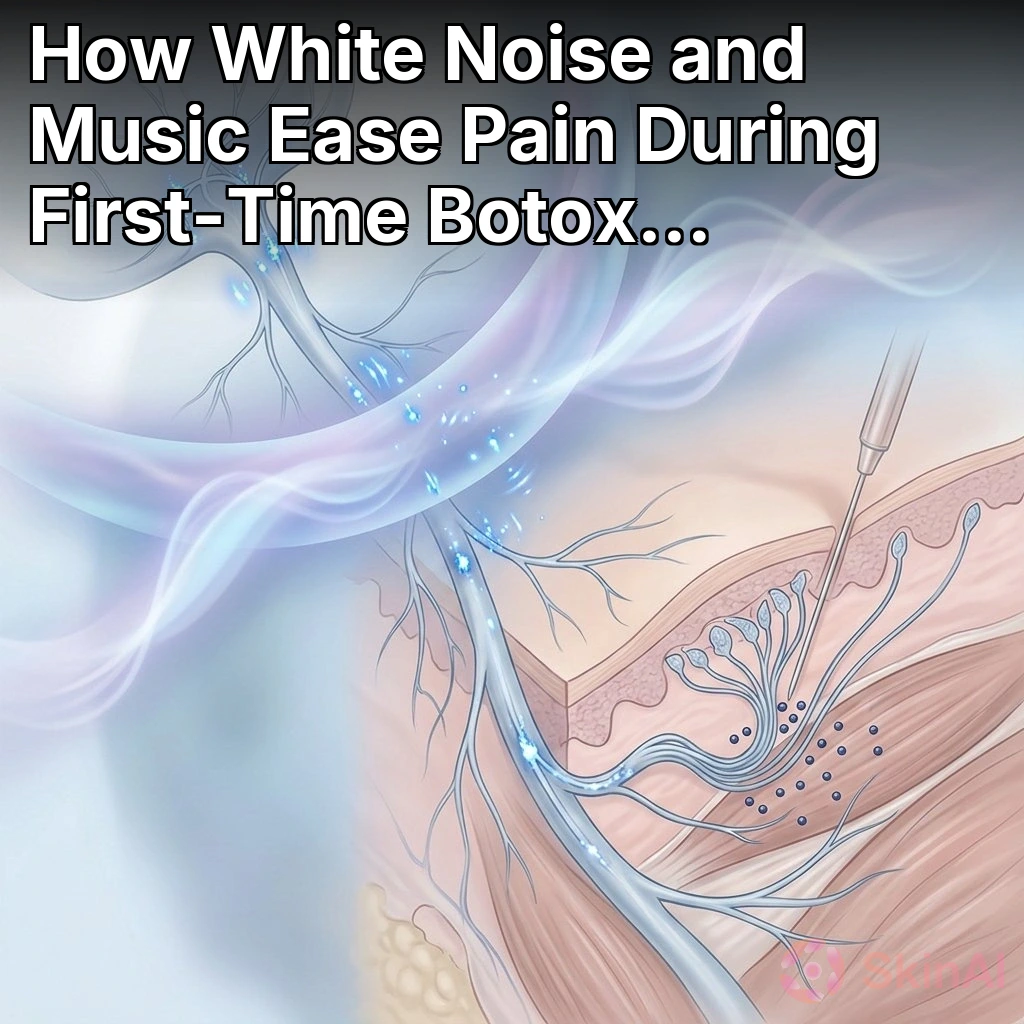
Listening to Music or White Noise May Ease Pain and Stress During Upper-Face Botulinum Injections
A recent prospective controlled study found that playing either a patient’s favorite music or a standardized white noise recording during cosmetic botulinum toxin injections to the upper face reduced both procedure-related pain and perceived stress in women, especially in those receiving injections for the first time (Source: Pain Research and Management, Do White Noise or Music Relieve Pain Caused by Botulinum Toxin Injections? 2026).
Trial Design and Who Took Part
The trial enrolled 76 women aged 18 to 45 who were scheduled for cosmetic injections to the forehead, glabella, and periocular areas (Source: Pain Research and Management, Do White Noise or Music Relieve Pain Caused by Botulinum Toxin Injections? 2026).
Participants were assigned to one of three groups: a music group (n = 20) who listened to self-selected music, a white noise group (n = 31) who listened to a standardized recording resembling the sound of a hair dryer, and a control group (n = 25) who received only routine background sound (Source: Pain Research and Management, Do White Noise or Music Relieve Pain Caused by Botulinum Toxin Injections? 2026).
Both auditory interventions began 10 minutes before the injections and continued throughout the procedure and the recovery period, while the control group was exposed only to the usual clinic noise (Source: Pain Research and Management, Do White Noise or Music Relieve Pain Caused by Botulinum Toxin Injections? 2026).
To keep technique consistent, all injections were performed by the same experienced physician using the same botulinum toxin product, in the same exam room, and with the same injection technique and timing (Source: Pain Research and Management, Do White Noise or Music Relieve Pain Caused by Botulinum Toxin Injections? 2026).
As part of routine comfort measures, every patient received topical cryoanesthesia with ice packs before and after treatment; pain was measured with a 10-point visual analog scale (VAS), and patients also rated how much the sounds reduced their stress (Source: Pain Research and Management, Do White Noise or Music Relieve Pain Caused by Botulinum Toxin Injections? 2026).
Key Results: Pain and Stress Scores
Both the music and white noise groups reported significantly lower pain than the control group. Average pain scores on the VAS were:
- Control: 6.80
- Music: 5.70
- White noise: 5.52
These differences show that auditory stimulation — whether a patient’s favorite songs or neutral white noise — delivered a measurable reduction in procedural pain (Source: Pain Research and Management, Do White Noise or Music Relieve Pain Caused by Botulinum Toxin Injections? 2026).
There was no statistically significant difference in pain relief between the two sound types, suggesting comparable benefit from music and white noise in this setting (Source: Pain Research and Management, Do White Noise or Music Relieve Pain Caused by Botulinum Toxin Injections? 2026).
First-Time Patients Felt More Pain — Unless They Had Sound
The study found that patients receiving botulinum toxin for the first time reported higher pain overall than those with prior treatment experience: mean VAS 6.57 for treatment-naïve participants versus 5.74 for experienced patients (Source: Pain Research and Management, Do White Noise or Music Relieve Pain Caused by Botulinum Toxin Injections? 2026).
When the researchers looked within each treatment arm, the link between being a first-time patient and higher pain scores was only significant in the control group. In other words, music and white noise seemed to blunt the extra pain sensitivity seen in people getting injections for the first time (Source: Pain Research and Management, Do White Noise or Music Relieve Pain Caused by Botulinum Toxin Injections? 2026).
Among participants who had never had botulinum toxin before, both auditory interventions produced significantly lower pain scores compared with controls, reinforcing the idea that sound may be especially helpful for first-time patients (Source: Pain Research and Management, Do White Noise or Music Relieve Pain Caused by Botulinum Toxin Injections? 2026).
Stress Relief and the Pain–Stress Link
Patients also rated how much the sounds eased their stress. On average, the stress-reduction VAS ratings were 6.35 for the music group and 7.19 for the white noise group, a numeric difference that was not statistically significant (Source: Pain Research and Management, Do White Noise or Music Relieve Pain Caused by Botulinum Toxin Injections? 2026).
Importantly, in the white noise group investigators found a strong negative correlation between perceived stress relief and pain scores — meaning that participants who felt more stress relief also reported less pain, suggesting a close link between anxiety reduction and procedural comfort (Source: Pain Research and Management, Do White Noise or Music Relieve Pain Caused by Botulinum Toxin Injections? 2026).
Patient Acceptability and Preferences
Most people liked the idea of using sound during future treatments. Among those who experienced music during the procedure, 85% said they would want it again; in the white noise group, 96.8% preferred continuing the sound intervention for future injections (Source: Pain Research and Management, Do White Noise or Music Relieve Pain Caused by Botulinum Toxin Injections? 2026).
Only a single participant in the white noise arm found the sound bothersome enough to decline its future use, indicating high overall acceptability for both approaches (Source: Pain Research and Management, Do White Noise or Music Relieve Pain Caused by Botulinum Toxin Injections? 2026).
Why Might Sound Reduce Pain?
The authors discussed several plausible mechanisms. Prior research has proposed that music can reduce pain by providing distraction, engaging positive emotions, and influencing central pain-processing pathways, which may lower how the brain perceives nociceptive signals (Source: Pain Research and Management, Do White Noise or Music Relieve Pain Caused by Botulinum Toxin Injections? 2026).
White noise may work differently or in complementary ways: by stabilizing background sound levels, reducing startle responses, improving emotional regulation, and decreasing anxiety, all of which can blunt the experience of pain (Source: Pain Research and Management, Do White Noise or Music Relieve Pain Caused by Botulinum Toxin Injections? 2026).
The findings align with existing evidence that anxiety, fear of pain, and uncertainty amplify procedural discomfort, and that noninvasive, low-cost interventions targeting anxiety can improve the patient experience (Source: Pain Research and Management, Do White Noise or Music Relieve Pain Caused by Botulinum Toxin Injections? 2026).
How This Fits with Other Pain-Reduction Approaches
The study paired auditory interventions with standard topical cryoanesthesia, and the investigators suggested that combining sound therapy with other established pain-reduction measures could further improve comfort during minimally invasive cosmetic procedures (Source: Pain Research and Management, Do White Noise or Music Relieve Pain Caused by Botulinum Toxin Injections? 2026).
Previous work has reported benefits from novel topical anesthetic approaches to reduce both pain and anxiety before botulinum toxin injections, showing that multimodal strategies are reasonable and practical in clinic settings (Source: Ophthalmic Plastic and Reconstructive Surgery, Reduction of pain and anxiety prior to botulinum toxin injections with a new topical anesthetic method).
Clinical Implications for Providers
For clinicians, the takeaways are straightforward: adding patient-selected music or a simple white noise recording is inexpensive, noninvasive, and easy to implement, and it may make injections more comfortable — particularly for people getting botulinum toxin for the first time (Source: Pain Research and Management, Do White Noise or Music Relieve Pain Caused by Botulinum Toxin Injections? 2026).
Practical steps clinics might consider include offering headphones and a short playlist option, a white noise track, or letting patients bring their own music. Start the sound about 10 minutes before the procedure and keep it on through recovery, as was done in the trial (Source: Pain Research and Management, Do White Noise or Music Relieve Pain Caused by Botulinum Toxin Injections? 2026).
Because most participants found the intervention acceptable, clinics can reasonably pilot this as part of a broader comfort protocol that also includes topical cooling and careful, consistent injection technique (Source: Pain Research and Management, Do White Noise or Music Relieve Pain Caused by Botulinum Toxin Injections? 2026).
Limitations and What We Still Don’t Know
The trial focused on a specific group — women aged 18 to 45 receiving upper-face injections — so results may not generalize to other age groups, genders, or types of procedures (Source: Pain Research and Management, Do White Noise or Music Relieve Pain Caused by Botulinum Toxin Injections? 2026).
Although the study controlled for many variables by using the same injector and setting, factors such as individual music preferences, baseline anxiety levels, and the exact content of the white noise could influence outcomes and merit further study (Source: Pain Research and Management, Do White Noise or Music Relieve Pain Caused by Botulinum Toxin Injections? 2026).
Longer-term outcomes, the effects of different music genres, and whether group-wide implementation yields similar benefits in busy clinical practice are additional questions for future research (Source: Pain Research and Management, Do White Noise or Music Relieve Pain Caused by Botulinum Toxin Injections? 2026).
Bottom Line
Playing patient-selected music or a simple white noise track around the time of upper-face botulinum toxin injections appears to reduce both pain and stress, with notable benefit for people getting injections for the first time. These are low-cost, low-risk interventions that clinics can realistically add to comfort protocols to improve the patient experience (Source: Pain Research and Management, Do White Noise or Music Relieve Pain Caused by Botulinum Toxin Injections? 2026).
Sources
- Pain Research and Management. Do White Noise or Music Relieve Pain Caused by Botulinum Toxin Injections?. 2026;2026(1):e3007685. doi:10.1155/prm/3007685 (Source: Pain Research and Management, Do White Noise or Music Relieve Pain Caused by Botulinum Toxin Injections? 2026).
- Ophthalmic Plastic and Reconstructive Surgery. Reduction of pain and anxiety prior to botulinum toxin injections with a new topical anesthetic method. doi:10.1097/IOP.0b013e3181a145ca (Source: Ophthalmic Plastic and Reconstructive Surgery, Reduction of pain and anxiety prior to botulinum toxin injections with a new topical anesthetic method).