
Revolutionizing Acne Treatment: Denifanstat Targets Sebum Production
Exciting New Oral Therapy for Acne: A Game Changer for Dermatologists
In an insightful interview, Dr. Neal Bhatia expressed his enthusiasm about the upcoming oral therapy for acne that diverges from the traditional options of retinoids and antibiotics. Dr. Bhatia, who serves as the director of clinical dermatology at Therapeutics Clinical Research in San Diego, California, elaborated on the clinical importance of denifanstat, an advanced oral therapy currently under investigation for treating acne.
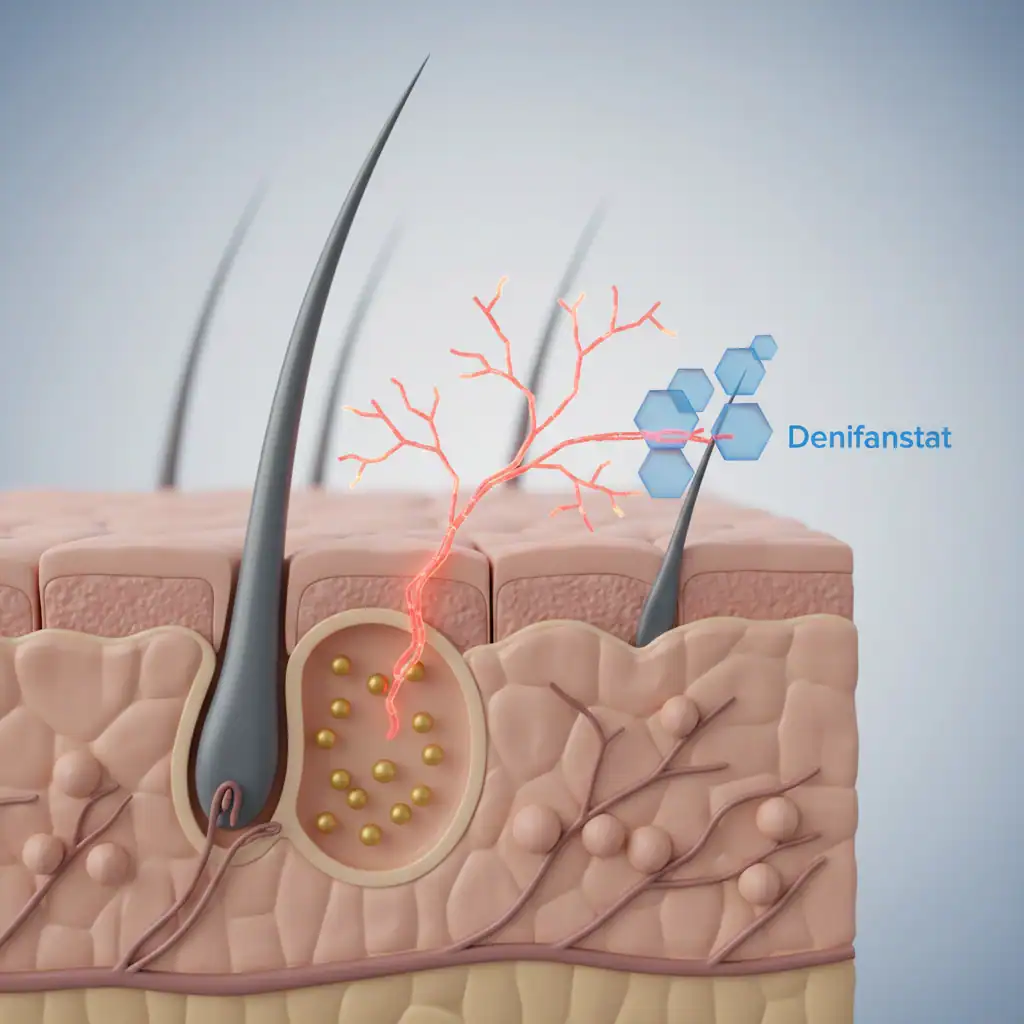
Denifanstat operates by targeting sebum production through the inhibition of fatty acid synthase (FASN), presenting a significant shift from the conventional systemic treatments that primarily depend on antibiotics or retinoids. This innovative mechanism works by inhibiting de novo lipogenesis, which not only reduces surface oil but also addresses the underlying metabolic factors that contribute to inflammation, comedogenesis, and the overall development of acne.
A Shift in Treatment Strategy
Dr. Bhatia emphasized that this approach is crucial, as it focuses on the biology of sebum rather than merely addressing oiliness. By inhibiting FASN, denifanstat could potentially serve as a disease-modifying treatment, significantly broadening therapeutic options available to patients. This is particularly relevant in the context of antibiotic stewardship and rising safety concerns related to isotretinoin.
Promising Safety and Tolerability Profile
Emerging safety and tolerability data from recent clinical trials have shown positive results. According to Dr. Bhatia, denifanstat has exhibited a favorable profile regarding adverse events when compared to existing systemic therapies for moderate to severe acne.
Reported side effects, including mild skin dryness and minor ocular symptoms, were generally well tolerated and did not necessitate discontinuation of treatment. This favorable tolerability profile may help overcome significant barriers that currently hinder acceptance of oral therapies among both clinicians and patients.
Strong Efficacy Supported by Clinical Trials
Results from a comprehensive 52-week phase 3 program conducted in China further bolster the potential of denifanstat. In a randomized trial involving 480 patients suffering from moderate-to-severe acne, those treated with once-daily denifanstat experienced significant reductions in total lesion counts (approximately 58% decrease), inflammatory lesions (about 63% decrease), and comedonal lesions (approximately 50% decrease).
Notably, a substantial proportion of participants achieved clear or almost clear skin, with sustained benefits observed throughout a year of treatment. These findings extend previous 12-week data, indicating that the positive response may be durable with long-term use.
Target Patient Population and Future Research
Dr. Bhatia identifies individuals who may not be suitable candidates for antibiotics or isotretinoin due to safety issues, resistance concerns, or regulatory limitations as particularly ideal for this new therapeutic approach. Looking forward, he emphasizes the necessity for large, well-structured trials in North America to validate efficacy across various populations and clinical settings.
Such studies will be vital for establishing the role of denifanstat within the U.S. acne treatment landscape and further substantiating the concept of FASN inhibition as a novel systemic strategy. “We will gain insights into demographics, age groups, skin of color, and a wider variety of presentations, along with data that we can directly relate to our current treatment landscape in the U.S.,” Dr. Bhatia commented regarding future research initiatives.
Sources
- Neal Bhatia, MD, Interview on Dermatological Advances.
- Therapeutics Clinical Research, Clinical Trial Data on Denifanstat.
- Phase 3 Study Results from Clinical Trials in China.