
Understanding the Long-Term Challenges of Hidradenitis Suppurativa
Insights on Hidradenitis Suppurativa from Dr. Thrasyvoulos Tzellos
In a recent exclusive interview, Dr. Thrasyvoulos Tzellos, a dermatologist practicing in Norway, provided an in-depth clinical perspective on the everyday challenges and long-lasting implications of hidradenitis suppurativa (HS). Drawing from his extensive research and daily interactions with patients, he shed light on this complex condition.
Understanding the Progressive Nature of HS
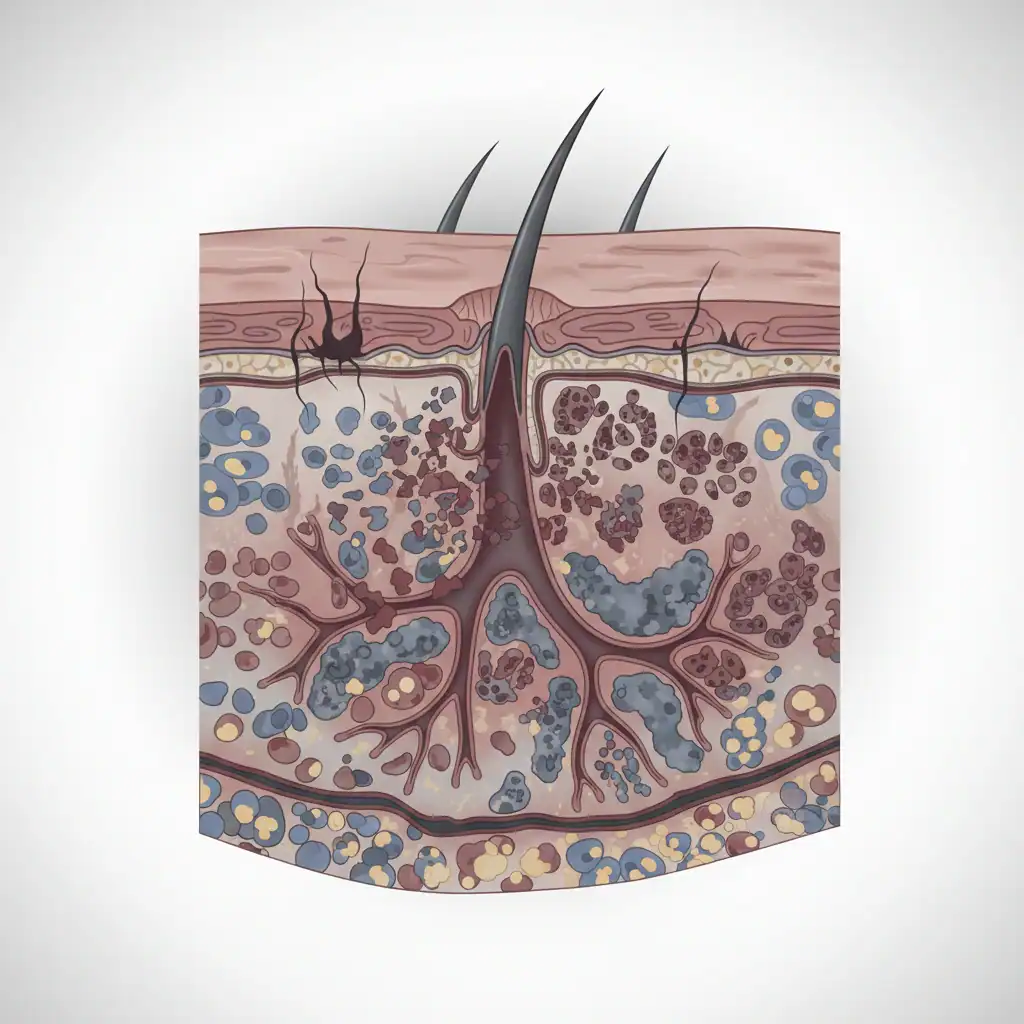
Dr. Tzellos pointed out that HS is notably different from other chronic inflammatory skin disorders due to its progressive characteristics. The condition commonly initiates with inflammatory nodules and abscesses, but can advance into a more aggressive phase. This later stage is marked by the development of draining and non-draining tunnels, significant scarring, and fibrosis.
As these structural changes manifest, patients find that treatment becomes notably more challenging, and the condition can lead to considerable debilitation. Dr. Tzellos specifically highlighted that the presence of draining tunnels is closely linked to ongoing daily pain, unpleasant odors, continuous drainage, and a significant decline in quality of life.
The Comprehensive Burden of HS
The impact of HS transcends mere physical symptoms. Many patients express the constant need for clothing changes due to drainage issues, experience reduced sexual activity, and withdraw socially. This is particularly concerning because HS often strikes young individuals during pivotal phases of personal and professional growth, disrupting their work productivity, daily activities, and mental health.
According to Dr. Tzellos, the interplay of chronic pain, functional restrictions, and disease progression creates a vicious cycle where the severity of the disease escalates, leading to a marked reduction in quality of life once fibrosis and tunnels are established.
UCB’s BE HEARD Clinical Program
Addressing the pressing needs of HS patients, UCB has launched the BE HEARD clinical program for bimekizumab. Earlier this month, the company presented encouraging long-term data at the 15th Conference of the European Hidradenitis Suppurativa Foundation (EHSF) held in San Giljan, Malta.
Dr. Tzellos emphasized that over a three-year follow-up period, treatment with bimekizumab was associated with significant and lasting reductions in draining tunnels—an outcome that holds particular clinical relevance given the critical role these tunnels play in pain and functional disability.
Sustained Improvements and Patient Outcomes
Importantly, the improvements noted were not fleeting; the reductions in tunnels were maintained over time. Moreover, a significant number of patients transitioned from moderate or severe disease states to mild or inactive conditions.
Mild disease is characterized by minimal or no draining tunnels, while inactive disease refers to the complete absence of inflammatory lesions. Dr. Tzellos interprets these findings as promising evidence suggesting that long-term therapy with bimekizumab may effectively control inflammation, prevent further disease progression, and, to a certain extent, reverse the damage already incurred.
Sources
- UCB, press release on BE HEARD clinical program.
- European Hidradenitis Suppurativa Foundation, conference proceedings from the 15th EHSF.
- Thrasyvoulos Tzellos, MD, PhD, personal interview.