
Wearable Electrotrichogenic Device Shows Significant Hair Density Gains in Men with AGA
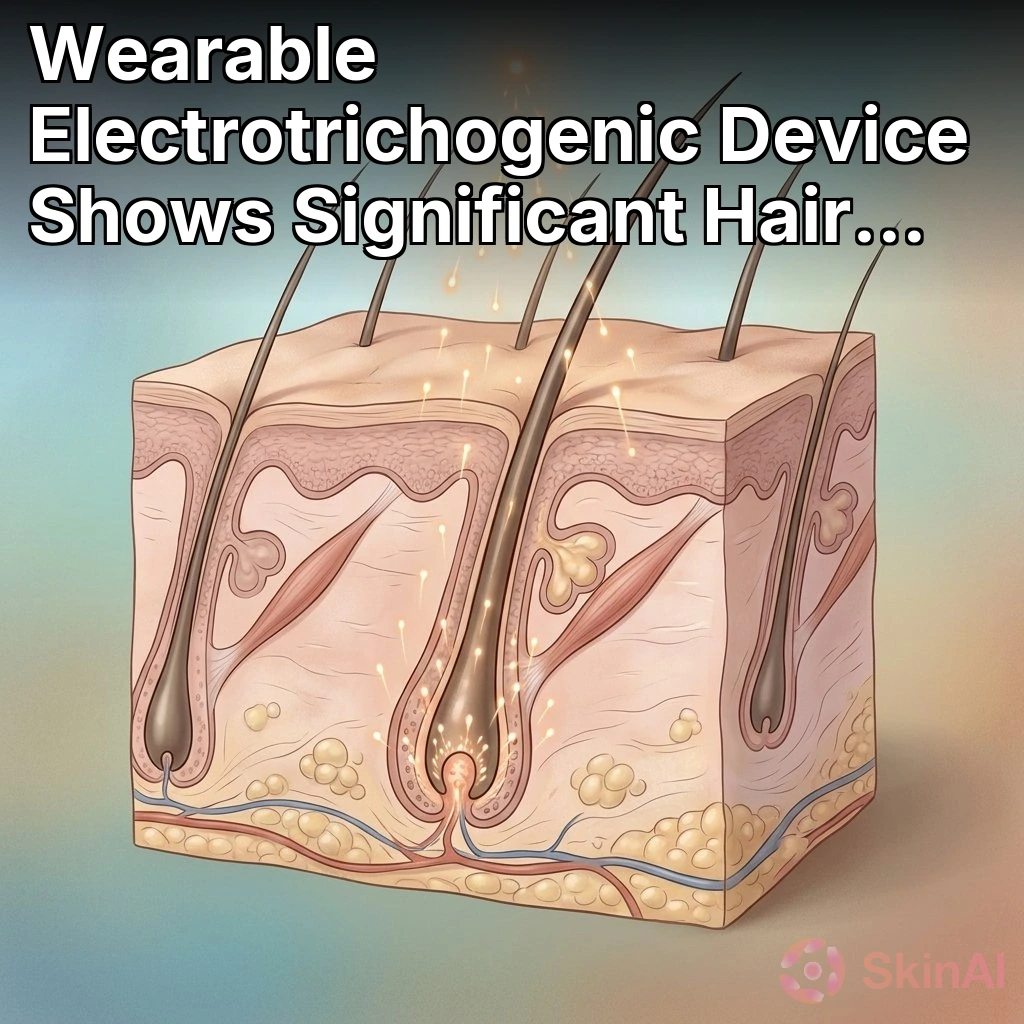
A randomized, double-blind, sham-controlled trial published in Dermatology and Therapy suggests that niostem’s electrotrichogenic (ETG) wearable device may offer a novel nonpharmacologic option for men with androgenetic alopecia (AGA).1 In the 24-week study, 81 male patients with Norwood-Hamilton II-VI AGA used either the active device or a sham comparator for 30 minutes daily, with efficacy assessed in participants achieving at least 70% adherence.
Dermatology Times spoke to niostem’s co-founder and chief technology officer, Carlos Chacón, PhD, about the recently published research. “As a startup originating from the Max Planck Institute in Germany, our goal has always been to translate cutting-edge regenerative science into a solution with real-world impact.
This publication represents a major milestone for us; we have moved with significant speed from our initial pilot data in 2025 to a full-scale RCT because we recognize the urgent need for non-invasive, side-effect-free options in hair restoration,” Chacón said.
“By applying the highest clinical standards-a randomized, double-blind, sham-controlled design-we have now validated that our wearable technology using low-level electrical stimulation is both safe and effective for the millions of men managing pattern baldness.” Clinical Efficacy and Hair Density Outcomes At 6 months, the active device demonstrated statistically significant improvements over a look-alike sham device across multiple hair growth endpoints.
Total hair density increased by a mean between-group difference of 24.4 hairs/cm² (p = 0.02), while terminal hair density improved by 17.1 hairs/cm² (p = 0.02) after 6 months. Cumulative hair thickness also increased significantly, with a 26.2 percentage-point advantage versus sham (p = 0.01).
Notably, efficacy signals emerged at month 6 rather than month 3, suggesting a time-dependent biologic response requiring sustained use. Exploratory analyses did not show significant changes in vellus hair density.
“These findings prove that low-level electrical stimulation (LLES) can successfully influence the follicular microenvironment to improve both hair density and shaft quality. For the first time, we have strong evidence that a wearable, at-home device using LLES can offer a drug-free approach that is easy to integrate into daily life without the systemic concerns often associated with traditional therapies,” Chacón noted.
Safety and Patient Tolerability The device was generally well tolerated, with no serious adverse events or clinically significant scalp reactions reported. Mild transient symptoms, including itching, redness, and scaling, were uncommon and comparable to sham.
No participants discontinued due to tolerability concerns. Investigators suggest low-level electrical stimulation may support follicular activity through modulation of the hair follicle microenvironment, although mechanistic studies are needed.
While results were based on a per-protocol analysis and longer-term durability remains unknown, these findings provide sham-controlled evidence that wearable electrotrichogenesis may represent a clinically relevant adjunct or alternative for patients seeking drug-free AGA management.
Larger studies, including in women and combination therapy settings, are warranted. “The data suggest a time-dependent response where the benefits of LLES accrue over months, supporting our hypothesis of hair follicle stem cell reactivation,” Chacón said.
“For the millions of men seeking evidence-based, drug-free alternatives—or those looking to complement existing therapies—this wearable technology offers a sophisticated, non-invasive path to managing AGA at home without the systemic side effects often associated with pharmacological options.” From Pilot Data to Further Validation These findings build on earlier pilot data for the niostem platform.2 In a prior open-label study of 20 men with AGA, daily use of the noninvasive device for 6 months led to visible hair regrowth in all participants, with total hair density increasing 19.3%, terminal hair density rising significantly, and cumulative hair thickness improving 8.8%.
Nearly all participants reported stabilization of hair loss by month 3, and 86% noted regrowth at that time point. No serious safety concerns were identified and patient satisfaction increased greatly, as about 75% of patients felt more confident with their hair.
“While our previous pilot study showed the potential of electrotrichogenesis, this randomized, sham-controlled trial provides the rigorous clinical evidence necessary to validate low-level electrical stimulation (LLES) as a primary non-drug intervention.
Seeing a statistically significant increase of 24.4 hairs/cm2 and a 26% improvement in cumulative hair thickness over the sham group confirms that we are not just seeing a subtle cosmetic effect, but a meaningful biological response in the hair follicle microenvironment,” Chacón concluded.
Chacón-Martínez CA, Pogorelov G, Cabral KK, Emmler T, Voss W. Efficacy, Safety, and Tolerability of a Wearable Electrotrichogenic Device in Men with Androgenetic Alopecia: A Randomized, Double-Blind, Sham-Controlled Trial. Dermatol Ther (Heidelb).
Published online April 22, 2026. doi:10.1007/s13555-026-01747-5 2. Jellard S, Moore S, Chacón-Martínez CA. Novel Electrotrichogenic Device Promotes Hair Growth in Men With Androgenetic Alopecia: A Pilot Study. J Cosmet Dermatol. 2025;24(5):e70202.
doi:10.1111/jocd.70202