
How Integrating Mental Health and Skin Care Is Transforming Treatment
Psychodermatology Is Moving from Margin to Mainstream: Insights from the APMNA Meeting
The overlap between skin health and mental health is no longer a niche conversation — it’s rapidly becoming a core part of clinical care for people with chronic dermatologic conditions.
In a recent episode of Skin & Psych, host Patricia M. Delgado, DNP, interviewed Mohammad Jafferany, MD, who currently serves as president of the Association for Psychoneurocutaneous Medicine of North America (APMNA), to discuss how integrating psychiatric assessment and treatment into dermatology practices can change outcomes for patients.
APMNA’s growth and why it matters
The APMNA began as a small regional group in 1994 and has expanded into an international forum that draws clinicians and researchers from around the world (Source: Association for Psychoneurocutaneous Medicine of North America annual meeting page).
This expansion shows up in the organization’s recent conference attendance: the most recent annual meeting marked the group’s 34th gathering and included more than 100 delegates representing over 20 countries (Source: Association for Psychoneurocutaneous Medicine of North America annual meeting page).
That kind of global representation matters because it surfaces differences in how conditions are managed in different regulatory and practice environments — and it fuels cross-cultural and cross-disciplinary learning.
What clinicians heard at the meeting: complex diseases and varied approaches
Conference sessions examined challenging, high-burden diseases such as alopecia areata, atopic dermatitis, and hidradenitis suppurativa, with presenters comparing treatment strategies across regions and regulatory frameworks.
For example, one regulatory contrast discussed at the meeting was the European approval of baricitinib (Olumiant) for moderate-to-severe atopic dermatitis, a treatment option that, at the time of the meeting, had different availability and labeling in Europe versus the United States (Source: European Medicines Agency, Olumiant [baricitinib] approval).
These differences underscore the importance of staying current with international research, approvals, and real-world experience so clinicians can make informed choices when options differ by country or region.
Making mental health screening routine in dermatology
A recurring, practical takeaway from the meeting was the need to screen patients with chronic skin disease for common psychiatric comorbidities such as depression and anxiety.
Dr. Jafferany and other presenters recommended simple, validated tools that can be integrated into clinic workflows, including the PHQ‑9 for depression and the GAD‑7 for anxiety (Source: Kroenke et al., PHQ-9 validation; Spitzer et al., GAD-7 validation).
The message was clear and actionable: clinicians should ask about mental health routinely, because many patients will not volunteer symptoms unless prompted — “unless you ask, patients won’t tell you,” as Jafferany put it.
The psychoneurocutaneous loop: how mind and skin influence each other
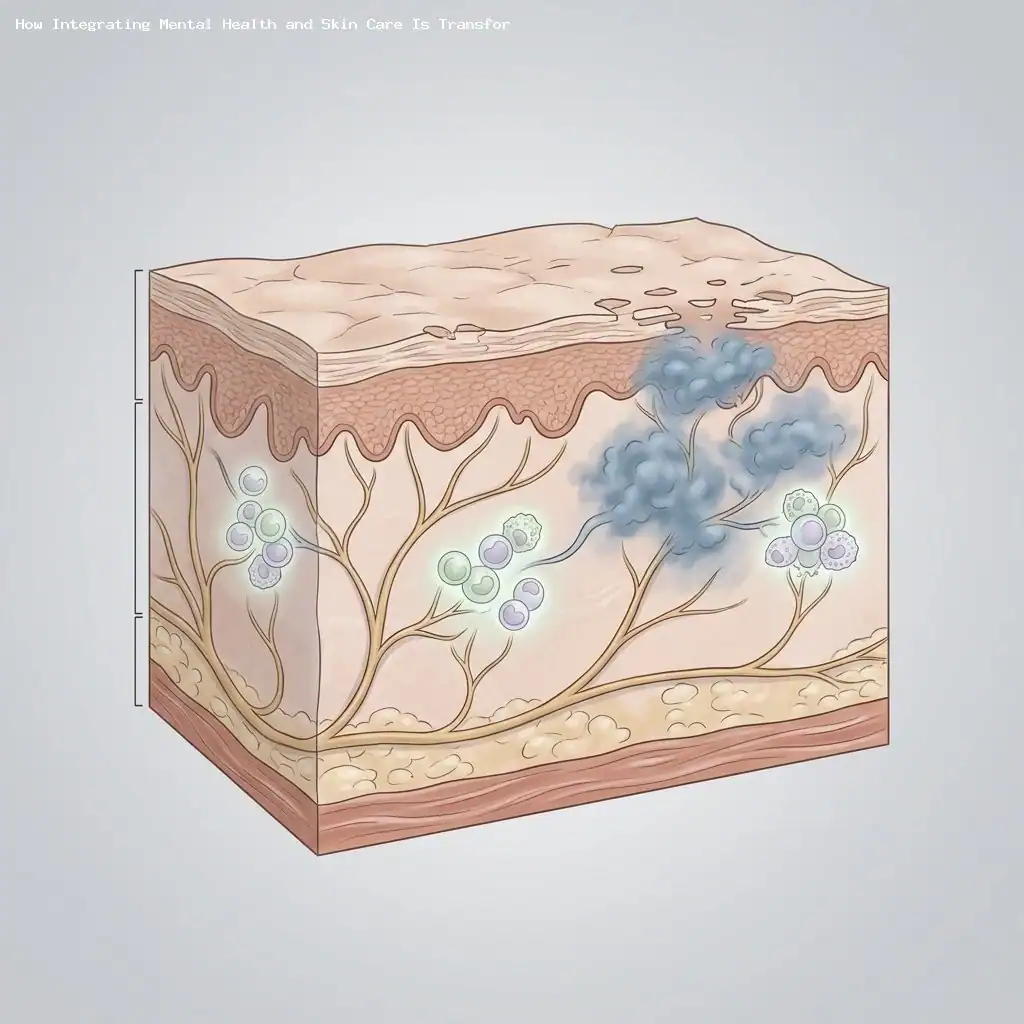
Central to the meeting’s discussions was the concept of the psychoneurocutaneous loop — the idea that psychological state, nervous system function, and skin disease influence one another in a two-way relationship.
Treating coexisting anxiety or depression can lead to improvements in self-esteem, coping behaviors, and adherence to dermatologic treatment, which in turn may improve skin outcomes and reduce symptom burden.
Presenters also shared emerging neuroimaging and neurobiological data that support this link, showing structural and functional brain differences in patients with chronic itch or inflammatory skin disease and brain changes associated with integrated treatment approaches (Source: Papoiu et al., fMRI studies of itch and related neuroimaging literature).
Education, training, and career pathways in psychodermatology
Although formal psychodermatology fellowships remain uncommon in the United States, educational and professional opportunities are growing internationally and within multidisciplinary societies.
Options for clinicians who want to deepen their skills include international diplomas, targeted conference sessions, committee work within professional organizations, collaborative research projects, and informal mentorship across specialties (Source: Association for Psychoneurocutaneous Medicine of North America information on education and membership).
Dr. Jafferany emphasized that psychodermatology is inherently team-based and benefits from involvement by dermatologists, psychiatrists, psychologists, physician assistants, and nurse practitioners working together to identify psychosocial drivers of disease and to coordinate care.
Practical takeaways for clinicians who manage chronic skin disease
-
Implement brief screening tools like the PHQ‑9 and GAD‑7 in busy clinics to catch common mental health concerns early (Source: Kroenke et al.; Spitzer et al.).
-
Recognize that treating mental health conditions can positively affect dermatologic outcomes through improved coping and adherence.
-
Stay aware of evolving therapeutic approvals and regional differences — for example, the European approval of baricitinib for atopic dermatitis highlights how regulatory environments can change available options (Source: European Medicines Agency, Olumiant [baricitinib] approval).
-
Engage with multidisciplinary colleagues and professional societies to build referral networks and educational resources for both clinicians and patients (Source: Association for Psychoneurocutaneous Medicine of North America).
Why integrating care matters for patients
When dermatologic care includes attention to mental health, patients often report better quality of life, less stigma, and improved day-to-day functioning — outcomes that are meaningful even when objective skin signs change slowly.
By acknowledging and treating the psychological components of chronic skin disease, clinicians can deliver more holistic, patient-centered care that addresses the full burden of illness.
Sources
- Association for Psychoneurocutaneous Medicine of North America (APMNA), annual meeting and organization information (Source: Association for Psychoneurocutaneous Medicine of North America website).
- European Medicines Agency / European Commission, approval information for Olumiant (baricitinib) for atopic dermatitis (Source: European Medicines Agency, Olumiant [baricitinib] approval).
- Kroenke K, Spitzer RL, Williams JB. The PHQ‑9: validity of a brief depression severity measure. Journal of General Internal Medicine. 2001 (Source: Kroenke et al., PHQ‑9 validation study).
- Spitzer RL, Kroenke K, Williams JB, Löwe B. A brief measure for assessing generalized anxiety disorder: the GAD‑7. Archives of Internal Medicine. 2006 (Source: Spitzer et al., GAD‑7 validation study).
- Papoiu A, Wang H, Coghill RC, et al. Neuroimaging studies of itch: functional MRI and central mechanisms of pruritus. Selected neuroimaging and psychoneurocutaneous literature on brain correlates of itch and integrated care outcomes (Source: Papoiu et al., fMRI studies of itch and related neuroimaging research).