
Oral STAT6 Degrader KT-621 Matches Dupilumab in Treating Atopic Dermatitis
Why this matters
For people with eczema (also called atopic dermatitis), a pill that works as well as current injectable drugs has been a long-standing hope. New early-stage data from a company study suggest an experimental oral medicine, KT-621, may reduce itch and skin lesions in a way that looks similar to the injectable drug dupilumab (brand name Dupixent). These findings were shared at a dermatology meeting and in company reports, but they are preliminary and need more testing.
A quick plain-language summary
KT-621 is an experimental oral drug that targets a protein inside cells called STAT6. By lowering STAT6, the drug aims to turn down the inflammation signals (driven by two immune chemicals called IL-4 and IL-13) that cause eczema symptoms. In a small, 4-week phase 1b study, the company reported reduced itch, fewer skin lesions, and lower levels of a related itch-causing molecule called IL-31. The company compares these early results to published data for dupilumab, but there was no direct head-to-head trial.
What is KT-621 and how is it different from current treatments?
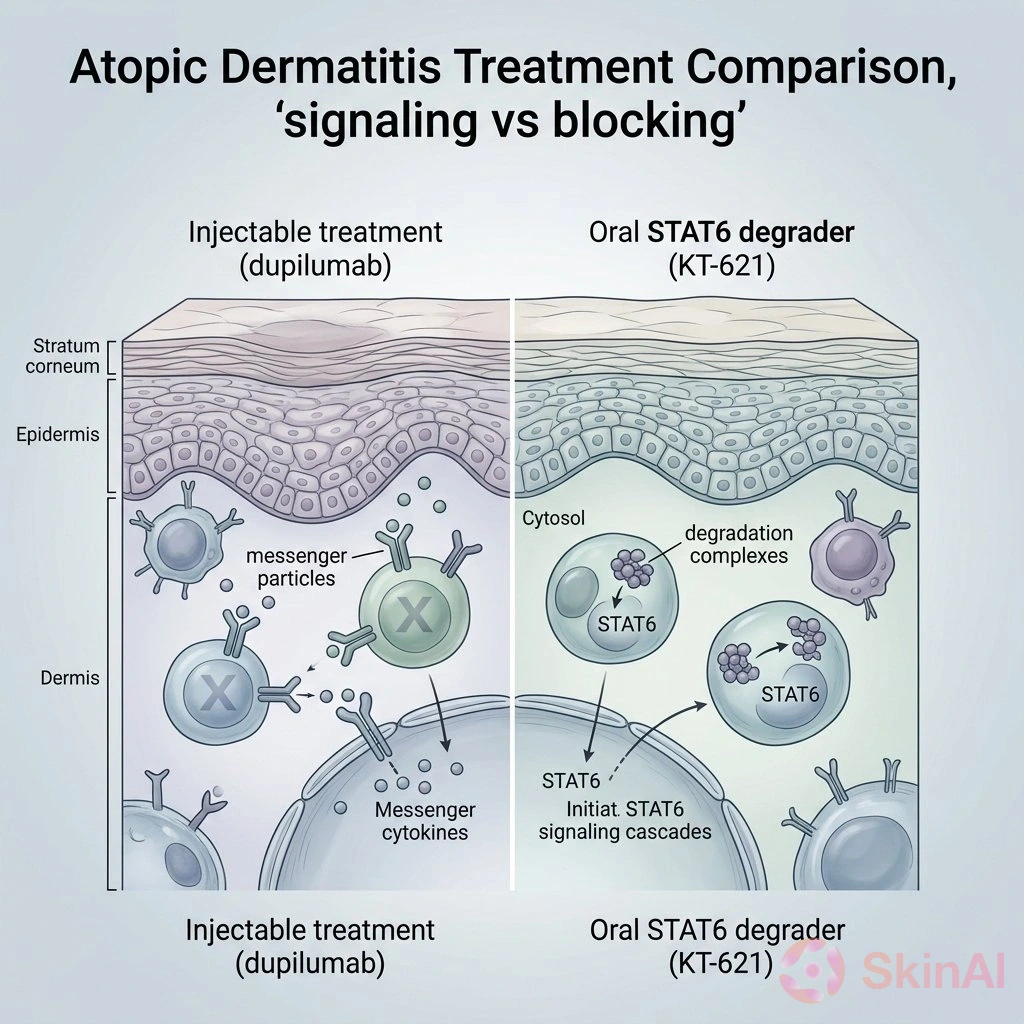
Dupilumab is a biologic medicine (a lab-made antibody) that blocks the receptor that responds to IL-4 and IL-13. It has helped many people with moderate to severe eczema, but it must be given as an injection.
KT-621 works inside cells to break down STAT6, a protein needed for the IL-4 and IL-13 signals to have their effect. Because it acts inside the cell, KT-621 is being developed as a once-daily pill. The idea is that an oral option could be easier for people who prefer not to give or receive injections, including children.
What did the study show?
The results come from the phase 1b BroADen study (NCT06945458) and were presented at the 2026 Society for Investigative Dermatology Annual Meeting. In this small study, people took KT-621 once daily for 4 weeks.
The company reports that KT-621 reduced inflammatory markers in the blood, lowered itch, and reduced skin lesion burden during that 4-week period. One notable lab finding was an average 54% drop in blood levels of IL-31, a molecule known to cause itching and which is produced after IL-4 and IL-13 activate their pathway. The study team said the fall in IL-31 tracked closely with patients’ reports of less itch.
The company also suggested the size of the clinical effects seen in 4 weeks looked similar to what has been reported for dupilumab, but they emphasized that the comparison is indirect. No head-to-head trial was done, and the KT-621 study was much shorter (4 weeks) than the larger dupilumab trials (often 16 weeks).
Important limitations to keep in mind
These findings are early. Phase 1b studies are small and mainly designed to look at safety, how the drug behaves in the body, and whether there are signs it might help. The KT-621 results were reported by the company that makes the drug, and the comparison to dupilumab was based on published data rather than a direct trial.
Because of the short treatment time, small sample size, and company reporting, we can’t yet say KT-621 is as effective or safe as established treatments. Larger, longer, independent studies will be needed to confirm these early signals.
What this could mean for people with eczema
If further studies confirm these results, an effective once-daily pill that lowers STAT6 could offer an alternative to injections for some people. That said, it’s too soon to draw firm conclusions. If you’re considering a new treatment, talk with your dermatologist or healthcare provider about what’s known, what’s still being studied, and whether a clinical trial might be appropriate.
When to see a doctor
Talk with your healthcare provider if your eczema is getting worse, not responding to your current treatment, spreading, bleeding, painful, or showing signs of infection (such as increased warmth, pus, or fever). If treatment changes are being considered, a dermatologist can help weigh risks, benefits, and possible trial options.
Keeping photos of your rash over time can help you and your doctor notice if the skin is improving or getting worse and can make it easier to explain changes during visits.
Disclaimer
This article summarizes early research and company-reported data. It is not medical advice. Treatment decisions should be made with a doctor or dermatologist. For urgent or serious symptoms, seek immediate medical care.
Sources
- Interview with Jared Gollob, MD; Kymera Therapeutics press materials and presentations (BroADen study, NCT06945458) presented at the 2026 Society for Investigative Dermatology Annual Meeting. (Source: Jared Gollob interview; Kymera Therapeutics)
- Kymera Therapeutics announces presentations on KT-621, a first-in-class, oral STAT6 degrader, at the Society for Investigative Dermatology and American Thoracic Society Congresses. Accessed June 2, 2026. https://investors.kymeratx.com/news-releases/news-release-details/kymera-therapeutics-announces-presentations-kt-621-first-class
- Kymera Therapeutics presents KT-621 BroADen data in late-breaking research session at the American Academy of Dermatology (AAD) Annual Meeting. Accessed June 2, 2026. https://investors.kymeratx.com/news-releases/news-release-details/kymera-therapeutics-presents-kt-621-broaden-data-late-breaking