
Overcoming Referral Challenges in Advanced Cutaneous Squamous Cell Carcinoma Care
Why this matters
Cutaneous squamous cell carcinoma (CSCC) is a common type of skin cancer. Most cases are caught and treated early, but some tumors become advanced—growing back, spreading, or causing symptoms that change treatment decisions. Recently, dermatologists and medical oncologists gathered to talk about how best to care for people with advanced CSCC, especially when to use newer immunotherapy drugs and how teams can work together.
What happened at the meeting
The discussion, led by Nina Ran, MD, focused on a real patient case and data from three key immunotherapy trials. Clinicians compared the drugs, talked about how patients move between dermatology and oncology, and debated when surgery is still needed versus when immunotherapy alone may be enough.
Quick plain-language summary
Treatment options for advanced CSCC now commonly include immunotherapy—drugs that help the immune system fight cancer. Doctors are weighing small differences between available immunotherapies, wondering whether one drug might cause fewer side effects or be better for older, frail patients. At the same time, referral systems and follow-up practices vary widely, so patients’ paths through care can look very different depending on where they live.
How the immunotherapy drugs differ
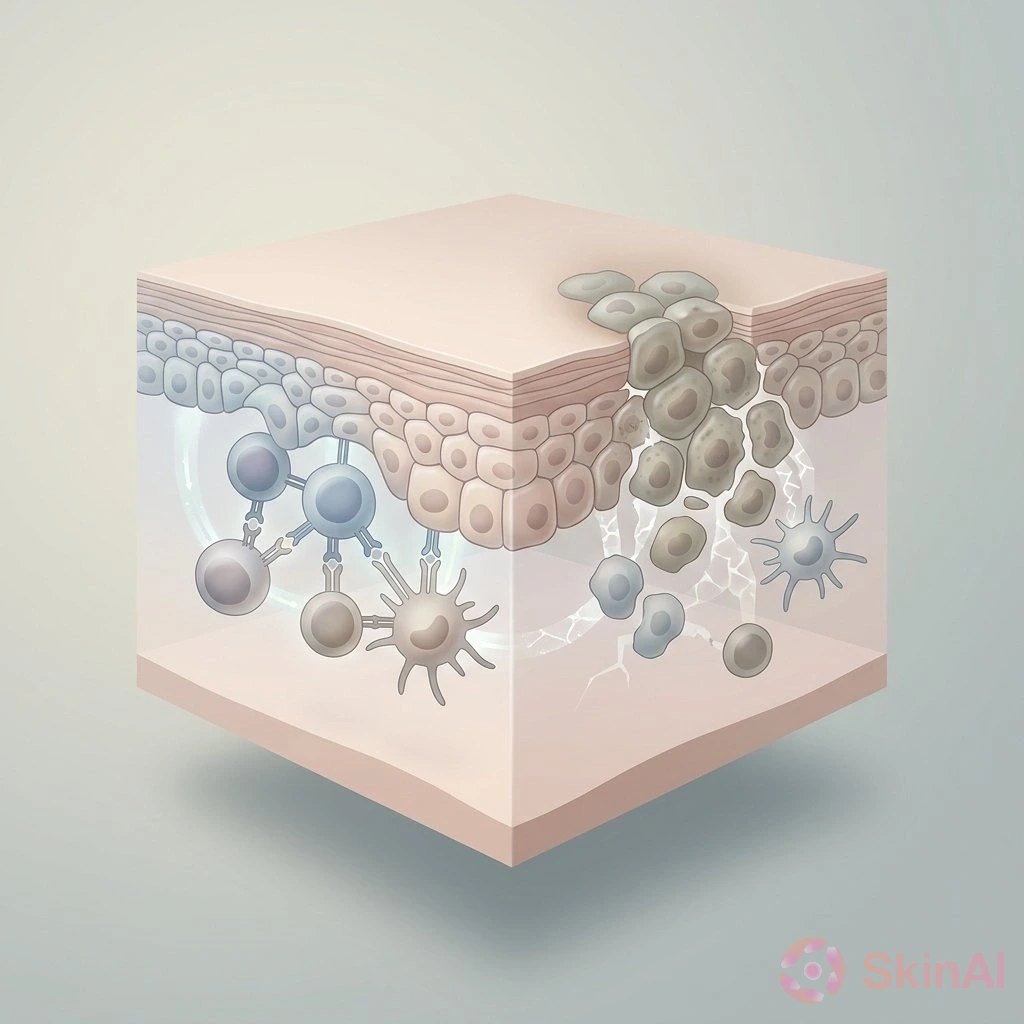
Immunotherapy drugs used for CSCC work by interrupting signals cancer uses to hide from the immune system. Two commonly used drugs, cemiplimab and pembrolizumab, attach to a protein on immune cells called PD-1. Another drug, cosibelimab, attaches to a related protein called PD-L1.
Cosibelimab also keeps part of the antibody that can recruit other immune cells to kill tumor cells—a activity called antibody-dependent cellular cytotoxicity. That effect has been seen in lab cells (known as Jurkat cells), but it has not yet been confirmed in people with CSCC, so its real-world importance is still unclear.
Trial reports suggest cosibelimab may have a lower rate of immune-related side effects, but doctors agreed this needs to be confirmed in larger groups of patients before it changes routine practice.
Do these drugs work the same?
Clinicians compared results from three trials: CK-301-101, EMPOWER-CSCC-1, and KEYNOTE-629 (each is identified by its clinical trial number). Overall, response rates were generally higher when the cancer was locally advanced (still mostly in one area) than when it had spread to distant sites (metastatic disease).
There are a couple of reasons for that. One is biological: once cancer spreads, a person’s immune response may be less able to control it. Another is technical: standard imaging rules used in trials—called RECIST—sometimes prevent calling a “complete response.” For example, scar tissue or certain bone changes can show up on scans and stop a formal “complete response” label, even if the doctor thinks the tumor is gone on exam.
How patients move between doctors
The group discussed how referrals work in the real world. Large academic centers often have triage teams and shared medical records that make it easier to move a patient from dermatology to oncology.
But community dermatologists more often do not use routine staging scans or regular surveillance imaging for CSCC. For some clinicians in private practice, getting a patient into oncology can feel unclear or slow. Even when hospitals share the same electronic medical record system, permission or access rules can create delays.
Real-world drug choices are changing
Historically, many clinicians chose cemiplimab because it had early supporting data for use before surgery (neoadjuvant data). More recently, some doctors have started choosing cosibelimab for certain patients, particularly those who are older or frail, because trial reports suggested fewer immune-related side effects.
However, this safety advantage is still a hypothesis. One attendee noted a trial-design difference: the cosibelimab trial did not include U.S.-based investigators, which could affect adverse event reporting. Many in the group felt the drugs are likely similar in effectiveness, and a confirmed safety benefit would be a strong reason to prefer one drug for frail patients.
Surgery and the timing of treatment
Immunotherapy is changing how doctors decide about surgery. Some teams are treating patients with immunotherapy first and using follow-up exams and scans to decide whether surgery is still needed. This approach lets the tumor’s behavior guide the plan instead of automatically going to surgery after a set number of weeks.
Surgeons on the panel said that if a patient appears clinically disease-free after immunotherapy, they rarely need further surgery. For older or frail patients, teams are often reluctant to do surgery if imaging and exams look clear.
Adjuvant (after-surgery) immunotherapy is debated
There were mixed views about routine use of adjuvant immunotherapy, which means giving treatment after surgery to try to lower the risk of cancer coming back. Two recent trials had different statistical outcomes: one showed a significant improvement in disease-free survival, while the other did not reach statistical significance despite a similar trend favoring treatment.
Some doctors think the difference reflects trial design or who was enrolled rather than a true difference between drugs. Others worry that giving a full year of adjuvant therapy may overtreat many people who were already cured by surgery, since recurrence rates for high-risk patients are still below 50% in many groups.
Clinicians also raised the toll of low-grade side effects on older patients, and the burden of extra clinic visits—what some called “time toxicity” and “financial toxicity.” These are important factors to discuss when deciding on adjuvant treatment.
Tracking visible changes on the skin
If you are watching a lesion or scarred area after treatment, taking clear photos over time can help you and your doctor see if anything is changing. Keep dates on the photos and bring them to appointments so your care team has the clearest possible record.
When to see a doctor
Talk to your dermatologist or oncologist if you notice a skin lesion that changes size, color, or shape, or if it starts bleeding, growing quickly, becoming painful, or showing signs of infection. If you already had treatment for CSCC and have new symptoms like persistent pain or new lumps, tell your care team promptly. Treatment decisions are individual, and your doctor can explain risks and options for your situation.
Disclaimer
This article is a recap of a medical meeting and summarizes viewpoints shared there. It is intended to help readers understand current discussion points about advanced CSCC and immunotherapy, not to give medical advice. Treatment choices depend on personal health, tumor characteristics, and available care. Discuss any questions or treatment decisions with your dermatologist or oncologist.
Sources
- Dermatology Times Evolving Paradigms event in Boston (recap of a multidisciplinary discussion led by Nina Ran, MD)
- CK-301-101 (clinical trial identifier NCT03212404)
- EMPOWER-CSCC-1 (clinical trial identifier NCT02760498)
- KEYNOTE-629 (clinical trial identifier NCT03284424)
- Event support: educational grant from Sun Pharmaceuticals