
Hydrocolloid Pimple Patches: Do They Really Work for Acne?
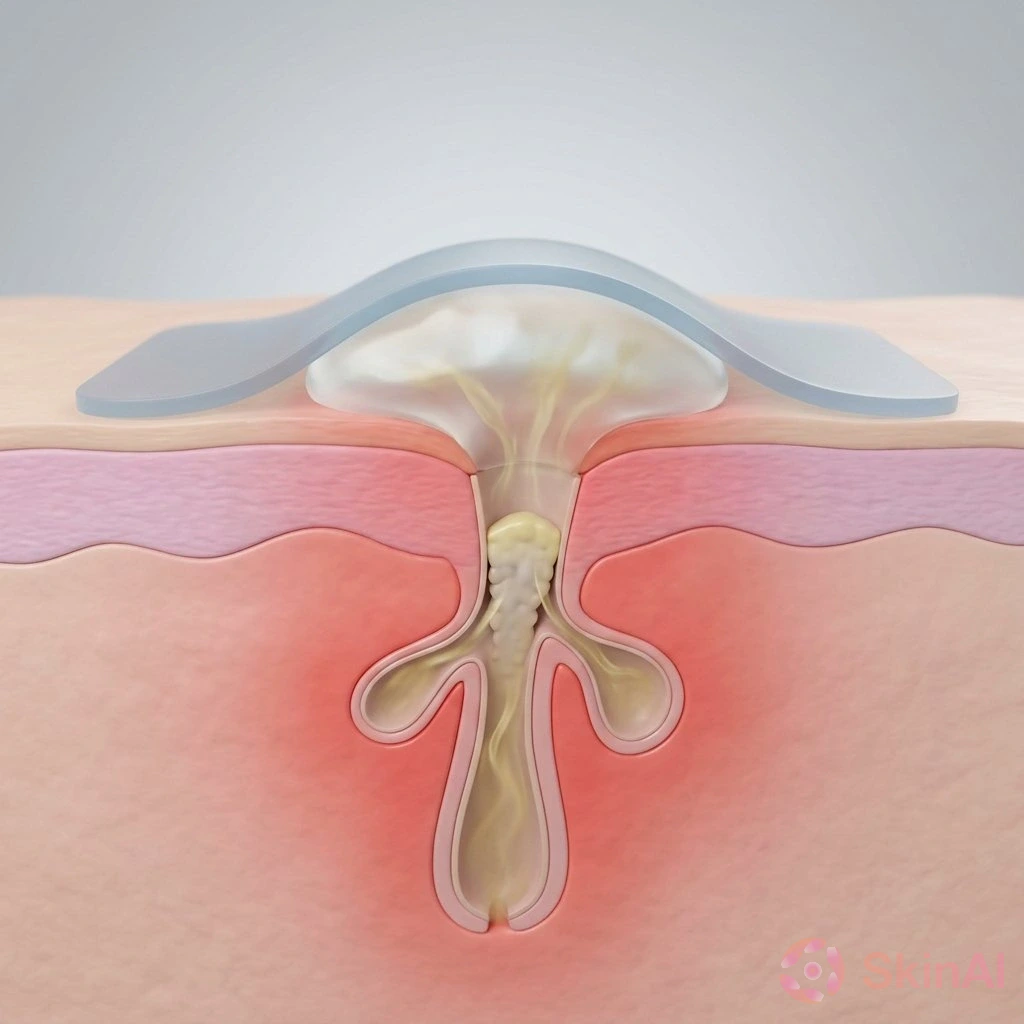
Why people are talking about pimple patches
Small, round stickers you press over a pimple have become a common sight online and in drugstores. People call them pimple patches, spot patches, or hydrocolloid patches. Many users say the patch visibly fills with fluid overnight and leaves the spot smaller and less red by morning. That has a lot of people wondering: do these patches actually help, and how do they work?
Quick summary
What they are: Hydrocolloid patches are thin, sticky dressings that absorb fluid and form a soft gel on contact with moisture.
What they may do: They can help already-draining pimples heal faster, may reduce redness and crusting, and might lower the chance of dark marks after the spot heals.
What they don’t do: They don’t suck impurities out of an intact pore. The “drawing out” idea you often see on social media is not how they work.
How hydrocolloid patches actually work
The idea behind these patches comes from wound care science that goes back decades. The basic finding was that wounds heal faster and with better-looking skin when they are kept moist and protected rather than left open to the air. This is called moist wound healing.
Hydrocolloid material (commonly containing a gel-forming substance such as carboxymethylcellulose) sticks to the skin and soaks up any fluid coming from the lesion. On contact with that fluid, the dressing turns soft and gel-like. That’s the “filled” look people notice in the morning: fluid from an already-open or already-draining spot has been absorbed into the patch, not pulled out of a closed pore by suction.
Another important but often overlooked benefit is behavioral. Patches cover the spot and make it harder to pick or squeeze. Because touching and picking a pimple can prolong inflammation and increase the chance of a dark spot after it clears (called post-inflammatory hyperpigmentation), keeping a lesion covered for several hours — for example overnight — can meaningfully help how it looks later.
What the research says
There are a few randomized trials looking at hydrocolloid patches for acne and they generally support modest benefits, especially for certain lesion types.
One larger 14-day randomized trial in people aged 12 to 35 compared hydrocolloid patches to a gentle-wash control. The study separated lesions that had been “popped” or were actively draining from closed lesions. Sites with drained or popped lesions showed clear and fast improvement in appearance, smoothness, redness, size, and crusting as soon as day 1 to day 4 (Source: Kosmoski G, Du-Soriano J, Ilg D, et al., 2024).
Closed bumps (papules) also improved, with smaller reductions in diameter by day 4 and less dryness, but the effects were smaller and slower than for draining lesions (Source: Kosmoski G, Du-Soriano J, Ilg D, et al., 2024).
Earlier smaller trials showed similar trends. A pilot randomized trial found greater reductions in acne severity and inflammation with a hydrocolloid dressing compared with standard skin tape over several days (Source: Chao CM, Lai WY, Wu BY, et al.). A recent randomized open-label trial of an unmedicated hydrogel/hydrocolloid patch reported a 35% drop in lesion size and a 44% improvement in lesion severity by day 2 versus no treatment, with further gains by day 10. That same trial found that untreated lesions were more likely to develop darker marks by day 10 than patch-treated lesions, which supports the idea that the patch helps by preventing manipulation as well as by absorbing fluid (Source: Maldonado López A, Domicio da Silva Souza I., 2025).
Overall, the best evidence is for actively draining or recently extracted lesions. The science shows smaller or slower effects for closed papules, and very little reason to expect a flat adhesive patch to make a difference for deep cysts or for blackheads (comedones) that don’t have any surface fluid to absorb.
What that means for everyday use
If you’re deciding whether to try a pimple patch, here are practical points to keep in mind:
- Best uses: Patches can help with pimples that are already draining, spots you’ve just popped or extracted, and any lesion you’re tempted to pick at. They protect the spot and keep it in a moist environment for healing.
- Less likely to help: Blackheads, deep cysts, and closed bumps without surface fluid generally won’t benefit much, because there’s nothing for the patch to absorb.
- Medicated vs non-medicated: There’s not enough head-to-head data comparing medicated and non-medicated hydrocolloid patches. If a patch contains an active ingredient, be cautious about irritation and stop use if the skin reacts.
- Not a full acne plan: A patch treats individual spots. It’s not a substitute for creams, ointments applied to the whole area, or prescription treatments for people with widespread or persistent acne. Talk with a doctor or dermatologist about a broader plan if you have ongoing acne.
When to see a doctor
Talk to a healthcare professional if you notice any of the following around a spot:
- Increasing pain, warmth, swelling, or spreading redness (possible infection).
- Bleeding that won’t stop.
- Fast-growing or very large nodules or cysts.
- Spots that don’t improve with home care or are affecting your quality of life.
For general advice about treatment options or concerns about scarring and darker marks, your doctor or a dermatologist can help you choose appropriate options.
Tracking changes
If you want to keep an eye on how spots are changing over time, taking a simple photo each day can help you notice improvement or new problems sooner. This can be useful when discussing treatment options with a clinician.
Disclaimer
This article is for general information and does not replace medical advice. Treatment decisions should be discussed with a doctor or dermatologist. If you have severe symptoms, signs of infection, or rapid changes in your skin, seek medical attention.
Sources
- Dhivya S, Padma VV, Santhini E. Wound dressings – a review. Biomedicine (Taipei). doi:10.7603/s40681-015-0022-9.
- Kosmoski G, Du-Soriano J, Ilg D, et al. 50551 The Science Behind a Viral Trend: Demonstrating Safety and Efficacy of Hydrocolloid Patch for Facial Acne. (Source: Kosmoski G, Du-Soriano J, Ilg D, et al., 2024).
- Chao CM, Lai WY, Wu BY, Chang HC, Huang WS, Chen YF. A pilot study on efficacy treatment of acne vulgaris using a new method: results of a randomized double-blind trial with Acne Dressing.
- Maldonado López A, Domicio da Silva Souza I. A randomized trial evaluating an unmedicated acne-concealing hydrogel patch on the appearance of acne and its psychological impact on quality of life. J Dermatol Sci Cosmet Technol. Volume 2, Issue 4, 2025, 100127. doi:10.1016/j.jdsct.2025.100127. (Source: Maldonado López A, Domicio da Silva Souza I., 2025).