
Difamilast Ointment: A New Non-Steroidal Treatment for Atopic Dermatitis
Expanding Therapeutic Options for Atopic Dermatitis
The treatment landscape for atopic dermatitis (AD) is evolving, and the recent approval by the U.S. FDA of difamilast 1% (marketed as Adquey) ointment marks the introduction of a new non-steroidal option for patients aged 2 years and older suffering from mild to moderate forms of this condition.
About Difamilast
Developed by Otsuka Pharmaceuticals and licensed in the United States to Acrotech Biopharma, difamilast is a topical phosphodiesterase 4 (PDE4) inhibitor intended for application twice daily. This medication joins a class of targeted anti-inflammatory therapies that function by inhibiting PDE4, an enzyme crucial for the breakdown of cyclic adenosine monophosphate (cAMP).
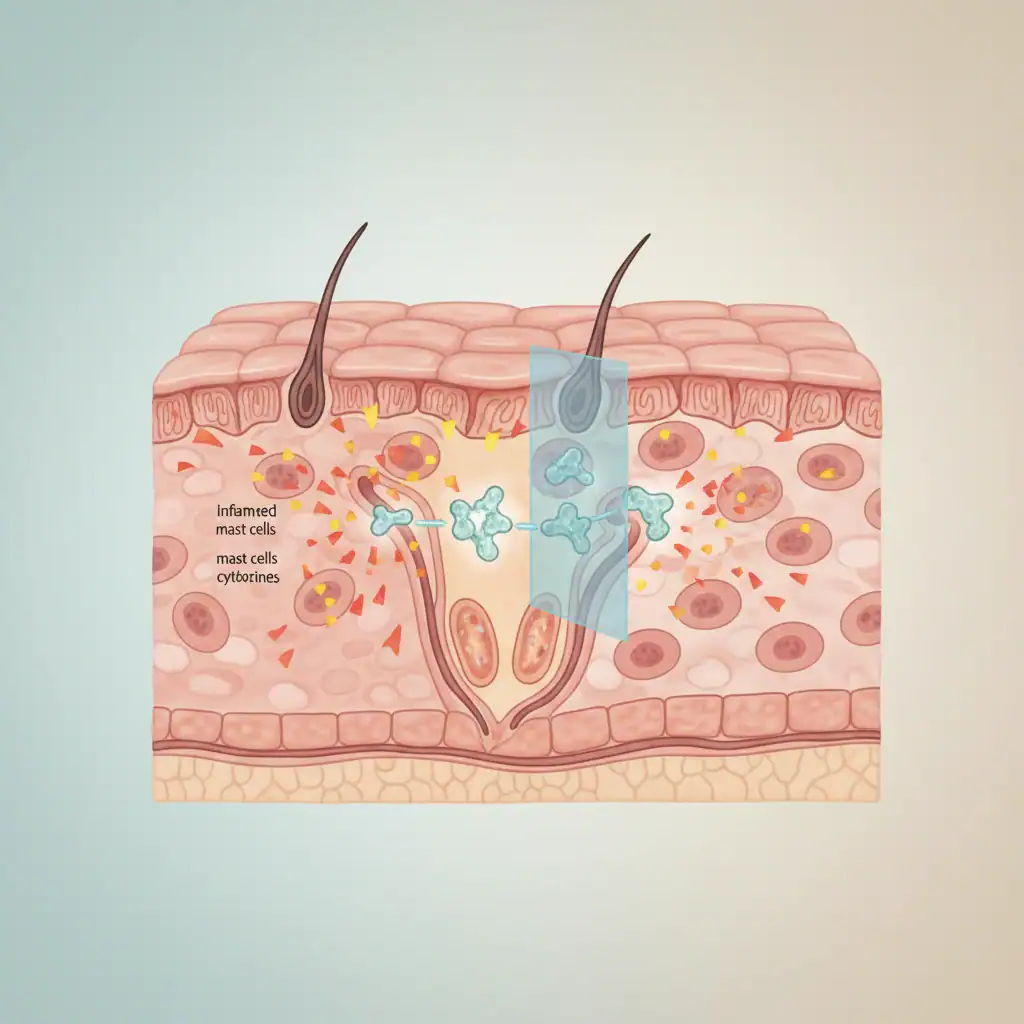
The inhibition of PDE4 leads to increased levels of intracellular cAMP, which in turn helps modulate the production of downstream inflammatory cytokines. This approach has been validated in treating inflammatory dermatoses like atopic dermatitis, particularly where type 2 immune pathways are prominent.
Advantages Over Topical Corticosteroids
While topical corticosteroids (TCS) remain the first-line treatment for flare-ups, their prolonged use comes with significant risks, including skin atrophy and telangiectasia. In contrast, difamilast offers a non-steroidal alternative that could be particularly advantageous for pediatric patients and in sensitive areas such as the face or intertriginous zones, where there are heightened concerns regarding steroid exposure.
Clinical Development and Approval
The FDA’s approval of difamilast was supported by multiple clinical trials, including pivotal phase 3 randomized, vehicle-controlled studies. These trials demonstrated that a notably higher percentage of patients treated with difamilast 1% achieved Investigator’s Global Assessment (IGA) success—characterized by clear or nearly clear skin with at least a 2-point improvement—after four weeks compared to the vehicle group (Source: Acrotech Biopharma Inc., FDA Approval Press Release).
The safety profile observed in these studies remained consistent, with the most frequently reported adverse reaction being nasopharyngitis. Other less common side effects included application-site folliculitis, contact dermatitis, application-site rash, and molluscum contagiosum.
Overall tolerability across the studies was comparable, with no new systemic safety signals identified. For practitioners familiar with interpreting eczema trials, the four-week IGA endpoint aligns with regulatory standards typically seen in other topical drug approvals.
Long-Term Data from Japan
Although the U.S. approval is valid for patients aged 2 years and older, additional insights can be drawn from Japanese clinical development programs that assessed difamilast in younger populations, including infants aged 3 to less than 24 months.
In a 52-week, phase 3 multicenter open-label study conducted in Japan (NCT05372653), 41 infants with mild to moderate AD were initially treated with difamilast 0.3% applied twice daily, with the option to escalate to 1% based on clinical response.
At baseline, the mean Eczema Area and Severity Index (EASI) score was 9.6, and the mean affected body surface area (BSA) was 27.1%. By week four, 56.1% of infants achieved IGA success, which increased to 75.6% by week 52.
The EASI response rates at week four were impressive, with 92.7%, 82.9%, and 46.3% achieving EASI 50, 75, and 90 responses, respectively, showing maintenance or further improvement through week 52. Notably, among infants who did not respond initially to 0.3%, a majority achieved IGA success after escalating to 1%.
Adverse events were prevalent, reflecting the expected infectious burden in infants; all participants experienced at least one adverse event, most of which were mild or moderate. Commonly reported events included nasopharyngitis, gastroenteritis, and typical pediatric viral illnesses.
Only one case of folliculitis was deemed related to the study medication, resulting in discontinuation. No significant laboratory or vital sign abnormalities were noted, and plasma concentrations remained low (averaging 7.2 ng/mL for 0.3% and 11.6 ng/mL for 1%), implying limited systemic exposure—an essential factor in infants.
However, the open-label design, lack of a vehicle control, the use of rescue topical corticosteroids by many participants, and the exclusively Japanese study population might limit the generalizability of the findings. Nevertheless, these results offer valuable insights into long-term tolerability and sustained responses in very young patients.
Clinical Implications
For healthcare providers managing AD, the availability of another topical PDE4 inhibitor enhances the non-steroidal treatment options. The treatment objectives for mild to moderate AD include effective symptom control while minimizing treatment-related side effects and enhancing the quality of life.
Many patients may require either intermittent or long-term topical therapy; thus, steroid-sparing strategies continue to gain interest. Difamilast could be considered for patients who express concerns about the chronic use of topical corticosteroids, those with disease affecting sensitive areas, or as part of a proactive maintenance regimen.
As with any topical treatment, patient adherence, application quantity, and education are critical factors that influence real-world effectiveness. Atopic dermatitis remains a chronic, relapsing inflammatory condition that can impose significant psychosocial burdens across a patient’s lifespan.
The approval of difamilast provides healthcare professionals with an additional non-steroidal option for patients aged 2 years and older, supported by clinical trial data indicating short-term efficacy and a generally favorable safety profile.
Continuing post-marketing surveillance and real-world data collection will be essential in clarifying difamilast’s long-term role within evolving treatment strategies.
Sources
- Acrotech Biopharma Inc., announces FDA approval of ADQUEYTM (difamilast 1%) ointment for the treatment of mild-to-moderate atopic dermatitis. Published February 13, 2026. Accessed February 19, 2026. https://www.aurobindo.com/api/uploads/corporateannouncements/Adquey-(Difamilast)_NDA%20Approval_PressRelease_13-Feb-26.pdf
- Saeki H, Ohya Y, Baba N, Imamura T, Yokota D, Tsubouchi H. A phase 3, long-term, open-label study of difamilast ointment to evaluate efficacy and safety in Japanese infants with atopic dermatitis. Dermatol Ther (Heidelb). doi:10.1007/s13555-025-01581-1