
How Phages Could Transform Acne and Body Odor Treatments Naturally
Why phages matter for skin care
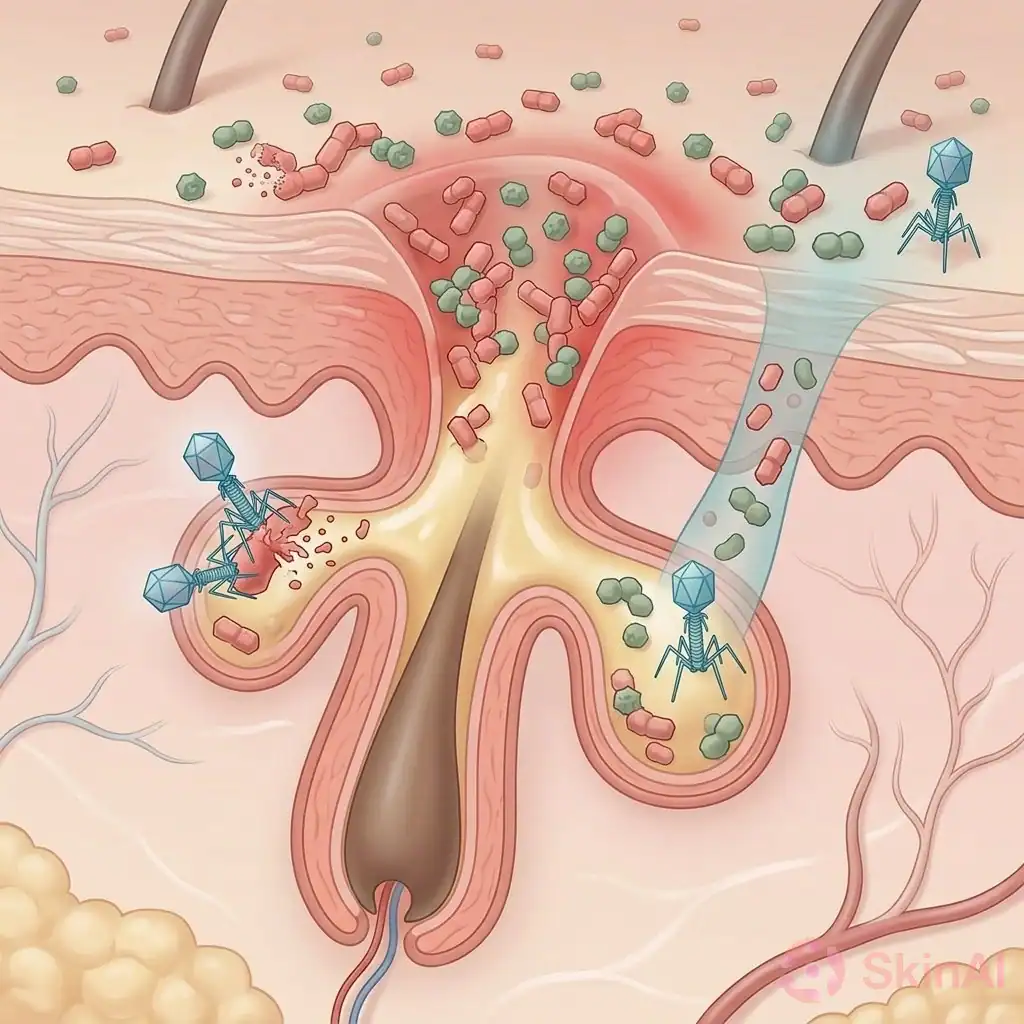
Scientists are exploring whether tiny viruses called phages could help with common skin problems like acne, atopic dermatitis (eczema), body odor, and other conditions where bacteria play a role. Phage-based approaches may offer a way to target harmful bacteria without using the antibiotics many people rely on now.
What is a phage?
Phage is short for bacteriophage, which literally means a virus that infects bacteria. Phages come in many varieties — some use DNA, some use RNA — and they do one job: find certain bacteria, infect them, and cause them to die.
Phages are found almost everywhere bacteria live: water, soil, sewage, the gut, the mouth, and the skin. There’s a whole community of phages in any given spot, sometimes called the phageome.
How phages might help skin problems
Because phages only target bacteria, they could be used to reduce or remove specific bacteria that cause trouble. For example:
- Acne: A phage that targets Cutibacterium acnes (C. acnes) might lower the amount of that bacteria on the skin and improve acne without oral or topical antibiotics.
- Atopic dermatitis and other inflammatory conditions: Changes in the phageome and bacterial balance have been linked to conditions such as eczema, psoriasis, and hidradenitis suppurativa. Adjusting phage levels could one day be part of treatment strategies.
- Body odor: Phages that reduce odor-causing bacteria under the arms, in the groin, or on the feet might improve how effective deodorants are. A mix of different phages (a “cocktail”) could be applied after bathing to help maintain a healthy bacterial balance and reduce odor.
Why this could be better than antibiotics
Antibiotics kill many kinds of bacteria, which can disturb the skin’s natural microbiome (the community of helpful and harmless microbes). That disruption can cause other problems and encourages antibiotic resistance.
Targeted phages could, in theory, remove just the specific bacteria that cause symptoms while leaving the rest of the microbiome intact, which may help avoid those downsides.
Important challenges and safety considerations
Phage therapy sounds promising, but there are several practical and safety questions that researchers are still working on:
- Active vs. passive therapy: Ideally, a phage applied once would multiply on the skin and persist (active therapy). In practice, it’s more likely that phages would need to be reapplied regularly in enough numbers to keep killing the target bacteria (passive therapy).
- Safety: Not all phages are harmless. Some can be immunogenic (trigger immune reactions) and some can carry genes for bacterial toxins. For example, certain bacterial toxins, such as botulinum toxin, are linked to genes carried by phages.
- Inflammation: When phages kill bacteria, bacterial components such as endotoxins can be released and may cause inflammation in humans.
- Environment sensitivity: Phages don’t all survive under the same conditions. Products that keep skin at its slightly acidic normal pH may lower phage levels, since many phages are pH-sensitive.
- Bacterial resistance: Just as bacteria can become resistant to antibiotics, they can change in ways that make them no longer sensitive to a given phage.
- Development hurdles: Researchers still need to solve questions about how to deliver phages to the skin, how often to use them, what doses are needed, and which combinations of phages work best.
Regulatory and marketing notes
As of now, no phage treatments for dermatology have full approval from the U.S. Food and Drug Administration (FDA). In the current marketplace, some phage-containing products may be sold as cosmetic ingredients rather than as medicines.
That matters because cosmetics are limited in what health claims they can make. For example, a company selling a phage product for acne may not be allowed to claim it treats acne. To get around that, some manufacturers add familiar acne ingredients such as salicylic acid so they can legally state the product is for acne. This makes it hard to know whether any improvement is coming from the phage, the salicylic acid, or both.
Where things stand and what to expect
Phages hold real potential to be a useful tool for bacterial skin problems and for improving deodorant effectiveness, but much more research is needed. Scientists are still working out which phages to use, how to formulate them into safe and effective products, and how to test them fairly.
Tracking changes to your skin
If you’re trying a new product that affects acne, eczema, or odor, consider taking a few photos over time and noting any changes in irritation, redness, or smell. Keeping a simple record can help you and your clinician see what’s working and what isn’t.
When to see a doctor
If you have worsening acne, severe or painful skin redness, signs of infection (such as increasing pain, warmth, pus, or spreading redness), rapid changes in a mole or lesion, or any concerning symptoms, talk with a dermatologist or your healthcare provider. They can help you decide on safe, evidence-based treatments.
Disclaimer
This article is for information only and is not medical advice. Treatment decisions should be made with your doctor or dermatologist. Phage therapies are experimental in many areas of dermatology and are not yet established standard treatments.
Sources
- Zoe Diana Draelos, MD — clinical faculty member, Department of Dermatology, Duke University School of Medicine; president, Dermatology Consulting Services, High Point, North Carolina.