
Is Our Skin Microbiome Facing a Modern Mass Extinction Crisis?
What the skin microbiome is — and why it matters
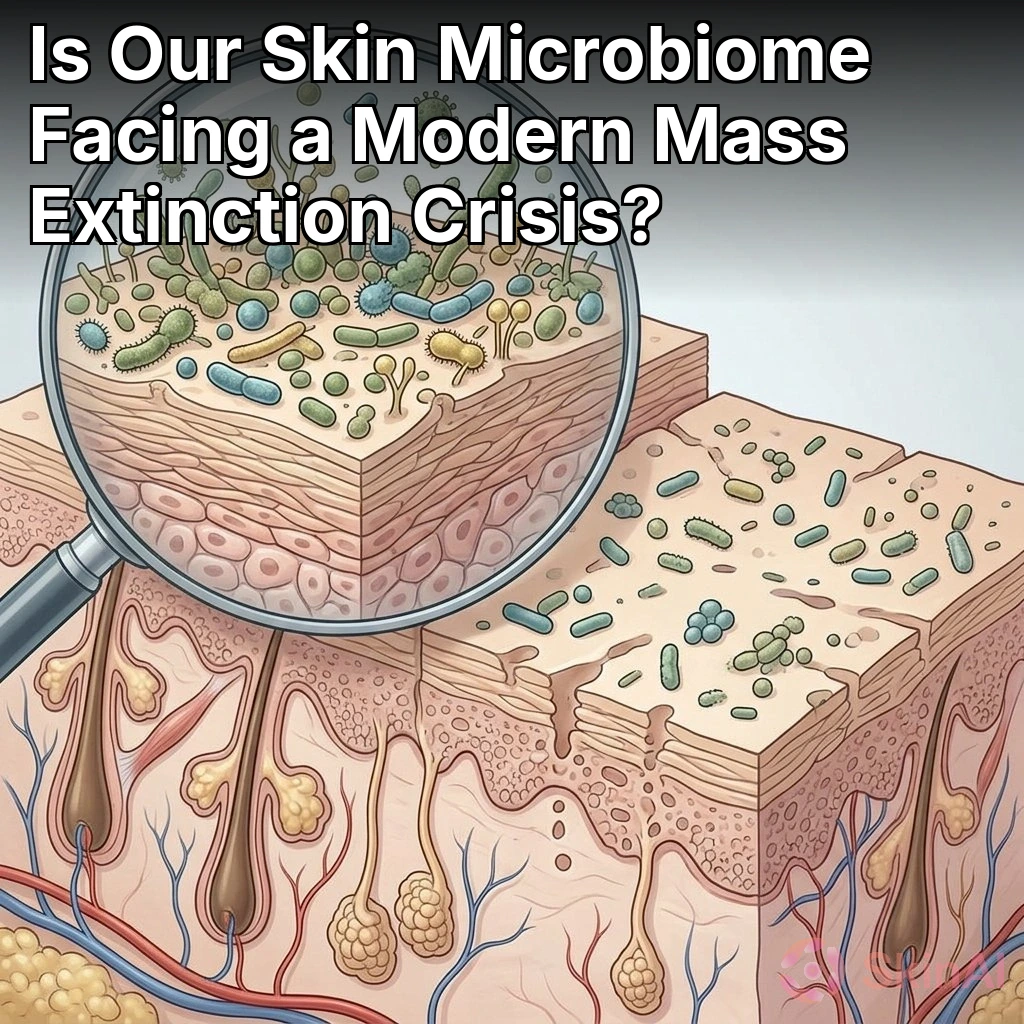
The skin microbiome is the rich community of microorganisms — including bacteria, yeast, fungi, and viruses — that live on every surface of our skin and help keep it functioning normally.
These tiny communities don’t live only on the skin; related microecosystems are found in the nasal passages, throat, lungs, and vagina, while the largest numbers of microbes are generally concentrated in the gastrointestinal tract (Source: Human Microbiome Project, Nature 2012).
Although the gut holds the largest microbial population, the skin is the second most microbiologically populated site on the body and plays a unique role as a barrier and immune interface (Source: Human Microbiome Project, Nature 2012).
How many microbes do we carry?
There are truly trillions of microorganisms living on and in us, and estimates of how many relative to human cells have been revised in recent years; microbes and human cells exist in roughly the same order of magnitude, meaning the microbiome represents a substantial fraction of our biological make-up (Source: Sender et al., PLOS Biology 2016).
Because microbial communities are so abundant and tightly linked to our physiology, changes in the microbiome can have outsized effects on health — particularly on the skin, which is our first line of defense against the outside world.
We’re losing skin microbial diversity — what that means
Researchers are sounding the alarm that the human skin microbiome is experiencing a marked decline in diversity — a phenomenon described as catastrophic biodiversity loss on the skin. This trend is believed to be driven by a blend of modern lifestyle factors, including widespread antibiotic exposure from food, a Westernized diet, and reduced contact with natural environments (Source: Wallen-Russell et al., Microorganisms DOI:10.3390/microorganisms11112784).
Loss of microbial diversity matters because healthy skin tends to host a broad variety of organisms, while diseased skin is often dominated by fewer species. Lower biodiversity is associated with reduced resilience against pathogens and altered immune signaling (Source: Wallen-Russell et al., Microorganisms DOI:10.3390/microorganisms11112784).
How scientists study the skin microbiome
Advances in DNA-based methods have transformed our understanding of skin microbes. In particular, shotgun metagenomic sequencing — which reads all the genetic material in a sample rather than just a single gene — has allowed researchers to detect fine-scale changes in who’s present on the skin and what they’re capable of doing (Source: Human Microbiome Project, Nature 2012; Quince et al., Nature Reviews Microbiology 2017).
This sequencing work has shown that factors like skin oil (sebum) and sweat shape which microbes thrive on different parts of the body, and it has revealed previously unrecognized organisms and functions that standard culture methods missed (Source: Human Microbiome Project, Nature 2012).
When the microbial balance goes off — dysbiosis explained
The term dysbiosis describes an unhealthy shift in a microbial community. On the skin this can look like a loss of overall diversity, an increase in disease-causing organisms, or the disappearance of beneficial microbes that normally keep opportunists in check.
One practical challenge is that there’s no single, universally agreed-upon definition of a “normal” skin microbiome across different people, ages, and environments — which makes diagnosing and treating dysbiosis more complex than, for example, treating a single infectious organism (Source: Human Microbiome Project, Nature 2012).
Evidence of biodiversity loss in developed societies
Comparative studies suggest that people in industrialized, urban settings have substantially reduced skin microbial diversity compared with individuals living in rural or indigenous environments — with reported reductions in biodiversity ranging widely, in some reviews from roughly 30% up to 84% (Source: Wallen-Russell et al., Microorganisms DOI:10.3390/microorganisms11112784).
Researchers point to a mix of contributors: widespread use of soaps, detergents, household cleaning products, pollution, increasing antibiotic exposure, and certain lifestyle choices that limit contact with diverse environmental microbes (Source: Wallen-Russell et al., Microorganisms DOI:10.3390/microorganisms11112784).
Daily products, pH shifts, and the microbiome
Many commercial skin care formulations are acidic (around pH 5), while traditional soaps and many detergents are more alkaline. These pH differences alter the skin surface environment and can shift which microbes are able to thrive (Source: Wallen-Russell et al., Microorganisms DOI:10.3390/microorganisms11112784).
Some investigators suggest that the explosion in cleansing and skin care products over the past decades may be linked to rising rates of inflammatory skin conditions. For example, historical data from the United Kingdom indicate a marked increase in eczema rates between the mid-20th century and recent decades — a trend some analysts have connected to changes in hygiene and product use (Source: Wallen-Russell et al., Microorganisms DOI:10.3390/microorganisms11112784).
Dysbiosis across common skin diseases
A disrupted skin microbiome is a consistent feature of many dermatologic disorders, including acne, atopic dermatitis (often called eczema), seborrheic dermatitis, tinea pedis, rosacea, psoriasis, and hidradenitis suppurativa (Source: Wallen-Russell et al., Microorganisms DOI:10.3390/microorganisms11112784; Byrd et al., Nature Reviews Microbiology 2018).
In some cases, early exposure to antibiotics has been linked to later development of conditions like atopic dermatitis, possibly through long-term alterations to microbial communities (Source: Wallen-Russell et al., Microorganisms DOI:10.3390/microorganisms11112784).
Skin dysbiosis and body-wide illness: the gut–skin and brain connections
Evidence is mounting that skin microbial imbalance often occurs alongside changes in the gut microbiome, and that the two systems can influence one another through immune and metabolic pathways (Source: Wallen-Russell et al., Microorganisms DOI:10.3390/microorganisms11112784).
Beyond skin symptoms, dysbiosis has been tentatively associated with broader health issues, including cardiovascular disease, diabetes, and even neuropsychiatric and neurodegenerative conditions such as schizophrenia, Parkinson disease, and Alzheimer disease in emerging literature — an area that remains under active study and debate (Source: Wallen-Russell et al., Microorganisms DOI:10.3390/microorganisms11112784).
Microbial diversity may be more important than single pathogens
In some skin conditions, improvement appears to come not simply from killing a single microbe but from restoring a more balanced, biodiverse community. For example, some researchers suspect that gains in atopic dermatitis symptoms correlate with increased skin microbiome diversity rather than only a reduction in Staphylococcus aureus counts (Source: Wallen-Russell et al., Microorganisms DOI:10.3390/microorganisms11112784).
This shifts the treatment focus from purely antimicrobial approaches to strategies that support a resilient microbial ecosystem on the skin.
Fungi, inflammation, and possible links to neurodegeneration
The yeast Malassezia is a normal resident of oily skin areas, but when it overgrows it can cause chronic low-grade inflammation such as seborrheic dermatitis.
Some investigators have raised the possibility that persistent cutaneous inflammation driven by organisms like Malassezia might play a role, directly or indirectly, in neurodegenerative processes — a provocative hypothesis given the well-documented high prevalence of seborrheic dermatitis in people with Parkinson disease (Source: Wallen-Russell et al., Microorganisms DOI:10.3390/microorganisms11112784).
The microbiome as the skin’s first defense
Microbial diversity acts like a living shield: a rich community of microbes can help prevent colonization by harmful organisms and modulate local immune responses that keep inflammation in check.
Because of this, many clinicians now view the microbiome as the skin’s first line of defense, and they are exploring ways to support and restore healthy microbial communities rather than just eliminating microbes indiscriminately (Source: Byrd et al., Nature Reviews Microbiology 2018; Human Microbiome Project, Nature 2012).
Therapies on the horizon: probiotics, prebiotics, and microbiome-aware care
Topical probiotics and other microbiome-targeted approaches have generated both excitement and controversy in dermatology. Early studies and anecdotal reports show promise for treating chronic, treatment-resistant skin diseases, but the field is still young and rigorous clinical evidence is limited (Source: Wallen-Russell et al., Microorganisms DOI:10.3390/microorganisms11112784).
Dermatologists are increasingly incorporating microbiome science into practice by choosing therapies that minimize unnecessary disruption to microbial diversity and by considering strategies that restore helpful organisms when possible (Source: Byrd et al., Nature Reviews Microbiology 2018).
Where clinicians fit in
As specialists who manage complex skin conditions, dermatologists are often at the forefront of interpreting microbiome research and applying it to patient care.
Correcting dysbiosis — whether by modifying topical products, limiting unnecessary antibiotics, or exploring targeted microbiome therapies — has become part of the therapeutic conversation in modern dermatology (Source: Byrd et al., Nature Reviews Microbiology 2018; Wallen-Russell et al., Microorganisms DOI:10.3390/microorganisms11112784).
Author
Zoe Diana Draelos, MD, clinical faculty member in the Department of Dermatology at Duke University School of Medicine and president of Dermatology Consulting Services, contributed clinical perspective to these topics.
Sources
- Wallen-Russell C, Pearlman N, Wallen-Russell S, Cretoiu D, Thompson DC, Voinea SC. “A catastrophic biodiversity loss in the environment is being replicated on the skin microbiome: is this a major contributor to the chronic disease epidemic?” Microorganisms. doi:10.3390/microorganisms11112784 (Source: Wallen-Russell et al., Microorganisms)
- Human Microbiome Project Consortium. “Structure, function and diversity of the healthy human microbiome.” Nature. 2012. (Source: Human Microbiome Project, Nature 2012)
- Sender R, Fuchs S, Milo R. “Revised Estimates for the Number of Human and Bacteria Cells in the Body.” PLOS Biology. 2016. (Source: Sender et al., PLOS Biology 2016)
- Byrd AL, Belkaid Y, Segre JA. “The human skin microbiome.” Nature Reviews Microbiology. 2018. (Source: Byrd et al., Nat Rev Microbiol 2018)
- Quince C, Walker AW, Simpson JT, Loman NJ, Segata N. “Shotgun metagenomics, from sampling to analysis.” Nature Reviews Microbiology. 2017. (Source: Quince et al., Nat Rev Microbiol 2017)