
What Is Erythropoietic Protoporphyria? Causes, Symptoms, and Treatment
Why this matters
If you or a child suddenly feel intense burning or pain after being in sunlight — even when the skin looks normal — it can be frightening and confusing. One rare cause of that kind of reaction is erythropoietic protoporphyria (EPP). Understanding EPP can help people get diagnosed sooner and avoid long, painful delays.
In simple terms
- Erythropoietic protoporphyria (EPP) is an inherited condition caused by a missing or low enzyme important for making heme, the molecule in blood that carries oxygen.
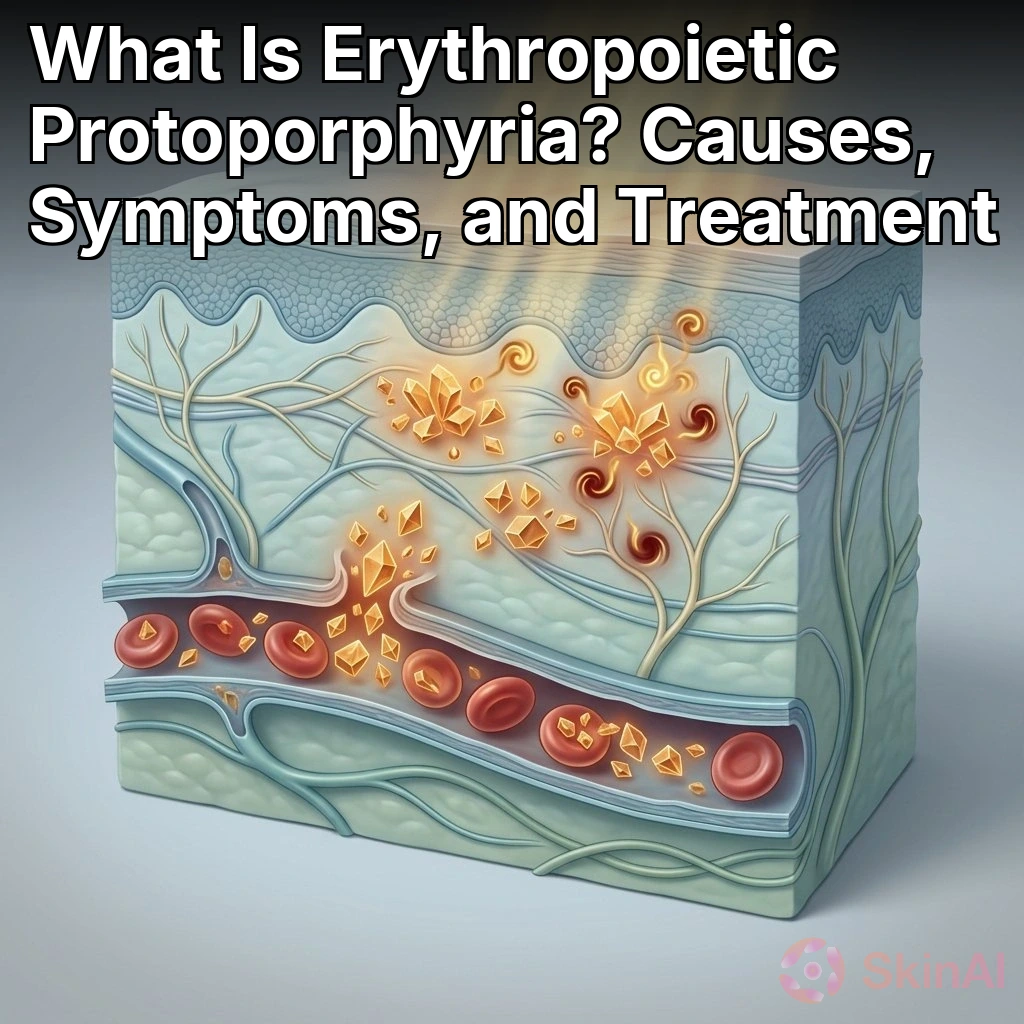
- Because of that enzyme shortage, a substance called protoporphyrin builds up in the blood, skin, and liver. Protoporphyrin reacts strongly to light.
- When exposed to certain kinds of light, people with EPP can get very painful, long-lasting reactions — often without much visible change to the skin.
What causes EPP?
EPP starts with a shortage of an enzyme called ferrochelatase. This enzyme helps make heme, which is part of red blood cells.
When ferrochelatase isn’t working well, protoporphyrin builds up in red blood cells, in the bloodstream, in the skin, and sometimes in the liver.
Because protoporphyrin is sensitive to light (especially blue light), exposure can trigger painful reactions. (Source: Elizabeth Buzney, MD, Brigham and Women’s Hospital and Mass General Brigham Dermatology)
Common symptoms
The hallmark of EPP is a sudden, intense, deep pain in skin that’s been exposed to light.
- People describe the pain as a deep burning, tingling, or itching.
- Redness and swelling can follow, and repeated long-term exposure can lead to permanent scarring.
- Surprisingly, you may see little or no visible change on the surface of the skin even when the pain is severe. (Source: Elizabeth Buzney, MD, Brigham and Women’s Hospital and Mass General Brigham Dermatology)
A pain that doesn’t match what you see
One confusing part of EPP is that the pain is often much worse than the skin looks. The pain is usually deep rather than just a surface burn.
Because there might be no visible injury, children and adults are sometimes not believed. Coaches, parents, or doctors may think the person is exaggerating — but the pain is real. (Source: Elizabeth Buzney, MD, Brigham and Women’s Hospital and Mass General Brigham Dermatology)
What triggers a reaction?
Sunlight is the most common trigger, but it’s not the only one. Any light that contains the right wavelengths — especially blue light — can cause problems.
- Sunlight during outdoor activities
- Indoor lights, like fluorescent office lighting
- Bright lights used during medical procedures, such as in operating rooms
Reactions can last days to weeks, and further exposure to provoking light or other physical stimuli can make symptoms worse. Standard pain or burn treatments often give little relief, leaving people feeling incapacitated until the reaction fades. (Source: Elizabeth Buzney, MD, Brigham and Women’s Hospital and Mass General Brigham Dermatology)
Why diagnosis is often delayed
Because symptoms start quickly — often within minutes of light exposure — but visible skin signs may be minimal or absent, EPP can be mistaken for allergies or other environmental reactions.
Many people go through extensive allergy testing that comes back normal. Patients themselves might not immediately link their pain to light and may keep searching for other causes.
Doctors who know the pattern — very fast onset of deep burning pain after light exposure, with little skin change and poor response to usual pain medicines — are more likely to test for EPP and avoid long delays in diagnosis. (Source: Elizabeth Buzney, MD, Brigham and Women’s Hospital and Mass General Brigham Dermatology)
When to see a doctor
Talk to a healthcare professional if you or your child:
- Has sudden, severe burning or deep pain after being in sunlight or bright indoor light
- Has repeated reactions that last days or weeks
- Has severe pain that doesn’t match how the skin looks
- Has reactions during medical procedures or under bright indoor lighting
A clinician who recognizes these clues can order the right blood tests and refer you to a specialist if needed.
Disclaimer
This article is for information only and is not medical advice. If you’re worried about symptoms, please consult a healthcare professional.
Sources
- Elizabeth Buzney, MD, Brigham and Women’s Hospital and Mass General Brigham Dermatology