
Delgocitinib Cream Boosts Quality of Life in Chronic Hand Eczema Patients
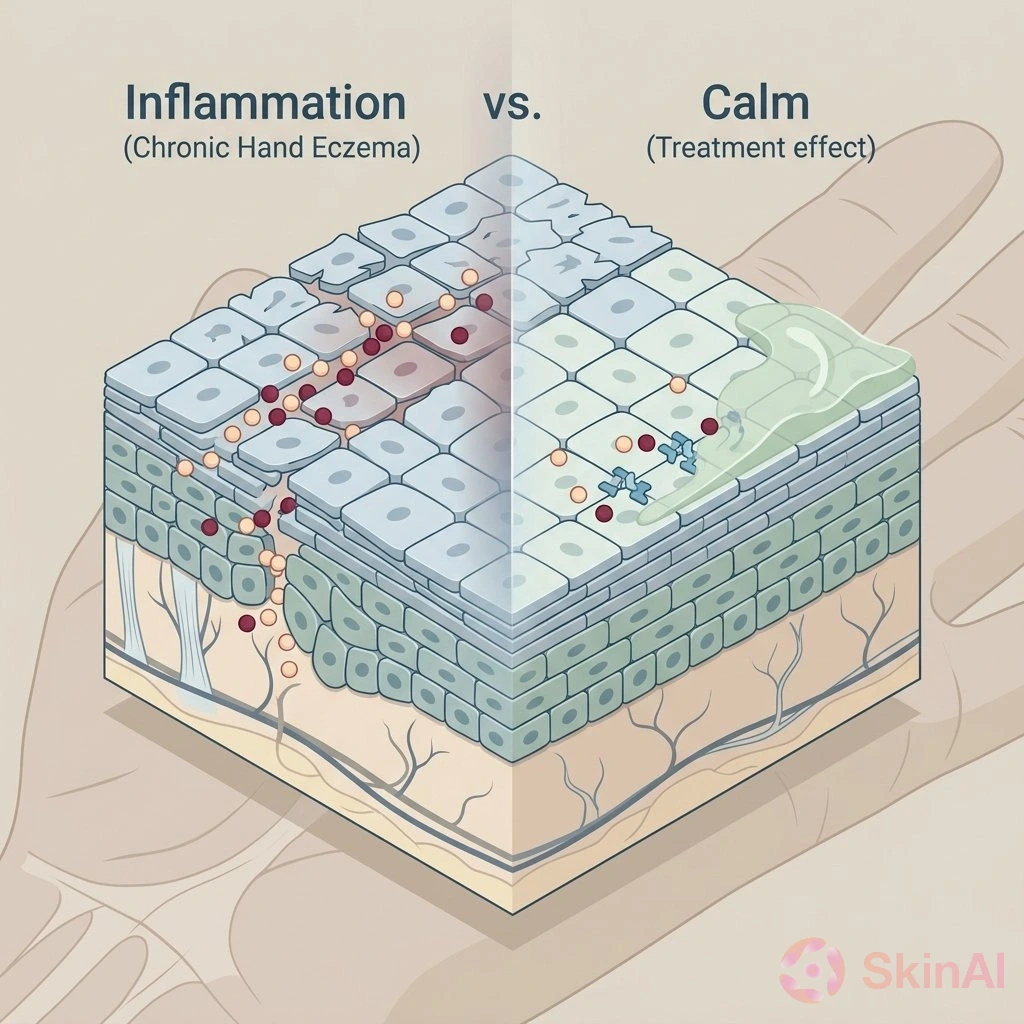
New data on a cream for chronic hand eczema — what people should know
Hand eczema can be painful, itchy, and stubborn. New results presented at the 2026 European Academy of Dermatology and Venereology (EADV) Congress in Vienna give more real-world and teen-focused information about delgocitinib cream, a topical medicine used for moderate to severe chronic hand eczema.
This article explains the findings in plain language, what the medicine is, and what the results may mean for people and families affected by this condition.
Why this matters
Chronic hand eczema (CHE) means eczema on the hands that lasts more than three months or keeps coming back at least twice a year. It can cause redness, itch, pain, scaling, thickened skin, blisters, swelling, and cracks that make everyday activities harder.
Researchers presented new data both from adults using the cream in routine care and from a clinical trial in adolescents. The results add to what we already know about delgocitinib, but they are early or secondary (post hoc) analyses, so they should be read with some caution.
What the studies looked at
Two types of findings were reported at EADV 2026:
- Real-world results from the ongoing REACHED study in Germany, which follows adults being treated in regular dermatology clinics.
- Post hoc (secondary) analyses from the DELTA TEEN phase 3 clinical trial, which looked at patient-reported itch, pain, and quality of life in adolescents aged 12 to 17.
Real-world results in adults (REACHED study)
The REACHED study is an observational, noninterventional study being run at 79 sites in Germany. The interim report presented results after 8 weeks of treatment for up to 97 patients, depending on the outcome measured.
At the start, 68 people had formal severity assessments and 63 of those had moderate or severe CHE. The average score on the Hand Eczema Severity Index (HECSI), a measure of how bad hand eczema is, was 62.4.
After 8 weeks using delgocitinib cream in routine practice, researchers found:
- 28.6% of patients were rated “clear” or “almost clear” on a modified Physician Global Assessment, compared with none at the start.
- The average HECSI score dropped from 62.4 to 30.8.
- 35.5% of patients achieved at least a 75% improvement in HECSI.
- Quality of life improved: average Dermatology Life Quality Index (DLQI) scores went from 14.5 at baseline to 7.9 at week 8.
- Patients reported less itch and pain: average itch and pain scores fell by 2.1 and 2.7 points, respectively, on numerical rating scales.
- All reported side effects were nonserious, and all but one were mild or moderate.
Because this is an interim, real-world report, the numbers give an early look at how the cream performs outside a tightly controlled clinical trial. That can be useful, but these results are not the final word.
Rapid improvements in teens (DELTA TEEN trial)
The DELTA TEEN trial was a 16-week, phase 3, randomized, double-blind, vehicle-controlled study testing twice-daily delgocitinib cream in adolescents with moderate to severe CHE. Researchers carried out post hoc analyses looking at daily patient-reported itch and pain using the Hand Eczema Symptom Diary (HESD).
Key findings included:
- Improvements were seen as early as day 1. Average itch change from baseline was –1.03 with delgocitinib versus –0.20 with vehicle (P = .040).
- Pain scores fell by –1.34 with delgocitinib versus –0.39 with vehicle (P = .019).
- The greater reductions in itch and pain with delgocitinib were maintained during the first two weeks of treatment.
A separate analysis from the same trial looked at health-related quality of life using the Children’s Dermatology Life Quality Index (CDLQI). Results at week 16 included:
- 27.0% of adolescents on delgocitinib reported a CDLQI score of 0, meaning their skin had no impact on quality of life, compared with 0% on vehicle (P = .005).
- The proportion reporting a large or very large impact on life dropped from 21.6% at baseline to 4.1% at week 16 with delgocitinib. In the vehicle group the drop was from 25.0% to 16.7%.
- For the CDLQI symptoms and feelings domain, 48.6% of adolescents treated with delgocitinib had a domain score of 0 at week 16, versus 5.0% for vehicle (P < .001).
These findings suggest delgocitinib may reduce itch and pain quickly in teens and improve how much eczema affects daily life, but remember these are post hoc analyses within a trial and should be interpreted carefully.
What is delgocitinib cream?
Delgocitinib is a nonsteroidal cream that works on the immune signaling pathway known as JAK-STAT. In simple terms, it helps reduce the inflammation that drives eczema symptoms. In the United States, delgocitinib cream is approved by the FDA for adults with moderate to severe chronic hand eczema who haven’t had enough benefit from topical corticosteroids or for whom steroids aren’t a good choice (Source: FDA approval noted in the original presentation).
What this could mean for people with hand eczema
The new EADV data add real-world adult experience and more teen-focused, patient-reported outcomes to the growing evidence about delgocitinib for CHE. The early adult results show improvements in clinical scores and quality of life by week 8, and the teen trial analyses show rapid reductions in itch and pain and better quality of life by week 16.
These findings are encouraging for people searching for alternatives when standard topical steroids aren’t enough or aren’t suitable, but they are not a guarantee that the cream will work for everyone. Talk with your dermatologist about whether this treatment might be appropriate for you or your child.
When to see a doctor
See a dermatologist or your primary care provider if your hand eczema is:
- Persistent for more than a few weeks, getting worse, or returning frequently.
- Causing severe pain, bleeding, signs of infection (increasing redness, warmth, pus), or difficulty using your hands.
- Interfering with sleep, school, work, or social activities.
If you’re already using treatments and not getting better, it’s worth discussing other options and whether a medication like delgocitinib might be considered.
Keeping track of visible changes
It can help to take photos of your hands over time and note symptoms such as itch, pain, or activities that trigger flares. This record may make it easier to describe your condition to a doctor and track whether a treatment is helping.
Important caution
This article summarizes research presented at a medical conference and does not offer medical advice. Some results were interim or post hoc analyses and should be interpreted with care. Treatment decisions should be made together with a healthcare professional who knows your medical history. If you have severe symptoms, signs of infection, or sudden changes in your skin, seek medical care promptly.
Sources
- Molin S, et al. Real-world effectiveness of delgocitinib cream in adults with moderate to severe chronic hand eczema: Interim analysis after 8 weeks of treatment in the German REACHED study. Presented at: European Academy of Dermatology and Venereology (EADV) Congress 2026; September 30–October 3, 2026; Vienna, Austria. (Source: EADV presentation)
- Molin S, et al. Delgocitinib cream provides rapid improvements in itch and pain symptoms in adolescents with moderate to severe chronic hand eczema: Results from DELTA TEEN. Presented at: EADV Congress 2026; September 30–October 3, 2026; Vienna, Austria. (Source: EADV presentation)
- Molin S, et al. Treatment with delgocitinib cream improves health-related quality of life in adolescents with moderate to severe chronic hand eczema: Results from DELTA TEEN; a randomized, double-blind, vehicle-controlled phase 3 trial. Presented at: EADV Congress 2026; September 30–October 3, 2026; Vienna, Austria. Oral presentation AS-1174. (Source: EADV presentation)
- Bissonnette R, Warren RB, Pinter A, et al. Efficacy and safety of delgocitinib cream in adults with moderate to severe chronic hand eczema (DELTA 1 and DELTA 2): Results from multicentre, randomised, controlled, double-blind, phase 3 trials. 2024;404(10451):461-473. (Source: Journal article cited in original)
- U.S. Food and Drug Administration — delgocitinib cream approval as noted in the original article. (Source: FDA approval referenced in original presentation)