
FDA Clears Phase 2 Trial for EB06, a New Treatment for Moderate to Severe Vitiligo
Why this matters
If you or someone you care about has vitiligo, news about new treatments can feel important. Vitiligo causes patches of lighter skin when pigment-producing cells (melanocytes) are lost. Many people with vitiligo are looking for better systemic treatments that address the underlying immune process, not just creams that treat the surface.
What happened
The U.S. Food and Drug Administration (FDA) has given clearance for an investigational new drug (IND) application that allows a company called Edesa Biotech to run a phase 2 study of a drug named EB06 in people with moderate to severe nonsegmental vitiligo. This clearance lets the company expand the study beyond Canada and start recruiting at sites in the United States. (Source: Edesa Biotech press release)
In plain language: what EB06 is
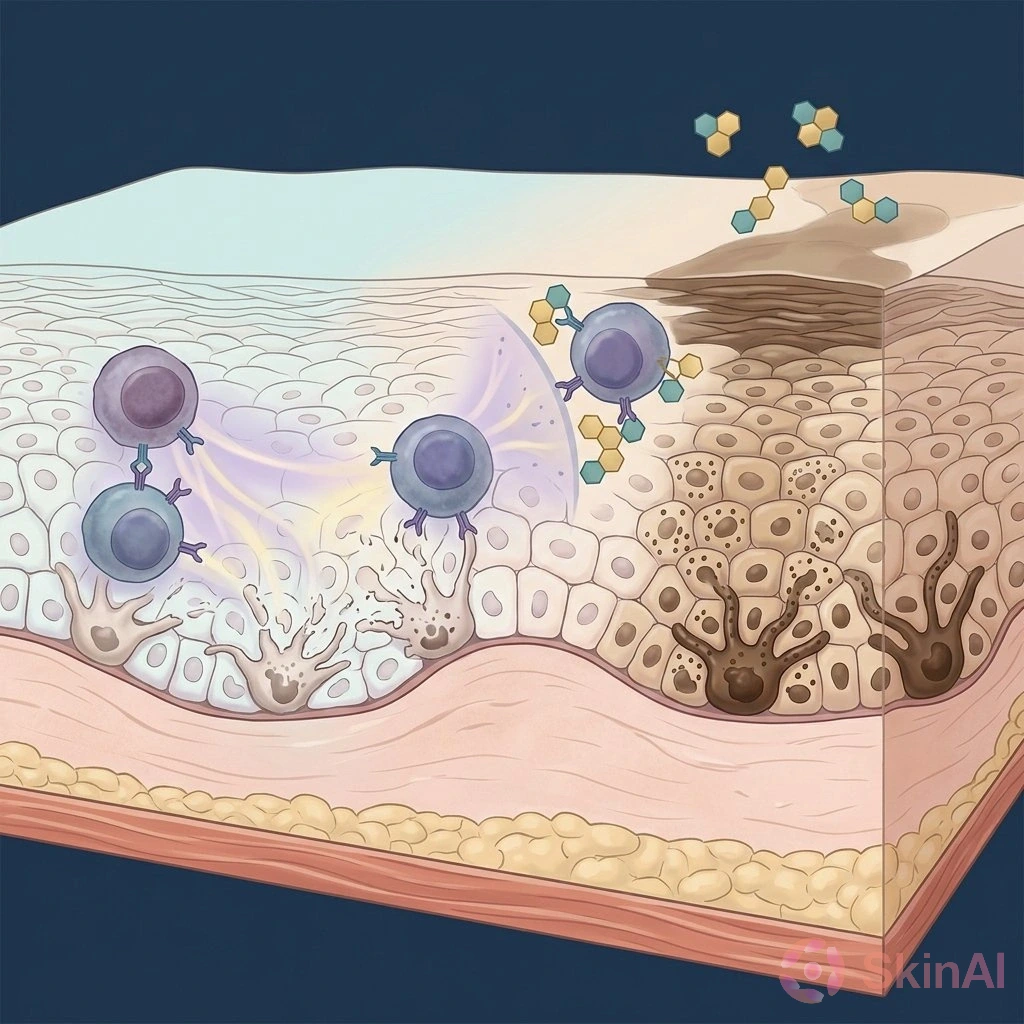
EB06 is a type of biologic called a monoclonal antibody. That means it is a lab-made protein designed to stick to one specific target in the body. EB06 targets a signaling protein called CXCL10, which researchers think plays a role in the immune activity that damages pigment cells in vitiligo. By binding CXCL10, EB06 is meant to block the signals that attract certain immune cells and that may cause pigment cells to die. (Source: Edesa Biotech press release)
Quick note on some terms
Monoclonal antibody: a lab-made protein that binds one specific molecule.
CXCL10: a signaling protein that can call immune cells to the skin and may be involved in pigment loss.
Nonsegmental vitiligo: the most common form of vitiligo, where lighter patches appear in multiple areas rather than in a single body segment.
Details of the phase 2 study
The study is double-blind and placebo-controlled, meaning neither participants nor researchers know who gets the active drug or a placebo during the trial. Up to 80 adults with moderate to severe nonsegmental vitiligo will be enrolled, and participants will be randomized 1:1 to receive EB06 or placebo every two weeks through week 22. EB06 in this study is given by intravenous (IV) infusion. (Source: Edesa Biotech press release)
The main result the study will look at is the change in facial pigmentation measured by the Facial Vitiligo Area Scoring Index (F-VASI) at week 28. F-VASI is a commonly used score that estimates how much of the face is affected by vitiligo and how severe the patches are. The study will also collect a number of secondary and exploratory measures, including overall body scores, safety and tolerability, how the drug moves through the body (pharmacokinetics), and immune responses to the drug (immunogenicity). (Source: Edesa Biotech press release)
How EB06 is thought to work
According to the company, EB06 binds CXCL10 with high affinity and blocks its interaction with two receptors called CXCR3A and CXCR3B. Edesa reports that CXCL10 can help guide anti-melanocyte CD8+ T cells into the outer layer of the skin through CXCR3A, and can trigger melanocyte death through CXCR3B. The company describes this as a targeted approach that is different from broader immunosuppressive treatments. These explanations come from Edesa’s descriptions of the drug’s mechanism and are part of what the clinical trial will test. (Source: Edesa Biotech press release)
What we already know (and what we don’t)
No results from this phase 2 study have been reported yet. Edesa expects to report topline results in the fourth quarter of 2027. (Source: Edesa Biotech press release)
Before this study, EB06 was tested in three earlier clinical studies involving a total of 65 people. The company says the antibody showed pharmacodynamic activity consistent with its proposed mechanism and was generally safe and well tolerated in those small studies. Edesa also reports preclinical lab and animal work suggesting that neutralizing CXCL10 could both prevent and reverse depigmentation. These findings are preliminary and are reported by the company; larger, controlled human trials are needed to confirm safety and effectiveness. (Source: Edesa Biotech press release)
Study operations and timeline
Patient recruitment is already underway in Canada, where the clinical trial application was approved. Edesa expects the first U.S. study sites to begin enrolling participants in the next quarter. The company selected JSS Medical Research as its clinical research organization in March 2026 to support running the trial. (Source: Edesa Biotech press release)
Par Nijhawan, MD, Edesa’s chief executive officer, noted in the company’s news release that FDA IND clearance is an important regulatory and operational step for their vitiligo program and that the company aims to report topline results in the fourth quarter of 2027. He also said in March 2026 that, despite how common vitiligo is, there are few effective treatment options and no approved systemic drugs that directly target the disease’s underlying processes. (Source: Edesa Biotech press release)
When to see a doctor
If you notice new or changing patches of lighter skin, if the patches are spreading quickly, or if you have concern about pigmentation changes, it’s reasonable to see a dermatologist. Also talk to a clinician if you have pain, signs of infection, or other symptoms associated with skin changes. Treatment choices and whether a clinical trial is appropriate are decisions to make with a doctor or dermatologist.
Keeping an eye on changes
It can help to document your skin over time with photos taken in consistent lighting and from the same angles. This makes it easier to track whether patches are stable, spreading, or improving and can help you and your clinician decide on next steps.
Important caution
This article is based mainly on company announcements from Edesa Biotech and public regulatory updates. Company reports of safety and early activity are preliminary. The safety and effectiveness of EB06 remain under clinical evaluation, and the final results of properly controlled trials will determine whether the drug is helpful for people with vitiligo. This is not medical advice; discuss any treatment questions with a dermatologist or other healthcare provider.
Sources
- Edesa Biotech announces FDA IND clearance for phase 2 vitiligo study. (Source: Edesa Biotech press release) Accessed October 16, 2026. https://www.globenewswire.com//news-release/2026/10/15/3381747/0/en/edesa-biotech-announces-fda-ind-clearance-for-phase-2-vitiligo-study.html
- Edesa Biotech advances vitiligo program for planned mid-2026 enrollment. (Source: Edesa Biotech press release) Accessed October 16, 2026. https://www.globenewswire.com/news-release/2026/03/26/3263120/0/en/Edesa-Biotech-Advances-Vitiligo-Program-for-Planned-Mid-2026-Enrollment.html