
Hair Loss Awareness Month: Identifying the Real Cause for Effective Treatment
Why hair loss deserves careful attention
As Hair Loss Awareness Month begins, it’s a good time to remember that hair loss is usually a sign of something going on in the body, not a single, one-size-fits-all problem. Alexandra Richmond, MD, founder and owner of Dermhaus in Charleston, South Carolina, emphasizes that treating hair loss starts with finding the reason behind it. (Source: Alexandra Richmond, MD, interview)
What your doctor will want to know
To figure out what’s causing hair loss, a doctor will take a detailed history. That helps separate one cause from another and leads to a treatment plan that fits your situation. Important things your clinician may ask about include:
- How the hair loss looks and where it’s happening (pattern and location).
- When it started and how fast it’s progressing.
- Any symptoms that come with it, such as itching or redness.
- Family history of hair loss.
- Current medications and supplements.
- Recent changes in hormones (for example, pregnancy or menopause).
- Recent stress, illness, or major lifestyle changes.
- Your diet and nutritional status.
- Hair care habits (products, styling, tight hairstyles).
Think symptom, not diagnosis
“I think of hair loss more as a symptom and we need to come up with a treatment plan,” Richmond says. The first goal is to figure out why the hair is falling out. Once the cause is found, a doctor can choose treatments that are more likely to help. (Source: Alexandra Richmond, MD, interview)
Be cautious about biotin
Some people reach for biotin supplements when they notice thinning hair, but Richmond advises against routinely taking high doses. Biotin deficiency is rare, and taking large amounts of biotin can interfere with common lab tests, including thyroid tests and troponin (a heart-related test). Because thyroid testing is often part of a hair-loss workup, and older adults may need accurate heart testing, unnecessary biotin can cause confusing or inaccurate results.
Scarring versus nonscarring hair loss
Doctors separate hair loss into two broad types because the outlook and urgency differ:
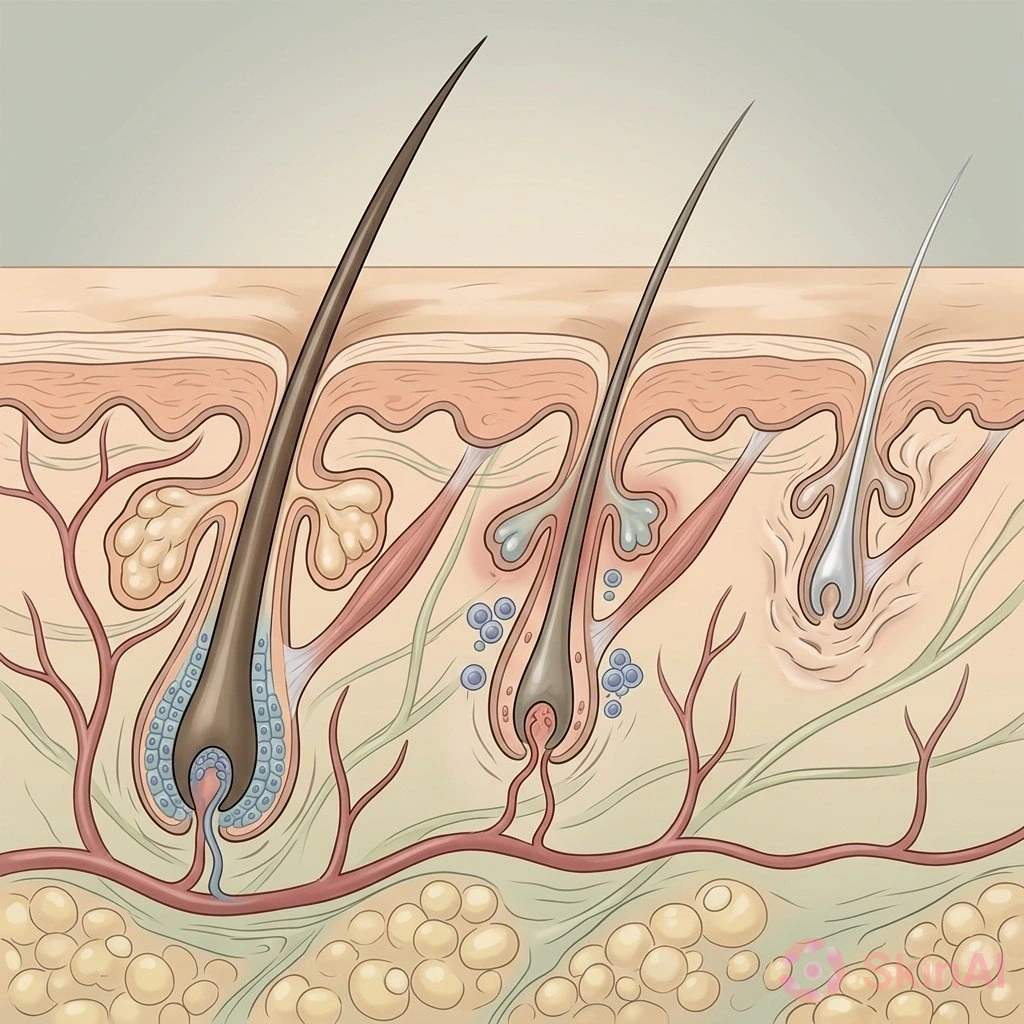
- Nonscarring hair loss: The hair follicle is still intact. If the cause is found and treated early—such as fixing a nutritional deficiency or reducing inflammation—hair may regrow.
- Scarring hair loss: The hair follicle has been permanently damaged and replaced by scar tissue. In these cases, hair that’s already lost cannot grow back, so early diagnosis and treatment are especially important to protect the remaining hair.
How doctors examine the scalp
A consistent diagnostic approach helps avoid missing important clues. A typical exam may include:
- Careful visual inspection of the scalp and hair.
- Dermoscopy, a handheld tool that magnifies the scalp to show patterns of hair loss and inflammation.
- A hair pull test, where the provider gently tugs small groups of hairs to see how many come out.
In some situations, a scalp biopsy is needed—especially when a scarring process or inflammation is suspected. Richmond usually takes a sample from the edge of an area where some hair remains; that spot shows both affected and still-viable follicles and helps reveal what’s happening beneath the skin. (Source: Alexandra Richmond, MD, interview)
Treatment is personal
Once the cause is known, treatment is tailored to the person. Your age, sex, overall health, plans for pregnancy, and other personal factors can influence which options are appropriate.
There are more treatment choices now than in the past, which makes personalization easier. Richmond points out that having more options is helpful—but it doesn’t replace the need to get the right diagnosis first. Choosing the wrong treatment for the wrong cause may not help and could cause harm. (Source: Alexandra Richmond, MD, interview)
When to see a doctor
Talk with a healthcare professional if you notice:
- Sudden or rapid hair loss.
- Patchy hair loss or clear areas of thinning.
- Scalp symptoms like pain, bleeding, pus, or severe redness.
- Hair loss accompanied by other symptoms such as unexpected weight changes, hair breakage, or signs of hormonal changes.
If you’re unsure, it’s reasonable to get a professional opinion. Early evaluation can preserve hair when the cause is treatable, and it helps make sure you’re on the right path.
Tracking visible changes
If you’re watching how your hair or scalp looks over time, simple photos taken in similar light and from the same angles can help you and your provider notice changes more clearly. This can make appointments more productive.
Important note
This article is for information and does not replace medical advice. Treatment choices and testing should be discussed with a doctor or dermatologist. Seek prompt care if you have pain, signs of infection, sudden or widespread hair loss, or other worrying symptoms.
Sources
- Interview with Alexandra Richmond, MD, founder and owner of Dermhaus, Charleston, South Carolina.