
Immune-Based Therapies Show Promise in Advancing Skin Cancer Prevention
Why this matters
If you worry about skin cancer or have a higher-than-normal risk, it helps to know what researchers are studying. Shawn Demehri, MD, PhD, a dermatologist and physician-scientist at Massachusetts General Hospital and Harvard Medical School, leads a clinic and a lab focused on preventing skin cancers before they start. His work may be especially relevant to people who develop many nonmelanoma skin cancers or who have genetic conditions that raise risk.
Who he treats and why it’s important
Dr. Demehri runs a high-risk skin cancer clinic that cares for people with multiple nonmelanoma skin cancers. That includes organ transplant recipients (who often take medicines that reduce their immune response) and people with rare genetic conditions such as xeroderma pigmentosum (a condition that makes the skin very sensitive to sunlight) and Gorlin syndrome (which can cause many skin growths and other problems). These patients need close follow-up because their chance of developing skin cancers is higher than average.
What his lab is studying
Rather than looking only at surgeries or topical creams, Dr. Demehri’s lab is investigating ways to use the body’s own immune system to prevent skin cancer. The team is exploring several ideas that try to teach or encourage the immune system to spot and remove abnormal or damaged skin cells before they become full-blown cancers.
Immunomodulatory agents: rallying immune cells
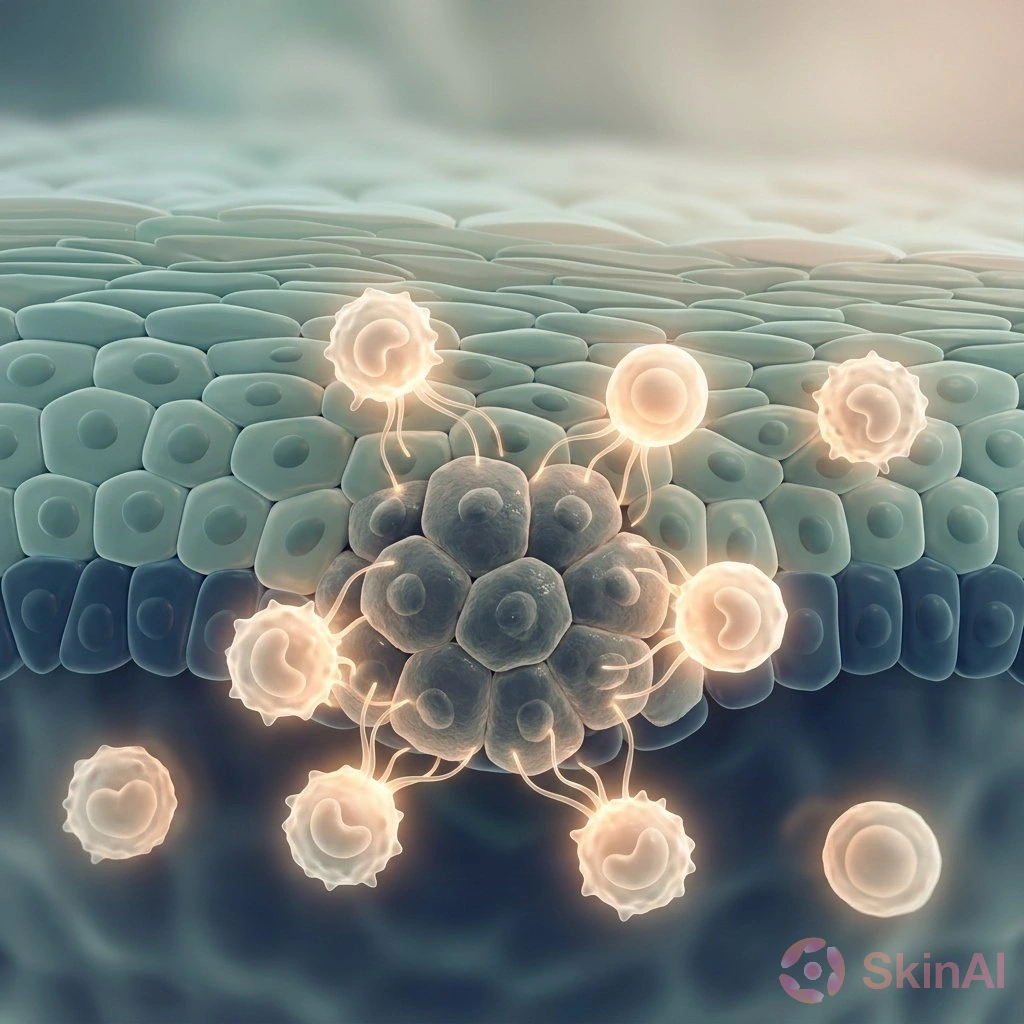
One line of research focuses on what are called immunomodulatory agents. These are treatments that stimulate the immune system by increasing the signals (called cytokines) that call immune cells to the skin. The idea is that stronger or better-targeted immune activity could help clear out tumor cells, precancerous cells, or damaged cells on the skin. Researchers are studying whether this approach might be used not only for skin but maybe for other organs in the future.
Antigen-directed immunotherapy in the keratinocyte compartment
Another area the lab is exploring is antigen-directed immunotherapy. In plain language: antigens are bits of protein or other markers that the immune system can recognize. The skin is mostly made up of cells called keratinocytes. The researchers want to know whether antigens or other natural elements in the skin can be used to help the immune system recognize and remove keratinocytes that are abnormal or damaged. If this works, it could give doctors a new way to reduce cancer risk for people who are especially prone to developing skin tumors.
The skin virome: the viruses that live on your skin
Dr. Demehri’s team is also interested in the human virome—the community of viruses that normally live on our skin without causing problems. Some of these “commensal” viruses might influence how the immune system behaves. The researchers are studying whether these harmless viruses could actually help the immune system spot and fight early cancer changes in the skin. This is part of a broader effort to understand the immune biology of early cancer development and find ways to use that knowledge for prevention.
What this could mean for people at higher risk
All of these projects aim to expand options for preventing skin cancer, especially for people who are at high risk. Right now these approaches are being investigated in the lab and early studies. That means they show promise, but they are not yet established as standard care. If these methods turn out to be safe and effective in further research, they might offer additional tools to lower the chance of new skin cancers developing in vulnerable patients.
If you’re tracking a visible mole, spot, or lesion over time, one simple step you can take is to photograph the area regularly. Clear photos can help you and your clinician spot changes more easily and prepare for a dermatology visit if needed.
When to see a doctor
Talk with your dermatologist or primary care doctor if you notice a changing mole or lesion, a spot that bleeds or gets painful, an area that’s rapidly growing, or any sign of infection. If you have a history of multiple skin cancers, a genetic condition that affects your skin, or you’re on long-term immunosuppression after an organ transplant, keep up with regular skin checks and follow your doctor’s recommendations for monitoring and prevention.
Important note
This article summarizes research directions described by Shawn Demehri, MD, PhD, and is intended to explain the work in plain language. It is not medical advice. Treatment decisions should always be discussed with your doctor or dermatologist.
Sources
- Interview and statements by Shawn Demehri, MD, PhD, Massachusetts General Hospital and Harvard Medical School.