
Menopause and Your Skin: How Hormones Impact Dryness, Firmness, and Acne
Why this matters
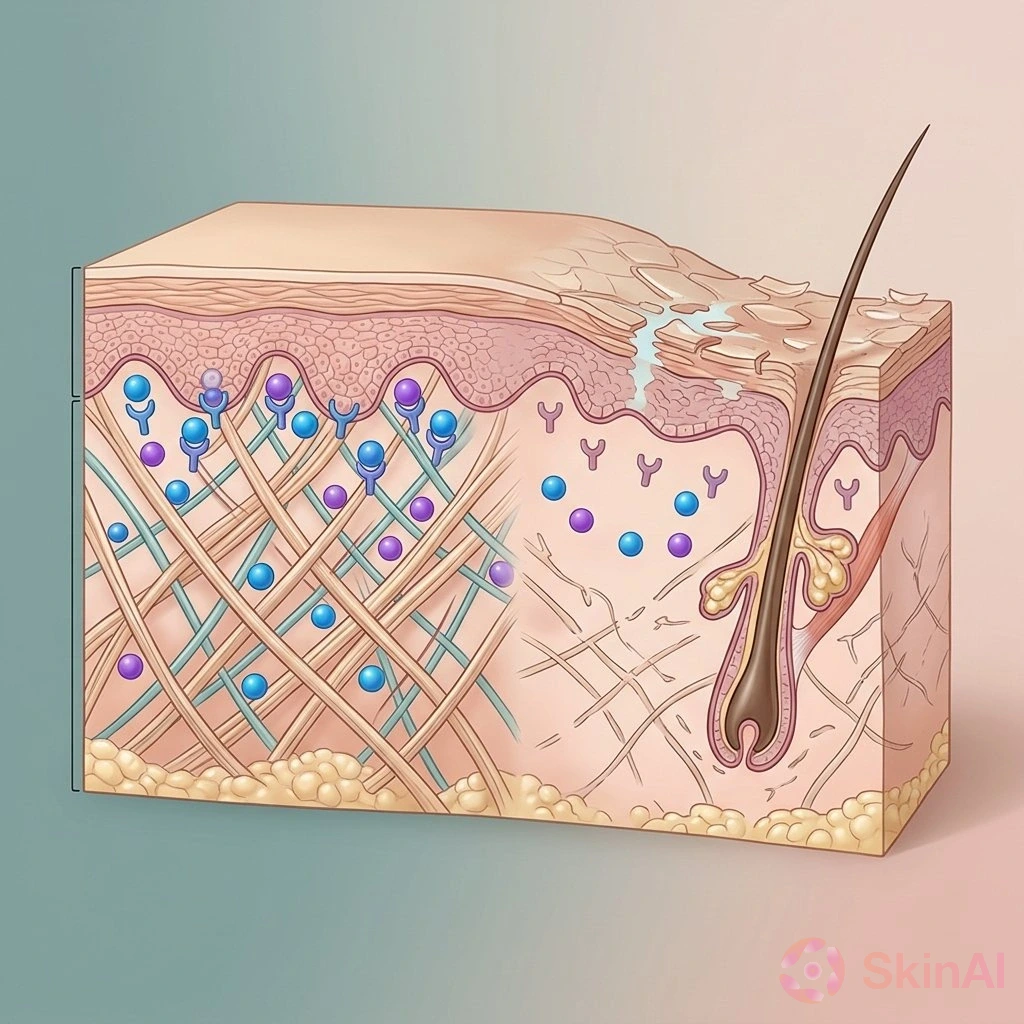
Many people notice their skin changing as they move through perimenopause (the years before menopause) and menopause. Dropping and fluctuating hormones can make skin drier, more sensitive, less firm, and sometimes bring back acne. Understanding these changes can help you and your dermatologist choose simpler, gentler care that fits the skin you have now.
A quick overview
Here are the common shifts people report during the menopausal transition:
- Dryness and irritation: Moisturizers that used to work may feel insufficient or products you tolerated for years can suddenly sting.
- Loss of firmness and glow: Skin may feel less elastic and less bouncy than before.
- Return of acne: Hormone changes can trigger breakouts even if you haven’t had acne in years.
What people often notice
One of the most frequent complaints is increased dryness and a change in skin texture. People describe losing some of that youthful bounce and glow.
Another common story is irritation from products that were fine before. You might find that a long-used moisturizer no longer seems to hydrate, or that active ingredients like strong exfoliants start to cause redness or stinging.
How to approach skin care during perimenopause and menopause
When skin becomes drier and more sensitive, adding more products isn’t always the answer. Many dermatologists recommend simplifying routines rather than layering on many new treatments at once.
Helpful ideas include:
- Prioritize hydration: Use moisturizers and gentle creams that help restore the skin’s barrier.
- Choose gentler active ingredients: Switch to milder forms of exfoliants or retinoids if you tolerate them less well, and avoid using many strong actives at the same time.
- Introduce changes one at a time: This makes it easier to see what actually helps and to spot what causes irritation.
Trying to treat every concern by piling on products can lead to more irritation. A simpler routine often gives better results and helps your clinician identify what’s working.
Why acne can come back
Hormonal ups and downs during perimenopause can cause acne to return in your 40s or 50s. This can be especially frustrating when your skin is also drier or more sensitive, because aggressive acne treatments may be harder to tolerate.
That’s why a tailored plan based on your current skin—rather than the routine you used at 20 or 30—is important. Your dermatologist can help balance acne control with gentle care to avoid worsening dryness or irritation.
Is it hormones or just aging and sun damage?
Many signs people associate with menopause—loss of firmness, texture changes, sensitivity—also happen from normal aging and years of sun exposure. Often, it’s a mix.
Dermatologists look at the whole picture, including menstrual history and other symptoms, to decide how much hormones might be contributing. Even then, there’s usually overlap: hormonal shifts add another layer to skin that has already been shaped by time and the sun.
Tracking changes over time
Keeping a simple photo log or notes about new products and symptoms can help you and your clinician spot patterns. This can be useful if you plan to discuss concerns with a dermatologist.
When to see a doctor
Make an appointment if you have rapidly changing spots, a lesion that’s bleeding or painful, signs of infection, or anything that worries you. If you’re unsure whether a change is related to hormones, aging, or something else, a clinician can help figure that out and recommend safe options.
Disclaimer
This article summarizes what a board-certified dermatologist shared in an interview and related medical references. It is for general information and not medical advice. Talk with your primary care provider or a dermatologist before starting or changing treatments. For concerning or rapidly changing skin findings, seek medical evaluation promptly.
Sources
- Interview with Jacqueline Watchmaker, MD, board-certified dermatologist, Scottsdale, Arizona (interview conducted during Menopause Awareness Month).
- Wentworth A. 2026;33(9):1031-1033. doi:10.1097/GME.0000000000002889
- Viscomi B, Muniz M, Sattler S. Managing menopausal skin changes: a narrative review of skin quality changes, their aesthetic impact, and the actual role of hormone replacement therapy in improvement. 2025;24(suppl 4):e70393. doi:10.1111/jocd.70393
- Kamp E, Ashraf M, Musbahi E, DeGiovanni C. Menopause, skin and common dermatoses. Part 2: skin disorders. 2022;47(12):2117-2122. doi:10.1111/ced.15308