
New Pediatric Hidradenitis Suppurativa Guidelines Urge Early Treatment
Understanding HS in children and teens
Hidradenitis suppurativa (HS) is a long-term skin condition that can cause painful lumps and sores. Over time, some people develop scars and tunnels under the skin, sometimes called sinus tracts. HS can begin in childhood, and getting the inflammation under control early may reduce the risk of lasting skin changes.
The first joint HS guidelines from the American Academy of Dermatology and the Hidradenitis Suppurativa Foundation include children as young as 9. The guidelines offer clinicians evidence to support treating HS in children as actively as they treat it in adults. (Source: AAD–Hidradenitis Suppurativa Foundation guidelines)
In an episode of Don’t Be Rash, the Society for Pediatric Dermatology’s official podcast, host Andrew Krakowski, MD, spoke with Colleen Cotton, MD, FAAD, about putting the guidelines into practice. Cotton directs the pediatric HS clinic at Children’s National Hospital in Washington, DC, where specialists from different fields work together. (Source: Don’t Be Rash interview)
Why early care matters
Fewer than 400 pediatric dermatologists practice in North America, so many children with HS see dermatologists who usually treat adults. Some clinicians may be hesitant to move to stronger treatments for a child. The new guidelines make few distinctions between treatment for children and adults, and early control may offer a better chance of limiting scars and tunnels beneath the skin. (Source: AAD–Hidradenitis Suppurativa Foundation guidelines; Don’t Be Rash interview)
About half of adults with HS report that their symptoms began in childhood. This makes it important to recognize and address the condition early, while also studying treatments more closely in adolescents. (Source: Don’t Be Rash interview)
Five factors that can shape treatment
In the podcast, Cotton described five factors that can play a role in HS: friction around hair follicles, an imbalance of bacteria, hormones, insulin resistance, and problems with immune system regulation. Hair follicles are the small openings in the skin where hair grows. Insulin resistance means the body does not respond to insulin as it normally should.
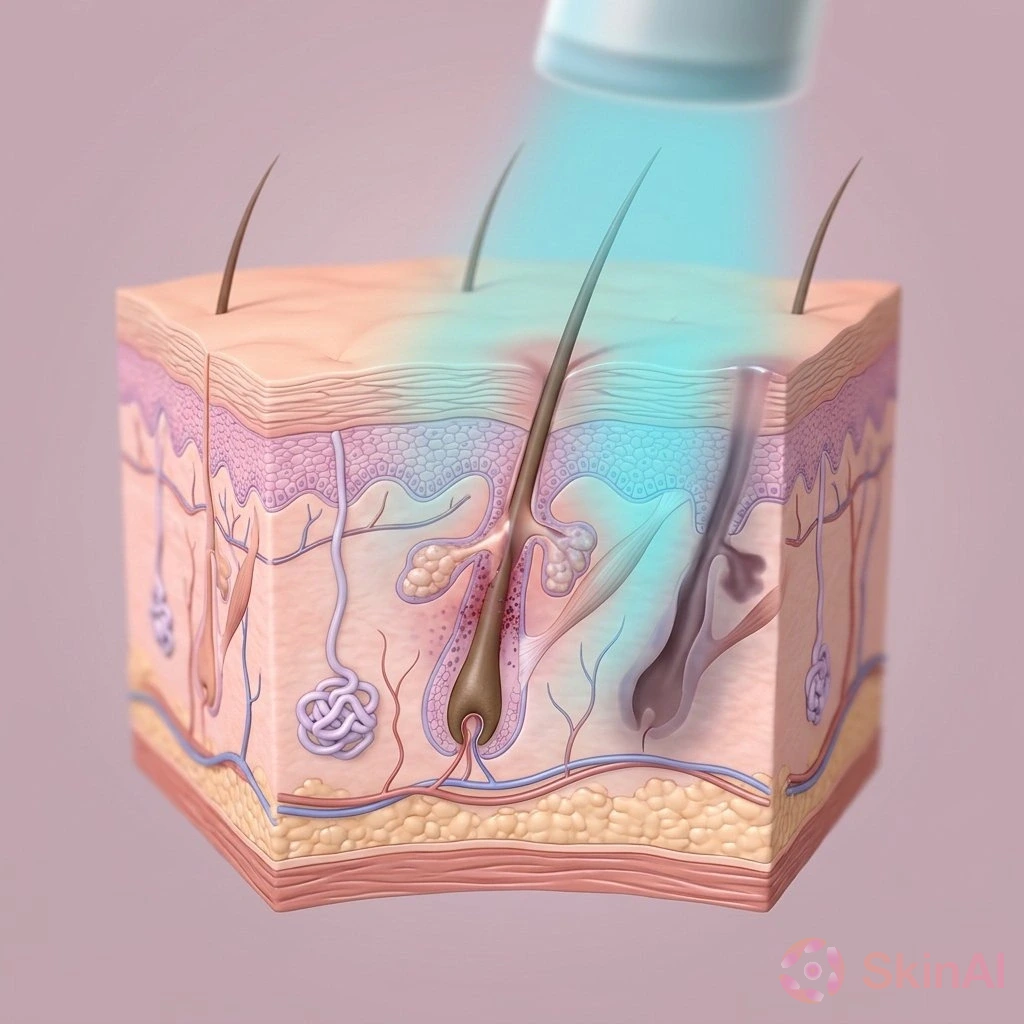
When friction seems to contribute to symptoms, seamless underwear and synthetic fabrics that draw moisture away from the skin may be helpful. Cotton also discussed early laser hair removal as an option that may affect the course of friction-related disease. These approaches are part of a broader discussion about care, not a replacement for medical treatment.
Medicines that may be used for HS
Antibiotics, hormonal medicines, and metformin
Oral antibiotics can act relatively quickly to reduce inflammation when used at doses that also treat bacteria. Other medicines, including spironolactone, metformin, and certain hormonal treatments, may take 3 to 6 months to have an effect. Metformin is a medicine that helps the body respond to insulin.
The guidelines give spironolactone a conditional recommendation. This means it may be appropriate in some situations, but the choice depends on the individual. Cotton noted that HS often requires higher doses than acne. She described a starting dose of 100 milligrams at night, which may be increased to twice daily after a week if tolerated. Dosing decisions should always be made with the treating clinician. (Source: AAD–Hidradenitis Suppurativa Foundation guidelines; Don’t Be Rash interview)
Options with limited or uncertain evidence
The guidelines found insufficient evidence to recommend antiseptic washes, weight loss alone, or medicines called GLP-1 receptor agonists for HS. GLP-1 medicines are used for conditions such as diabetes and weight management. Insufficient evidence does not necessarily mean an approach cannot help; it means there is not enough evidence to draw a clear conclusion. (Source: AAD–Hidradenitis Suppurativa Foundation guidelines)
The guidelines conditionally recommend against oral retinoids, a group of medicines related to vitamin A, for HS. Isotretinoin, one of these medicines, may still be appropriate for someone who also has severe acne. Cotton cautioned that using it for HS alone could delay more effective care. (Source: AAD–Hidradenitis Suppurativa Foundation guidelines; Don’t Be Rash interview)
Biologic medicines and more severe HS
Biologics are medicines that target specific parts of the immune system. The guidelines strongly recommend four biologics for HS: adalimumab, bimekizumab, infliximab, and secukinumab. A strong recommendation in the guidelines does not mean every medicine is suitable for every child. Age, disease severity, other health concerns, and available evidence all matter when discussing treatment. (Source: AAD–Hidradenitis Suppurativa Foundation guidelines)
For a patient who already has several tunnels under the skin, Cotton said it can be reasonable for a clinician to consider starting a biologic at the first visit. The guidelines support earlier use of these medicines in children with HS, while also highlighting the need for more trials that include adolescents. (Source: Don’t Be Rash interview)
Adalimumab is also available as a biosimilar, a medicine designed to be highly similar to an existing biologic. Biosimilars may make insurance approval easier. However, switches required by an insurer’s list of covered medicines can interrupt treatment and may encourage the body to produce antibodies against the medicine, according to the podcast discussion.
Infliximab and secukinumab
Cotton discussed infliximab at a dose of 10 milligrams per kilogram of body weight every 4 weeks as an option for severe HS or when inflammatory bowel disease is suspected. Inflammatory bowel disease involves ongoing inflammation in the digestive tract. The appropriate medicine and dose depend on the individual and should be decided by the treating clinician.
For children who weigh less than 90 kilograms, or about 198 pounds, secukinumab dosing is based on models that predict how the medicine behaves in the body rather than on pediatric trials. Cotton noted that a 150-milligram dose may not be enough for some patients. More research in children and teens is needed. (Source: Don’t Be Rash interview)
Procedures for tunnels under the skin
Medicines are not the only option discussed in the podcast. A procedure called deroofing removes the skin covering a tunnel so the area can heal. Cotton described patient satisfaction with this procedure as high.
Another option, cryoinsufflation, uses freezing treatment inside a tunnel and may be considered for people who cannot tolerate an open wound.
Biologic treatment does not always need to be stopped for skin procedures. In the SHARPS trial, people receiving adalimumab around the time of HS surgery had an improved treatment response without a higher risk of infection after surgery. A person’s care team can discuss whether to continue or pause a medicine for a particular procedure. (Source: SHARPS randomized clinical trial)
When to speak with a doctor
A doctor or dermatologist can assess painful lumps, recurring sores, or other concerning skin changes and discuss whether they could be HS. Seek medical advice if an area is changing, bleeding, becoming more painful, or showing signs of infection, or if you are unsure what is causing it.
Keeping a record of visible changes and symptoms over time may help families prepare for a dermatology visit. Treatment decisions should be made with a doctor who understands the child’s health and needs.
This article is for information only and is not a substitute for individual medical advice.
Sources
- Naik HB, Yeung H, Frazer-Green L, et al. “Joint American Academy of Dermatology-Hidradenitis Suppurativa Foundation guidelines of care for the management of hidradenitis suppurativa.” Journal of the American Academy of Dermatology. Published online October 20, 2026. doi:10.1016/j.jaad.2026.08.125.
- Bechara FG, Podda M, Prens EP, et al. “Efficacy and safety of adalimumab in conjunction with surgery in moderate to severe hidradenitis suppurativa: the SHARPS randomized clinical trial.” JAMA Surgery. 2021;156(11):1001-1009. doi:10.1001/jamasurg.2021.3655.
- Society for Pediatric Dermatology. Don’t Be Rash podcast interview with Colleen Cotton, MD, FAAD, hosted by Andrew Krakowski, MD.