
ODD-SPOT: A New Simple Tool to Improve Skin Cancer Detection for All
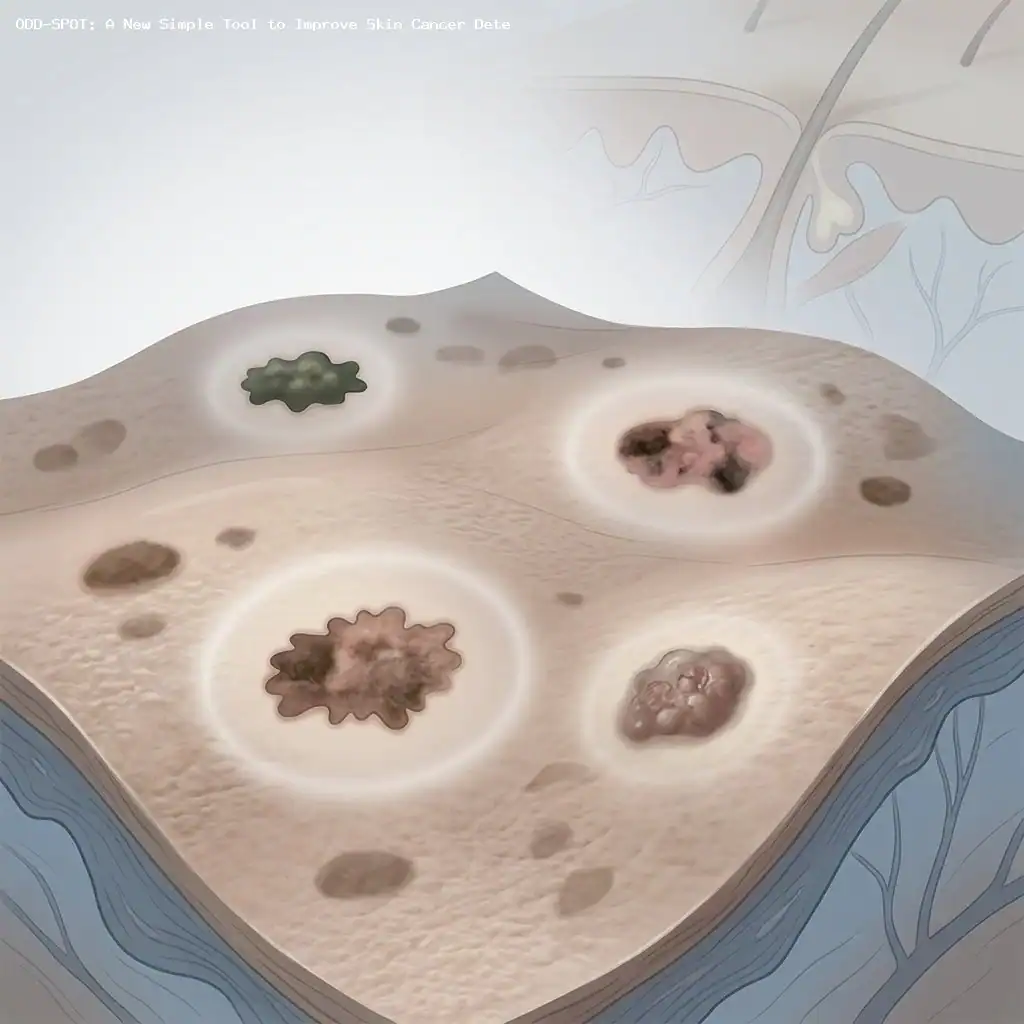
Meet ODD-SPOT: a new way to teach people about skin cancer
The familiar ABCDE rule for spotting dangerous moles has been a mainstay of patient education for years, but a new tool called ODD-SPOT aims to give people a broader, more practical way to recognize suspicious skin findings. (Source: Journal of the American Academy of Dermatology, ODD‑SPOT study)
Why clinicians felt a change was needed
Dermatologists and public health volunteers noticed that the old checklist often didn’t capture the full range of how skin cancer can look in everyday life.
As one of the developers, dermatologist Karen Babcock Nern, MD, observed, the ABCDE standard “is really incomplete and misses 95% of skin cancers,” and it can be described in language that is hard for many patients to use. (Source: Journal of the American Academy of Dermatology, ODD‑SPOT study)
Where ODD-SPOT came from
The idea for ODD‑SPOT grew out of real-world frustration during meetings for the Sun Bus, a free mobile skin cancer screening program in Colorado that reaches communities outside traditional clinics. (Source: Sun Bus, mobile screening program)
The team — including Dr. Nern and biomedical engineer Tamara Terzian, MS, PhD — took a systematic approach: they reviewed the medical literature, patient-facing websites, and major textbooks to collect the language used to describe skin cancers in clinical practice. (Source: Journal of the American Academy of Dermatology, ODD‑SPOT study)
They then tested and refined those word choices with two live and survey-based patient studies that together included nearly 1,800 participants, making sure the final phrasing matched how people naturally think and describe what they see on their skin. (Source: Journal of the American Academy of Dermatology, ODD‑SPOT study)
What ODD-SPOT stands for
-
Odd looking — anything that looks out of place compared with the rest of your skin or your other moles.
-
Dry and scabby — lesions that crust, flake, or don’t heal the way a normal scratch would.
-
Discolored — new or changing color, including patches that are darker, lighter, or unusually red.
-
Shiny — bumps or patches with a glossy or pearly surface, often seen with basal cell cancers.
-
Puffy/painful — raised, swollen, or tender spots that are new or changing.
-
Open/oozing/bleeding — sores that stay open, leak fluid, or bleed without an obvious injury.
-
Transforming — any spot that visibly changes over weeks to months in size, shape, or texture.
The developers designed these descriptors to reflect the typical appearances of basal cell carcinoma, squamous cell carcinoma, and melanoma, which together make up the large majority of skin cancers covered by routine screenings. (Source: Journal of the American Academy of Dermatology, ODD‑SPOT study)
Images and plain language
ODD‑SPOT pairs the short descriptors with clinical photos to help people match words to what they actually see on their skin; the images were licensed from DermNet. (Source: DermNet NZ, image licensing)
The written material was intentionally kept simple: it’s presented at about a 6th‑grade reading level and scored 100% on the CDC Clear Communication Index, indicating it meets recognized standards for clarity. (Source: Centers for Disease Control and Prevention, Clear Communication Index; Journal of the American Academy of Dermatology, ODD‑SPOT study)
Practical impact on clinic workflow
One of the developers ran a quick time comparison in clinic to see whether using ODD‑SPOT changed how long counseling took.
Compared with the traditional ABCDE counseling, a brief ODD‑SPOT explanation paired with a take‑home card averaged about one minute less per patient in that informal study — a small change that adds up during busy screening sessions. (Source: Journal of the American Academy of Dermatology, ODD‑SPOT study)
For example, over 20 screening encounters in a day, that one minute per patient could translate to roughly twenty minutes saved for the clinician, time that can be redirected to exams, documentation, or seeing additional patients. (Source: Journal of the American Academy of Dermatology, ODD‑SPOT study)
How clinicians and trainees reacted
Clinicians who used ODD‑SPOT during Sun Bus screenings reported that a single, image‑supported handout covering all major skin cancer types simplified conversations with patients.
Medical and physician assistant students working with the program also found the tool easy to learn and to teach from, which can make it useful in training and community outreach settings. (Source: Sun Bus, mobile screening program; Journal of the American Academy of Dermatology, ODD‑SPOT study)
A Spanish‑language adaptation and a dedicated educational website were developed so the tool can reach more people outside the clinic where it originated. (Source: Journal of the American Academy of Dermatology, ODD‑SPOT study)
How to use ODD-SPOT in practice
Clinicians interested in streamlining patient counseling can introduce ODD‑SPOT as a quick, image-backed checklist during skin exams and leave a take‑home card for patients to reference later.
Because ODD‑SPOT was designed to capture a wider range of appearances than older rules, it can reduce the need to teach multiple separate frameworks for different cancer types during a single visit. (Source: Journal of the American Academy of Dermatology, ODD‑SPOT study)
Limitations and next steps
ODD‑SPOT was developed with careful review and patient testing, but broader studies are still useful to confirm how well it performs across diverse populations and healthcare settings.
Future work could track whether ODD‑SPOT use actually improves early detection rates, reduces diagnostic delays, or changes how and when people seek care in the community. (Source: Journal of the American Academy of Dermatology, ODD‑SPOT study)
Bottom line
ODD‑SPOT is a compact, image-supported, plain‑language approach to helping people recognize suspicious skin findings that may point to skin cancer.
It grew from practical experience in mobile screenings, was shaped by literature review and patient testing, and appears to be a user-friendly alternative to the older ABCDE framework — especially for community outreach and quick clinic counseling. (Source: Journal of the American Academy of Dermatology, ODD‑SPOT study; Sun Bus, mobile screening program)
Sources
- Journal of the American Academy of Dermatology — ODD‑SPOT patient education tool publication (Authors: Karen Babcock Nern, MD, MBA, FAAD; Tamara Terzian, MS, PhD) (Source: Journal of the American Academy of Dermatology, ODD‑SPOT study)
- Sun Bus — Colorado mobile skin cancer screening program (Source: Sun Bus, mobile screening program)
- DermNet NZ — clinical image licensing used in ODD‑SPOT (Source: DermNet NZ, image licensing)
- Centers for Disease Control and Prevention — Clear Communication Index (Source: Centers for Disease Control and Prevention, Clear Communication Index)