
Red Light PDT: Establishing New Standards for Treating Superficial BCC
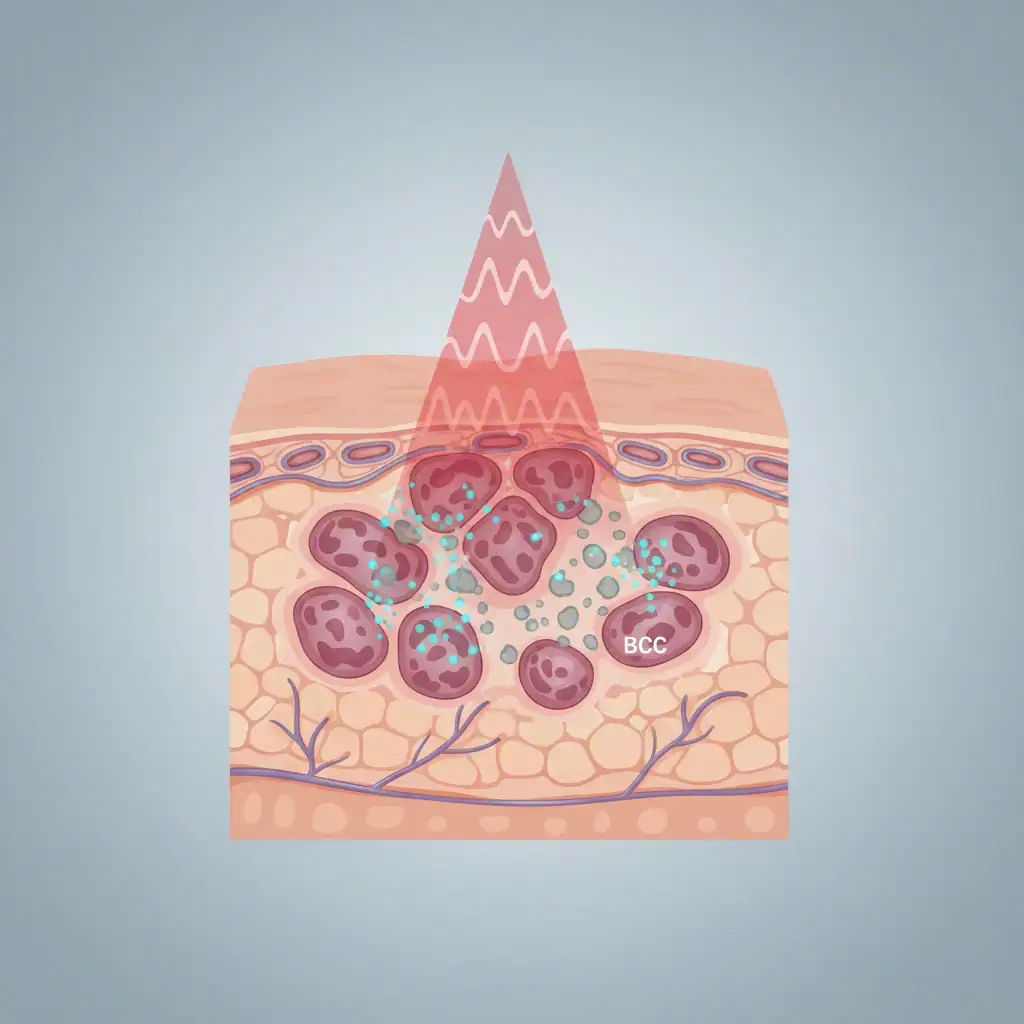
Insights into Red Light–Activated Photodynamic Therapy for Skin Cancer
In a recent installment of the Expert Perspectives custom video series, Dr. Todd Schlesinger, a highly regarded dermatologist, Mohs surgeon, and clinical trialist at Epiphany Dermatology in South Carolina, shed light on the growing body of evidence supporting the application of red light–activated photodynamic therapy (PDT) in conjunction with 10% aminolevulinic acid (ALA) gel. He discussed how healthcare professionals should interpret these emerging data in their clinical practice.
Blue Light PDT: Limitations and Anecdotal Evidence
Dr. Schlesinger pointed out that although blue light PDT has gained popularity in dermatological treatments, particularly for conditions like actinic keratosis, the evidence supporting its efficacy for superficial basal cell carcinoma (sBCC) remains limited. “We don’t really have as much data for blue light,” he remarked, indicating that much of what exists is largely anecdotal.
Red Light PDT: A Robust Evidence Base
In stark contrast, red light PDT benefits from findings derived from a randomized, double-blind, placebo-controlled trial that evaluated the combined use of red light and 10% ALA gel in a sufficiently large cohort of patients diagnosed with sBCC. “I think that really is going to have to define and set the standard for the data,” Schlesinger asserted, highlighting the importance of rigorous research.
Why Red Light? Depth of Penetration Explained
Dr. Schlesinger elaborated that red light was chosen primarily for its superior depth of penetration, which facilitates energy delivery beyond the epidermis and into the dermis. He noted, “That depth being able to penetrate through the epidermis, the dermis, and a little bit into the subcutaneous tissue would make sure that there’s enough energy at the dermal-epidermal junction to effectively treat superficial basal cell carcinoma.”
Guidance for Clinicians: Choosing Between Light Sources
When questioned about how he advises fellow clinicians in selecting between light sources for PDT, Schlesinger was unequivocal. “I’m going to say red light because the data is there,” he stated confidently. “We’ve got the data to support that now.” While acknowledging that future research might broaden the applications of blue light, he emphasized that current clinical decisions should be rooted in the existing evidence rather than theoretical assumptions.
Criteria for Patient Selection
Patient selection plays a pivotal role in the success of PDT. According to the prevailing data, suitable candidates for this treatment include individuals with biopsy-confirmed sBCC located on the trunk or extremities, including lesions measuring up to 2 to 3 cm in size. These cases often present alternatives to surgical intervention for patients who prefer a non-invasive approach.
Practical considerations influencing the decision to proceed with treatment include:
- Accessibility to the treatment site
- Availability of red light equipment
- Absence of contraindications such as significant photosensitivity
The Importance of Biopsy Confirmation
Finally, Dr. Schlesinger accentuated the necessity of obtaining biopsy confirmation prior to initiating treatment. “We want to make sure that it is a superficial basal cell carcinoma, because that’s where we have the data,” he noted, cautioning that more aggressive subtypes or recurrent tumors are not suitable candidates for PDT.
Sources
- Epiphany Dermatology, Expert Perspectives video series.
- Clinical Trial Data, randomized, double-blind study on red light PDT.