
Advances in Chronic Spontaneous Urticaria: Biologics and Targeted Care
New approaches for chronic hives: what to know
If you get itchy, red welts that come and go for weeks or months, you may have chronic spontaneous urticaria, often called CSU. CSU means hives that appear without a clear trigger and last for six weeks or more. It can be frustrating, uncomfortable, and sometimes interfere with sleep, work, or mood.
Recently, doctors have moved from only treating symptoms to using medicines that target the immune system processes behind CSU. This article summarizes what a dermatologist, Nicholas Brownstone, MD, shared about current treatments and what’s coming next. (Source: interview with Nicholas Brownstone, MD)
Quick summary
Antihistamines still help with itch, but they mainly ease symptoms. Newer medicines aim at parts of the immune system that drive CSU, and several of these are already approved or being studied. Finding markers in a person’s blood or cells may one day help doctors pick the best treatment for each person. (Source: interview with Nicholas Brownstone, MD)
What are the usual symptoms?
CSU usually causes raised, itchy welts (hives) that appear suddenly and fade within a day or two, but new ones keep popping up. Some people also have swelling under the skin, called angioedema. The itching and visible bumps can affect sleep, social life, and mental health.
How treatments have changed
For many years, the first-line treatment has been antihistamines, which block the action of histamine, a chemical that causes itching and swelling. Antihistamines can be helpful for controlling itch, but they mostly treat symptoms rather than the root cause of CSU. Some people also find certain antihistamines make them sleepy. (Source: interview with Nicholas Brownstone, MD)
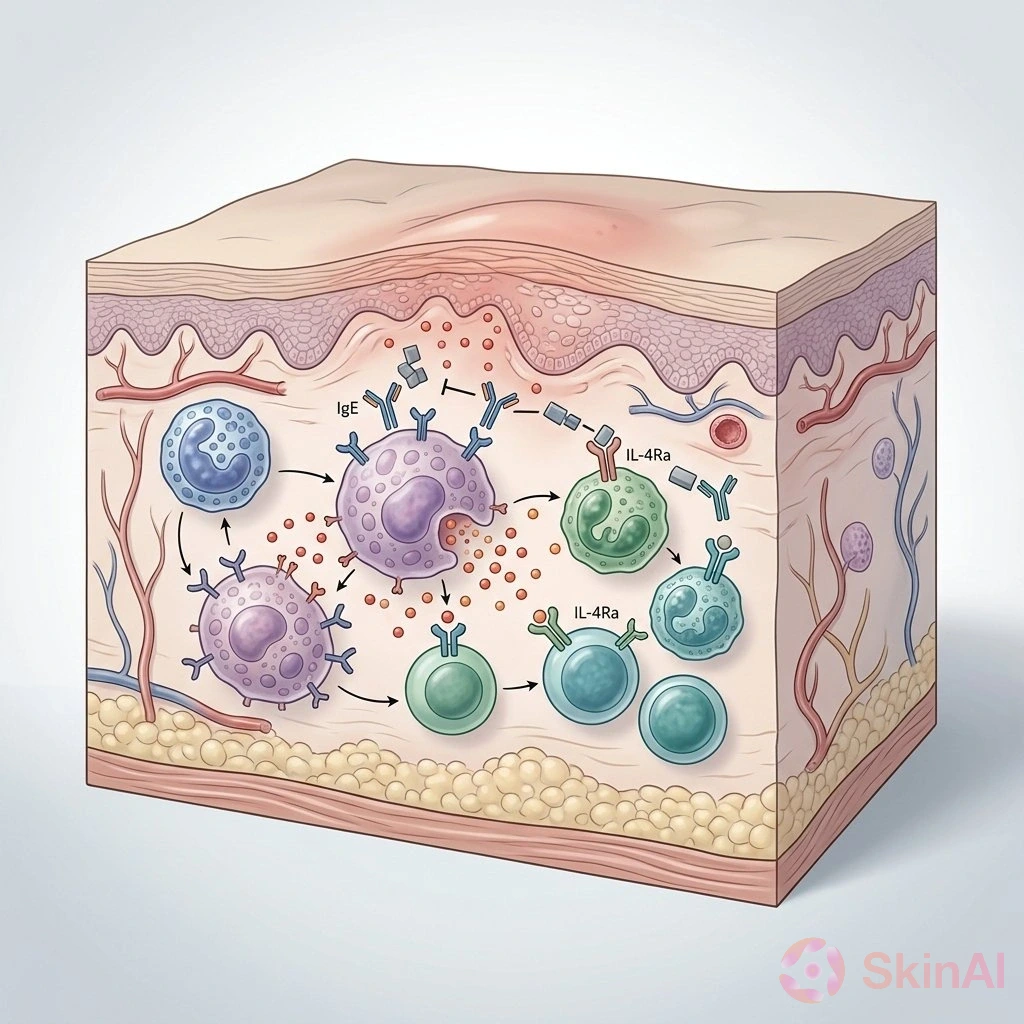
Because researchers now understand more about how the immune system causes CSU, there are medicines that target specific parts of the immune response. These targeted options can address the underlying process instead of only calming the itch.
FDA-approved targeted options
According to Brownstone, three medicines are currently approved by the U.S. Food and Drug Administration for CSU:
- Omalizumab — works by lowering free IgE, an antibody that can trigger allergic-type reactions and contribute to hives. (Source: interview with Nicholas Brownstone, MD)
- Dupilumab — blocks two immune signaling proteins called interleukin-4 and interleukin-13 (IL-4 and IL-13), which are involved in some inflammatory responses. (Source: interview with Nicholas Brownstone, MD)
- Remibrutinib — a type of drug called a Bruton tyrosine kinase (BTK) inhibitor. It may reduce the activity of immune cells involved in urticaria. Clinical experience suggests some people notice improvement in about one to two weeks. (Source: interview with Nicholas Brownstone, MD)
Each of these drugs works on different parts of the immune system, so they give doctors more options when antihistamines aren’t enough. They have generally favorable safety profiles, but treatment choice and monitoring should be discussed with your doctor. (Source: interview with Nicholas Brownstone, MD)
What’s being studied now
Researchers are testing more treatments that target immune pathways connected to CSU. These include additional BTK inhibitors and drugs aimed at:
- KIT (a receptor involved in cell signaling)
- TSLP (thymic stromal lymphopoietin, a molecule that can trigger inflammation)
- MRGPRX2 (a receptor on certain skin cells that may cause non‑allergic hives)
These investigational approaches could help people who don’t get enough relief from current options. (Source: interview with Nicholas Brownstone, MD)
Toward more personalized care
Because different people’s immune systems may cause CSU in different ways, researchers are exploring the idea of using biomarkers. Biomarkers are measurable signs—like blood tests—that could show which immune pathways are most active in a person. In the future, this might help doctors choose the treatment most likely to help each individual. (Source: interview with Nicholas Brownstone, MD)
How doctors decide what kind of hives you have
It’s important for clinicians to tell the difference between:
- acute urticaria (short-lived hives),
- chronic spontaneous urticaria (CSU), and
- chronic inducible urticaria (hives triggered by things like pressure, cold, or exercise).
Careful history-taking—asking when the hives appear, how long they last, and what seems to trigger them—helps make that distinction. (Source: interview with Nicholas Brownstone, MD)
Ask about quality of life, not just the rash
Brownstone recommends that doctors routinely ask whether hives are affecting sleep, work, or mental health, including anxiety or depression. These simple questions can reveal a bigger burden and point to the need for more comprehensive care. (Source: interview with Nicholas Brownstone, MD)
A practical tip for tracking hives
If your hives come and go, taking a photo when you have a flare can help document how long they last, how severe they are, and whether treatments are helping. A photo can also be useful to show your doctor during appointments.
When to see a doctor
If hives last more than six weeks, come back repeatedly, interfere with your sleep or daily life, or are accompanied by swelling in the face or throat, contact a healthcare provider. Also seek immediate care for any trouble breathing, lightheadedness, or other signs of a severe allergic reaction.
Important note
This article summarizes information shared by Nicholas Brownstone, MD, about current and emerging treatments for chronic spontaneous urticaria. It is for general information only and does not replace medical advice. Treatment decisions should be made together with your doctor or dermatologist.
Sources
- Interview with Nicholas Brownstone, MD, board-certified dermatologist at Mount Sinai (information on current treatments and emerging approaches for chronic spontaneous urticaria).