
Hair Loss in Kids with Inflammatory Bowel Disease: What Parents Should Know
Why this matters
Skin and hair problems can affect how we feel, our daily routines, and even big life choices. Recently published studies looked at several common concerns people bring to dermatologists: hair loss tied to inflammatory bowel disease, new skin-rejuvenation treatments using stem cells, how smoke exposure relates to hidradenitis suppurativa in kids, how chronic hives affect major life decisions, and how to think about food allergy testing for people with eczema. Below is a plain-language look at what researchers found and what it might mean for you or a family member.
Quick summary
In short:
- Hair loss can be an underrecognized problem in children with inflammatory bowel disease, often from stress, nutrition issues, or autoimmune processes.
- Stem cell–based skin treatments show some promise for improving skin elasticity and collagen, but the evidence is limited and not yet strong enough for broad recommendations.
- Both active and secondhand smoke exposure are linked with higher odds of hidradenitis suppurativa in young people, with secondhand smoke a major contributor.
- Chronic urticaria (long-lasting hives) can affect big life decisions, especially social life, physical activities, and work choices.
- Food allergy testing for atopic dermatitis (eczema) should be driven by clear clinical reasons to avoid unnecessary diets that could harm nutrition.
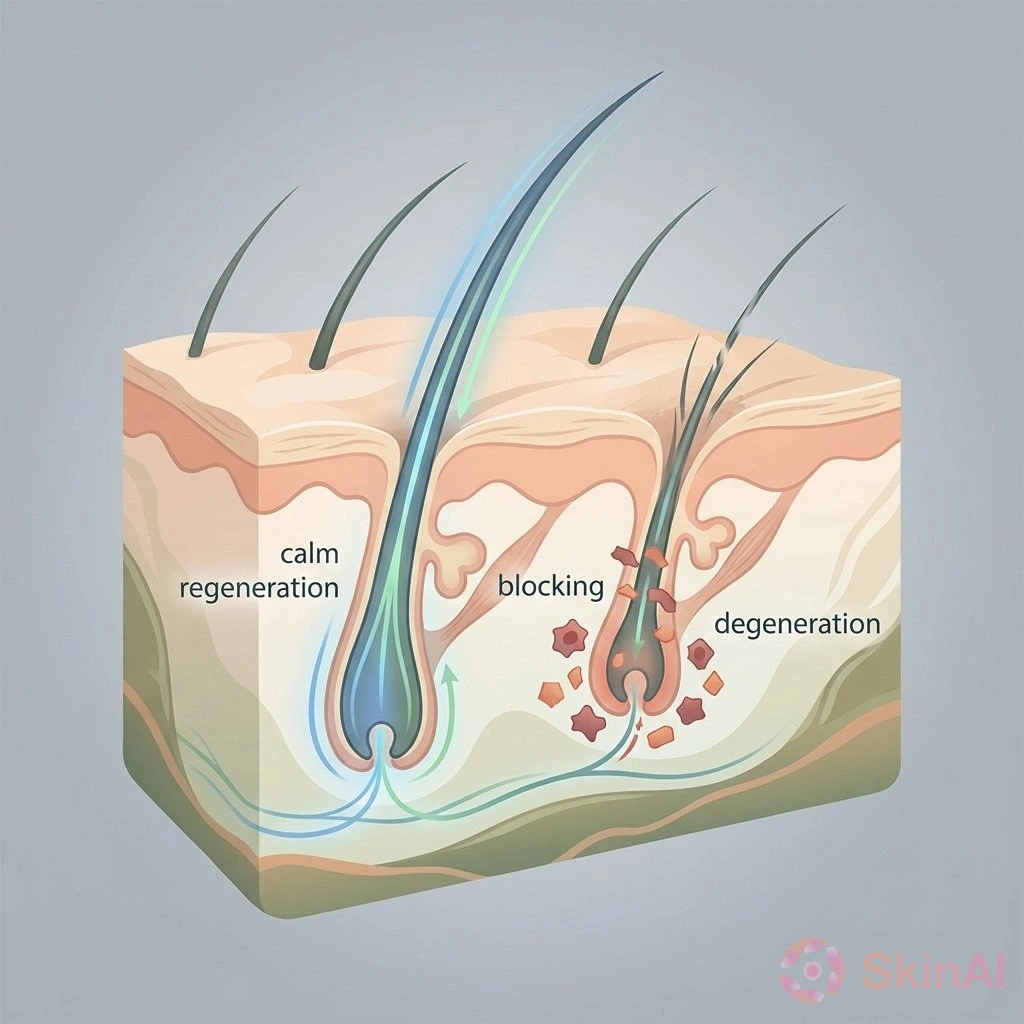
Hair loss in children with inflammatory bowel disease (IBD)
What they looked at: A review of pediatric literature examined hair loss as an extraintestinal (outside the gut) sign of inflammatory bowel disease.
Key patterns found:
- Telogen effluvium (TE): This looks like diffuse (overall) shedding that often starts 2 to 3 months after a major stress on the body, such as a flare of inflammation, serious illness, hospitalization, or malnutrition. TE usually improves after the trigger is treated.
- Nutritional alopecia: Deficiencies in iron, zinc, vitamin D, vitamin B12, folate, or not enough protein can cause thinning hair, brittleness, and slowed hair growth.
- Alopecia areata (AA): This causes clearly defined round patches of hair loss and is thought to be autoimmune (the immune system attacks hair follicles). It may be linked to IBD, but pediatric-specific data are limited.
What doctors should check: For a child with IBD who is losing hair, clinicians are advised to look at IBD activity, medicines the child is taking, nutrition and growth measurements, and lab tests for vitamin and mineral levels. Treatment focuses on controlling the gut inflammation, fixing any nutritional gaps, and watching for hair regrowth. Working with the child’s gastroenterology team is important because pediatric data are limited and treatments overlap. (Source: Journal of Pediatric Gastroenterology and Nutrition, Hair loss in pediatric inflammatory bowel disease)
Stem cell–based therapies for skin rejuvenation
What they looked at: A systematic review pooled data from nine clinical studies with a total of 847 participants to evaluate stem cell–based products such as mesenchymal stem cells (MSCs) and exosomes for skin rejuvenation.
What the studies found:
- Human-derived treatments suggested improvements in skin elasticity of about 26% to 34% and increases in collagen production of about 35% to 45%.
- Exosome-based treatments were associated with reductions in facial wrinkles ranging from about 17% to 25%.
- Adipose (fat)-derived MSCs showed potential to help with elasticity and collagen, while some umbilical cord–derived products showed anti-inflammatory effects in limited comparisons.
- Most reported side effects were mild and went away on their own. About 98.4% of adverse events were mild. There were no safety signals reported for tumor formation or immune rejection in the included studies.
Important cautions: The reviewers warned that the overall certainty of the evidence is low to moderate. Reasons include small studies, different study designs, possible bias, short follow-up, and the inclusion of non-human products in some research. Larger, standardized randomized trials are needed before these therapies are widely adopted. If you’re considering such treatments, discuss risks, benefits, and uncertainties with a qualified clinician. (Source: Journal of Cosmetic Dermatology, Stem Cell-Based Therapies for Skin Rejuvenation)
Smoke exposure and hidradenitis suppurativa (HS) in young people
What they looked at: A retrospective case–control study compared 174 pediatric and adolescent patients with HS to 522 matched controls to see whether active or passive (secondhand) smoke exposure was more common in those with HS.
Key results:
- Active and/or passive smoke exposure was associated with about 4.8 times higher odds of having HS.
- Passive smoke exposure alone was linked with about 1.6 times higher odds.
- Nearly two-thirds of reported smoke exposure among the HS patients was passive exposure.
- Smoke exposure was also associated with being diagnosed at a later age.
What this means: For dermatologists and families, it’s useful to ask about household and personal tobacco exposure when managing HS in children and teens. Counseling families about reducing secondhand smoke exposure may be a helpful part of overall care, though this study shows an association rather than proving smoke causes HS. (Source: Journal of Pediatric Dermatology, Associations of Active and Passive Smoke Exposure and Hidradenitis Suppurativa in the Pediatric Population)
How chronic urticaria (long-lasting hives) affects big life decisions
What they looked at: A multicenter cross-sectional study asked 111 Turkish-speaking patients how chronic urticaria (CU) influenced major life-changing decisions, such as social activities, physical activity, and work.
What they found:
- About 79% said CU affected at least one major decision in their life.
- The biggest impacts were in social life (69%), physical activities (57%), and job or career decisions (37%).
- Changes to eating habits were the most common specific decision (60%), followed by avoiding sports (31.5%) and changing work schedules (23.4%).
- People who developed CU at age 45 or younger were more likely to report it affected their decisions. Symptoms that signal a heavier disease burden—like sleep disturbance, emergency visits, and missed work or school—were also linked to more affected decisions.
Takeaway for clinicians and patients: The study suggests clinicians should ask about how CU affects major areas of life—not just symptom frequency and quality of life scores. Conversations about work, relationships, exercise, and other life choices can help identify unmet needs and guide more complete care. (Source: Journal of the European Academy of Dermatology and Venereology, Impact of Chronic Urticaria on Major Life-Changing Decisions)
Food allergy testing in atopic dermatitis (eczema)
What they looked at: A structured review compared international guidelines from North America, Europe, the UK, and East Asia on when to test people with atopic dermatitis for food allergies.
Key points:
- Different recommendations often reflect different testing goals: diagnosing a true immediate allergic reaction (IgE-mediated), checking whether a food is safe to introduce, or seeing if food could be making eczema worse.
- Testing should be guided by the patient’s history and situation, not by running broad panels of food tests without a clear reason.
- Most guidelines recommend optimizing eczema treatment first before exploring food-triggered eczema. Some, like EuroGuiDerm, suggest testing mainly for moderate-to-severe disease with supporting history or suspicion.
- A positive skin prick test or a positive specific-IgE blood test means sensitization (the immune system recognizes the food) but does not always mean a clinical allergy. Relying only on test results can lead to unnecessary elimination diets, which can cause nutritional problems and weaken tolerance to foods.
Advice for patients: If your doctor suggests testing, ask what the specific purpose is. If tests suggest a food might be involved, clinical confirmation (for example, an supervised food challenge) is usually recommended before making long-term dietary changes. (Source: International Journal of Dermatology, Food Allergy Testing in Atopic Dermatitis)
Keeping an eye on visible changes
If you’re tracking rashes, hair loss, or other visible skin changes, it can help to take clear photos over time. A simple, dated photo series can make it easier to show your clinician whether something is getting better, worse, or changing shape or color. This can be helpful when discussing symptoms or treatment effects at appointments.
When to see a doctor
- Rapid or extensive hair loss, bleeding, signs of infection, painful or spreading skin lesions, or fast changes in a mole or lesion—seek medical evaluation promptly.
- If skin problems are disrupting sleep, work, school, relationships, or physical activity, mention these impacts to your clinician so treatment can address quality of life as well as symptoms.
- Before starting any major diet change or new treatment (especially newer therapies like stem cell products), discuss benefits, risks, and uncertainties with a dermatologist or your primary care provider.
Important note
This article explains recent research for general information and does not replace medical advice. If you have questions about your skin or hair, talk with your doctor or a dermatologist who can assess your specific situation.
Sources
- Anaeme A, Siegel L, Perlman M. Hair loss in pediatric inflammatory bowel disease: Clinical recognition and implications for care. J Pediatr Gastroenterol Nutr. Published online September 8, 2026. doi:10.1002/jpn3.70568 (Source: Journal of Pediatric Gastroenterology and Nutrition)
- Al-Dhubaibi MS, Mohammed GF, Bahaj SS, et al. Stem Cell-Based Therapies for Skin Rejuvenation: A Systematic Review of Clinical Efficacy, Safety, and Underlying Mechanisms. J Cosmet Dermatol. 2026;9:e71186. doi:10.1111/jocd.71186 (Source: Journal of Cosmetic Dermatology)
- Ziebart RL, Numani A, Todd A, Alavi A, Davis DM, Mohandesi NA. Associations of Active and Passive Smoke Exposure and Hidradenitis Suppurativa in the Pediatric Population: A Case-Control Study. Pediatr Dermatol. Published online September 9, 2026. doi:10.1111/pde.70101 (Source: Journal of Pediatric Dermatology)
- Ornek Ozdemir S, Cure K, Baskurt D, et al. Impact of Chronic Urticaria on Major Life-Changing Decisions: Greater Burden in Social, Physical, and Job/Career Domains. JEADV Clinical Practice. 2026:1-10. doi:10.1002/jvc2.70433 (Source: Journal of the European Academy of Dermatology and Venereology)
- Chen WG, Chen CC, Chen CY, Hsu SC, Ho WT. Food Allergy Testing in Atopic Dermatitis: A Purpose-First Comparison of International Guidelines. Int J Dermatol. Published online September 8, 2026. doi:10.1111/ijd.70669 (Source: International Journal of Dermatology)