
Eczema Awareness Month: Personalized Care and New Treatment Advances
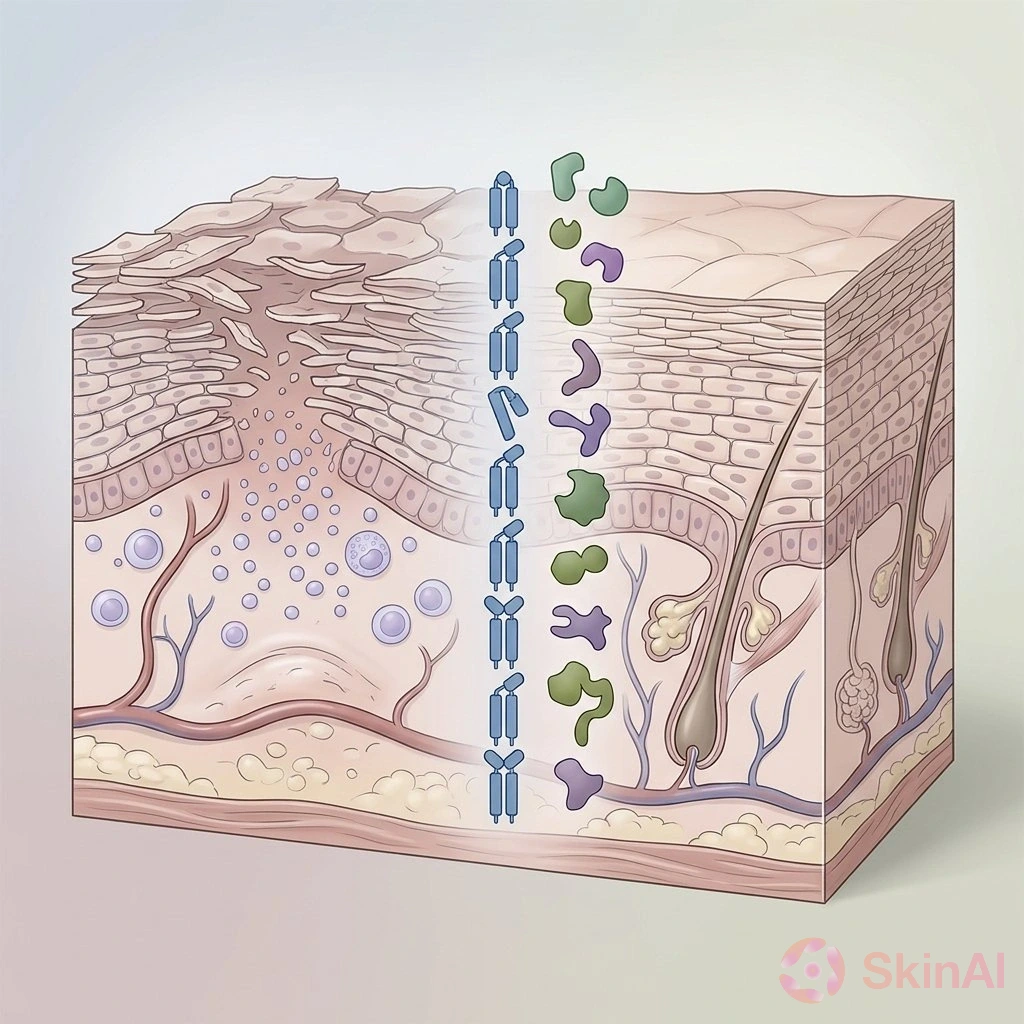
Why Eczema Awareness Month matters
During Eczema Awareness Month, it’s a good time to remind people that eczema is usually a long-term condition and that how we treat it is changing. This article draws on an interview with Adam Stratman, MD, and recent reviews of eczema treatments and biomarkers to explain what that change means for you.
Quick summary
Eczema (also called atopic dermatitis) often needs ongoing care, not just a change in soap or lotion. New medicines — creams, pills, and injectables — give doctors more ways to help, but they also mean treatment needs to be tailored to each person. Researchers are working on tools that might one day predict which treatment will work best for you, but for now choices are made from clinical features and conversations with your clinician. (Source: Interview with Adam Stratman, MD)
What is eczema and why it’s usually chronic
Eczema is a condition that makes the skin red, itchy, and sometimes cracked or weepy. Many people expect it to go away with changes in skin care, but eczema is often driven by underlying inflammation and a tendency toward dry, sensitive skin.
That means gentle skin care and moisturizing are important, but they’re often part of a broader plan that can include regular medical treatment. Some people manage well with creams and emollients; others need medicines that affect the whole body. Because eczema can flare up at different times of the year or with life changes, keeping in touch with your dermatologist or primary care clinician is helpful. (Source: Interview with Adam Stratman, MD)
Treatment options today — more choices, more personal decisions
In recent years, the number of treatments for eczema has grown. Today’s options include:
- creams or ointments applied to the skin (topical treatments)
- oral medications you take by mouth
- injectable medicines given at the clinic or at home
More choices are a good thing because they give doctors ways to tailor care to how severe your eczema is and what fits your life. But with more options, it becomes more important to talk through safety, how a medicine is taken, and what to expect. Some people prefer a pill; others are comfortable with injections. Your clinician should consider your lifestyle and preferences when recommending a plan. (Source: Interview with Adam Stratman, MD)
Don’t blame yourself for flares
People often worry they’ve done something wrong when their eczema flares despite using fragrance-free soaps, detergents, and moisturizers. Clinicians want you to know that flare-ups are not always caused by a mistake in your routine. Eczema can change over time, and a treatment that worked before may need adjusting later. The best approach is steady maintenance and regular follow-up so your plan can be updated as needed. (Source: Interview with Adam Stratman, MD)
Looking ahead: precision medicine may help personalize care
One big area of interest is precision medicine, which aims to match the right treatment to the right person using biological tests. Researchers are studying genetic and molecular markers that might predict who will respond to a specific medicine. If these tools become reliable and widely available, they could reduce the trial-and-error process many people go through today.
That said, precision tools are not yet a routine part of care. For now, doctors make individualized decisions based on your symptoms, medical history, and your preferences. (Sources: Paller AS et al. 2026; Hilger E et al. 2026; Chiricozzi A et al. 2025)
Why eczema can be misdiagnosed
Eczema doesn’t always look the same. Some people think their skin problem is an infection, while other conditions can mimic eczema. Because the appearance can vary, accurate diagnosis matters. Your clinician may need to rule out infections or other skin disorders before settling on a long-term plan.
Clear diagnosis, good counseling, and knowing the range of treatment options help clinicians create a plan that fits you. (Source: Interview with Adam Stratman, MD)
Keep checking in — eczema care isn’t one-and-done
Eczema care should be revisited over time. Seasons, stress, sleep, work, and other changes can affect how your skin behaves. A regimen that worked last winter might not be enough this summer. Regular follow-up visits let clinicians see how you’re doing and adjust treatment when needed. If a flare happens, your clinician may change medications or add short-term strategies rather than assume the previous plan will keep working. (Source: Interview with Adam Stratman, MD)
Tracking visible changes
If your eczema causes visible changes in the skin, keeping a simple photo diary or notes about when flares happen can help you and your clinician spot patterns and track whether treatments are working over time.
When to see a doctor
Talk with a clinician if:
- your rash is getting worse or spreading
- you have signs of infection such as increased pain, fever, pus, or bleeding
- itching keeps you from sleeping or affects daily life
- over-the-counter or basic prescription measures aren’t controlling symptoms
If you’re unsure whether something is eczema or another skin condition, a medical visit can help clarify the cause and next steps.
Important note
This article explains general ideas about eczema care and is based largely on an interview with Adam Stratman, MD, and recent reviews of eczema treatments and biomarkers. It is not medical advice. Treatment decisions should be made with your doctor or dermatologist. If you have severe symptoms, signs of infection, or rapid changes in your skin, seek medical attention promptly.
Sources
- Interview with Adam Stratman, MD (content and quotes in this article are based on that interview).
- Paller AS, et al. Systemic therapies for atopic dermatitis. Published online 2026. doi:10.1016/j.jaad.2026.01.075.
- Hilger E, Chan K, Yip A, et al. Biomarkers for therapeutic response and adverse outcomes in atopic dermatitis: a systematic review. J Eur Acad Dermatol Venereol. 2026;40(7):1173-1184. doi:10.1111/jdv.70330.
- Chiricozzi A, Levi A, Palladino C, Girolomoni G. Enabling precision medicine with biomarkers of response to treatment in atopic dermatitis: where are we now? Front Med (Lausanne). doi:10.3389/fmed.2025.1574697.