
Chronic Spontaneous Urticaria Impacts Mental Health and Quality of Life
Why this matters
If you have chronic hives that come and go for weeks or months, you might think the main problem is the itching and the visible bumps. New research shows there’s often more going on. A recent review in the Indian Dermatology Online Journal highlights that people with chronic spontaneous urticaria (CSU) commonly also struggle with mental health issues such as sleep problems, anxiety, and depression (Source: Indian Dermatology Online Journal).
What is chronic spontaneous urticaria?
Chronic spontaneous urticaria (CSU) means you get hives (raised, itchy red welts) or swelling (angioedema) that last for six weeks or longer and happen without an obvious trigger. The hives can be unpredictable and can really affect everyday life.
How common are mental health problems with CSU?
The review suggests psychiatric or psychological symptoms affect roughly one-third of people with CSU, making them a common but often overlooked part of the condition (Source: Indian Dermatology Online Journal).
More specifically, the review collected data that showed:
- Sleep-wake disorders in about 36.7% of people.
- Anxiety disorders in about 30.6%.
- Mood disorders, including depression, in about 29.4%.
- Smaller numbers of people had trauma-related disorders, somatic symptom disorders (physical symptoms linked to emotional distress), obsessive-compulsive disorder, or substance use problems.
Some studies included in the review even found psychiatric disorders in nearly half of patients in certain groups. A few reports noted suicidal thoughts in people with skin conditions, which is an important and serious finding (Sources: Tzur Bitan et al.; Sampogna et al.).
Why might CSU and mental health be linked?
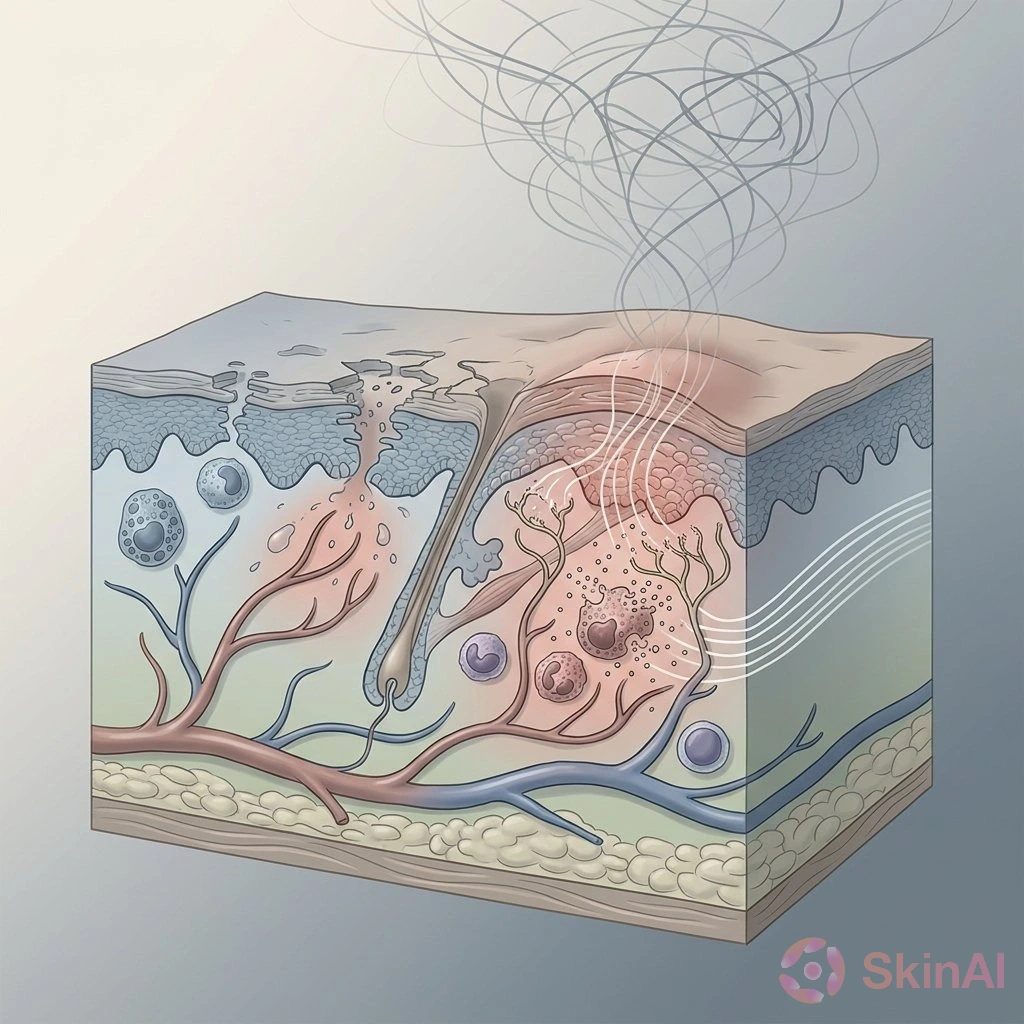
Scientists think the connection may be partly biological. The review describes a “neuro-immuno-cutaneous axis,” which is a way of saying the skin, the immune system, and the nervous system talk to each other (Source: Indian Dermatology Online Journal).
Chronic stress can change how the body’s stress system (the hypothalamic-pituitary-adrenal axis) and the sympathetic nervous system work. That can alter levels of cortisol and raise inflammatory chemicals such as interleukin-6 and tumor necrosis factor-alpha. Those chemicals can activate mast cells, which are immune cells that play a central role in producing hives.
Researchers have also found changes in parts of the brain involved in sensing itch and processing emotions, including the anterior cingulate cortex, insula, and prefrontal cortex. Altogether, this points to a two-way interaction: skin symptoms can affect the brain and emotions, and emotional or stress-related changes can affect the skin.
How mental health affects daily life with CSU
Mental health symptoms don’t just accompany the skin problem—they can be major drivers of how much CSU interferes with your life. The review found that anxiety, depression, stress, and related symptoms were often stronger predictors of reduced quality of life than basic demographic factors or even some disease-related measures (Source: Indian Dermatology Online Journal).
Across studies in India included in the review, depression rates were often in the 30–40% range and anxiety affected roughly one-third of patients. Stress, sleep problems, and certain inflammatory markers were linked to worse disease severity in several reports.
What this means for care
Because of the strong link between CSU and mental health, the review supports adding routine mental health screening to CSU care (Source: Indian Dermatology Online Journal). Simple questionnaires often used are:
- Hospital Anxiety and Depression Scale (HADS) — a short screening for anxiety and depression.
- Patient Health Questionnaire-9 (PHQ-9) — a common tool for spotting depression symptoms.
- Generalized Anxiety Disorder-7 (GAD-7) — a brief anxiety screen.
- Disease-specific quality-of-life questionnaires that ask how hives affect daily activities and well-being.
These tools can help spot people who need extra support so clinicians can offer or refer for appropriate care.
Treatment approaches beyond antihistamines
Antihistamines are the usual first step for hives, but the review highlights additional approaches that may help people whose disease isn’t controlled or who have significant psychological symptoms (Source: Indian Dermatology Online Journal).
Psychological treatments that may reduce stress-related flares include:
- Cognitive behavioral therapy (CBT) — helps change unhelpful thoughts and coping behaviors.
- Mindfulness — techniques that reduce stress and increase present-moment awareness.
- Acceptance and commitment therapy (ACT) — focuses on accepting difficult feelings while committing to meaningful actions.
There is limited evidence from small studies and case reports that some antidepressant medications (such as selective serotonin reuptake inhibitors and tricyclic antidepressants) and trauma-focused psychotherapy can help both mental health symptoms and, in selected cases, urticaria symptoms.
Treatment options for hard-to-control CSU are also expanding. Biologic medicines such as omalizumab, drugs like dupilumab, and Janus kinase (JAK) inhibitors may target inflammatory and neuroimmune pathways involved in CSU. Research into substances that affect neuropeptides (for example, substance P and calcitonin gene-related peptide) is ongoing (Source: Indian Dermatology Online Journal).
It’s important to be cautious: many of these findings come from small studies or early research. Talk with your doctor or dermatologist about any treatment options, and don’t start or stop medicines without medical advice.
Limitations of the research
The review notes that much of the available data come from tertiary-care centers (specialty clinics), which may include people with more severe disease or other complications. That means findings may not represent everyone with CSU. The authors call for larger, multicenter, population-based studies—especially in India—to better understand how common psychiatric comorbidities are and how best to provide culturally relevant care (Source: Indian Dermatology Online Journal).
What you can do
If you live with CSU, it can help to:
- Tell your doctor about sleep problems, persistent worry, low mood, or any changes in thinking or behavior.
- Ask about screening tools (HADS, PHQ-9, GAD-7) if you or your provider think mental health concerns might be present.
- Consider stress-reduction strategies such as CBT, mindfulness, or other therapies, and discuss these options with your care team.
- Keep a simple journal or take photos to track how your hives change over time and whether stress, sleep, or other factors seem linked to flare-ups. This can help when you talk with your clinician.
When to seek urgent help
Seek immediate medical or mental health help if you experience suicidal thoughts, are unable to stay safe, or if your skin symptoms suddenly get much worse with signs of infection (increasing pain, spreading redness, fever), severe swelling that affects breathing, or other worrying signs. For urgent or severe concerns, contact emergency services or go to the nearest emergency department.
Short disclaimer
This article is for general information and is not medical advice. Always discuss symptoms and treatment options with your doctor or dermatologist to find a plan that fits your needs.
Sources
- Kumaran MS, Kaur S, Narang T. Psychiatric comorbidities in chronic spontaneous urticaria: an overlooked dimension. Indian Dermatol Online J. doi:10.4103/idoj.idoj_339_25 (Source: Indian Dermatology Online Journal review)
- Tzur Bitan D, Berzin D, Cohen A. The association of chronic spontaneous urticaria (CSU) with anxiety and depression: a nationwide cohort study. doi:10.1007/s00403-020-02064-3
- Sampogna F, Abeni D, Schut C, et al. Suicidal ideation in patients with skin conditions: A multicentre European study. J Eur Acad Dermatol Venereol. doi:10.1111/jdv.70523