
Higher Starting Dose in Excimer Laser Speeds Vitiligo Repigmentation
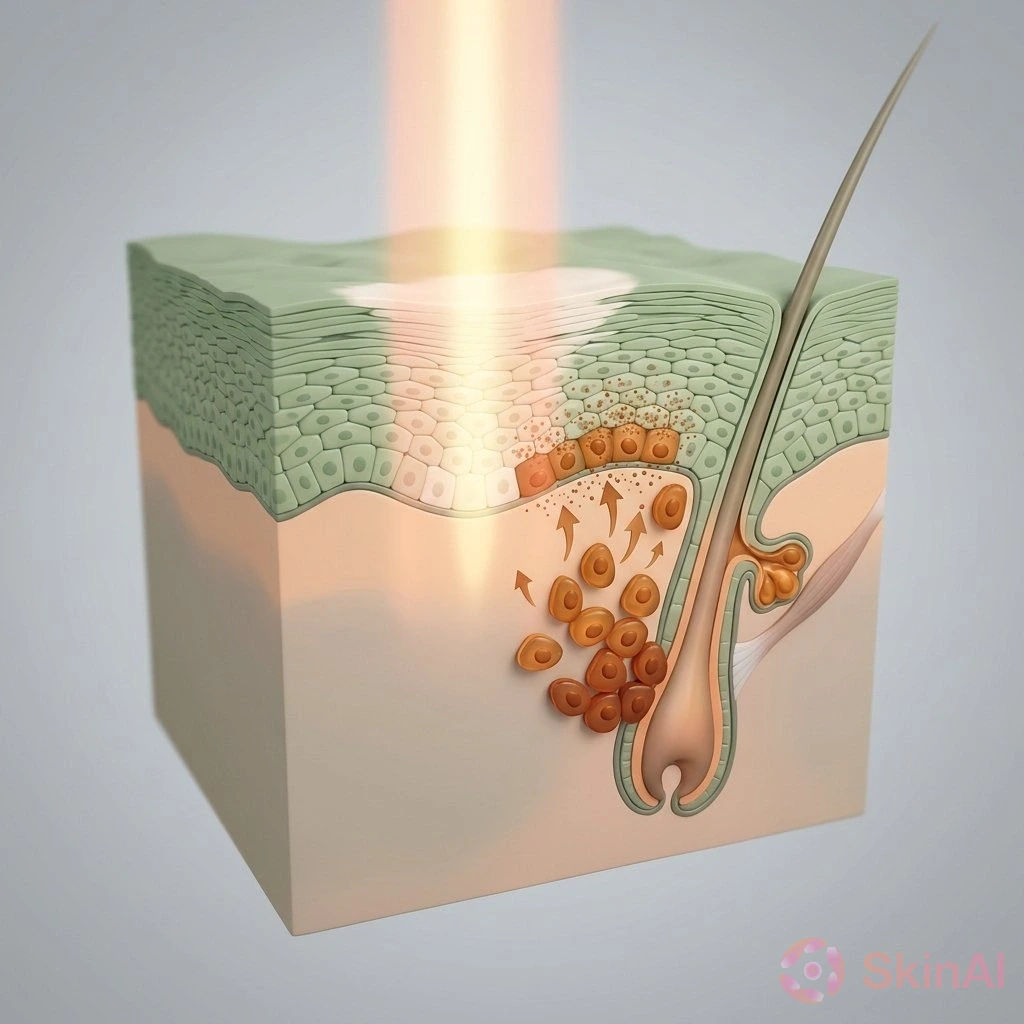
Can a higher-dose excimer laser speed up repigmentation in vitiligo?
If you have vitiligo, you may be curious about ways to help freckles of normal color return to pale patches. A recent hospital study from Nagoya City University looked at a different way of using the excimer laser, a common light treatment for vitiligo, and found it may lead to faster and greater repigmentation for some people. The results are promising but not final, and more research is needed. (Source: Yamamoto A et al., J Dermatol, 2026)
A short, plain-language summary
Researchers compared two ways of giving excimer laser treatments. The usual method starts with a low dose and slowly increases it. The newer method aims for a dose that may cause small blisters, called the minimal blistering dose (MBD). People who chose the MBD approach in this study showed quicker and larger skin color improvement compared with people who got the conventional dosing. Both approaches had mainly mild side effects, and overall light exposure over the whole course of treatment was similar between the groups. (Source: Yamamoto A et al., J Dermatol, 2026)
How the two approaches differ
First, a couple of quick definitions in plain language.
Minimal erythema dose (MED) is the lowest amount of light that makes the skin turn a little red. Doctors often use this to set starting doses for light therapy.
Minimal blistering dose (MBD) is a higher dose, close to the point where tiny blisters can form. The MBD protocol deliberately uses higher doses that may cause blistering on treated spots.
In the study, patients chose which plan to try after being told about both options and the chance that the MBD approach might cause blisters. The group that followed the conventional plan started at about half the MED and slowly increased the dose as their skin tolerated it. The MBD group began at roughly twice the MED, around the level likely to cause blistering, then adjusted doses as redness responses changed. (Source: Yamamoto A et al., J Dermatol, 2026)
Who was in the study and how results were measured
The researchers looked back at medical records for 43 people with vitiligo who completed more than 20 excimer laser sessions. Of these, 29 used the conventional approach and 14 used the MBD approach. Treatments were tracked and skin improvement was measured using a scoring system called the Vitiligo Area Scoring Index, or VASI, at the start and after the 10th and 20th sessions. (Source: Yamamoto A et al., J Dermatol, 2026)
What they found
Overall, the people treated with the MBD method showed faster and greater repigmentation.
- After 10 sessions, the MBD group had significantly bigger improvements in VASI scores than the conventional group.
- Looking at the first 20 treatment sessions as a whole, the MBD group showed a larger cumulative improvement.
- People in the MBD group reached a 50% improvement in VASI (called VASI 50) sooner than those in the conventional group.
- These differences were still seen after both the 10th and the 20th sessions, suggesting the effect was sustained over that period. (Source: Yamamoto A et al., J Dermatol, 2026)
How many visits and how much light exposure
Although the MBD protocol used higher maximum doses per session, the study found that the total cumulative light exposure by the end of treatment was not significantly different between groups. People in the MBD group also needed fewer overall treatment sessions, on average about 30 sessions, versus about 57 sessions for the conventional group. For context, standard narrowband UVB therapy often requires 25 to 50 sessions over at least six months, so approaches that shorten treatment time can be helpful for busy patients. (Source: Yamamoto A et al., J Dermatol, 2026)
Side effects and safety
Side effects were generally mild and went away when treatment was paused. In the conventional group, two people had redness with a burning feeling. In the MBD group, two people had redness with burning and one person developed redness with a small blister. No one stopped treatment because of side effects. The researchers said more work is needed to fine-tune how to measure and set MBD safely for different body areas. (Source: Yamamoto A et al., J Dermatol, 2026)
Limitations to keep in mind
This was a retrospective study, which means researchers reviewed past cases rather than running a randomized trial. The number of people in the study was small, with only 14 in the MBD group. Also, MED was measured on each person’s back rather than directly at each treated spot, so the true blistering threshold may have varied across different body areas. Because of these limits, the results are interesting but not definitive. More research is needed to confirm the findings and to work out the safest way to use MBD-based dosing. (Source: Yamamoto A et al., J Dermatol, 2026)
What this might mean for people with vitiligo
The study suggests that aiming for a minimal blistering dose with excimer laser may speed up repigmentation and cut down the number of clinic visits for some people. That could reduce the time it takes to see improvement and lower the treatment burden. However, because of the small, retrospective nature of this study, you should discuss any changes in treatment strategy with your dermatologist before trying a different protocol. (Source: Yamamoto A et al., J Dermatol, 2026)
When to see a doctor
If your vitiligo patches are changing quickly, spreading, hurting, bleeding, or showing signs of infection, see a dermatologist right away. Also talk with your dermatologist before starting or switching light-based treatments, especially if you have sensitive skin, a history of skin reactions, or health conditions that affect healing.
Tracking changes to your skin
Keeping photos of affected areas over time can help you and your doctor see whether treatments are working. Try to take photos in the same light and from the same angle each time to make comparisons easier.
Disclaimer: This article summarizes a single retrospective study and does not provide medical advice. Treatment decisions should be made with your dermatologist.
Sources
- Yamamoto A, Enomoto Y, Sakurai M, et al. Efficacy of Minimal Blistering Dose-Based Versus Conventional Excimer Laser Therapy for Vitiligo. J Dermatol. Published online May 3, 2026. doi:10.1111/1346-8138.70247 (Source: Yamamoto A et al., J Dermatol, 2026)
- Noborio R, Nomura Y, Nakamura M, et al. Efficacy of 308-nm excimer laser treatment for refractory vitiligo: a case series of treatment based on the minimal blistering dose. J Eur Acad Dermatol Venereol. 2021;35(4):e287-e289. doi:10.1111/jdv.17047 (Source: Noborio R et al., J Eur Acad Dermatol Venereol, 2021)