
How Digital Twin Technology Is Revolutionizing Skin Treatment Choices
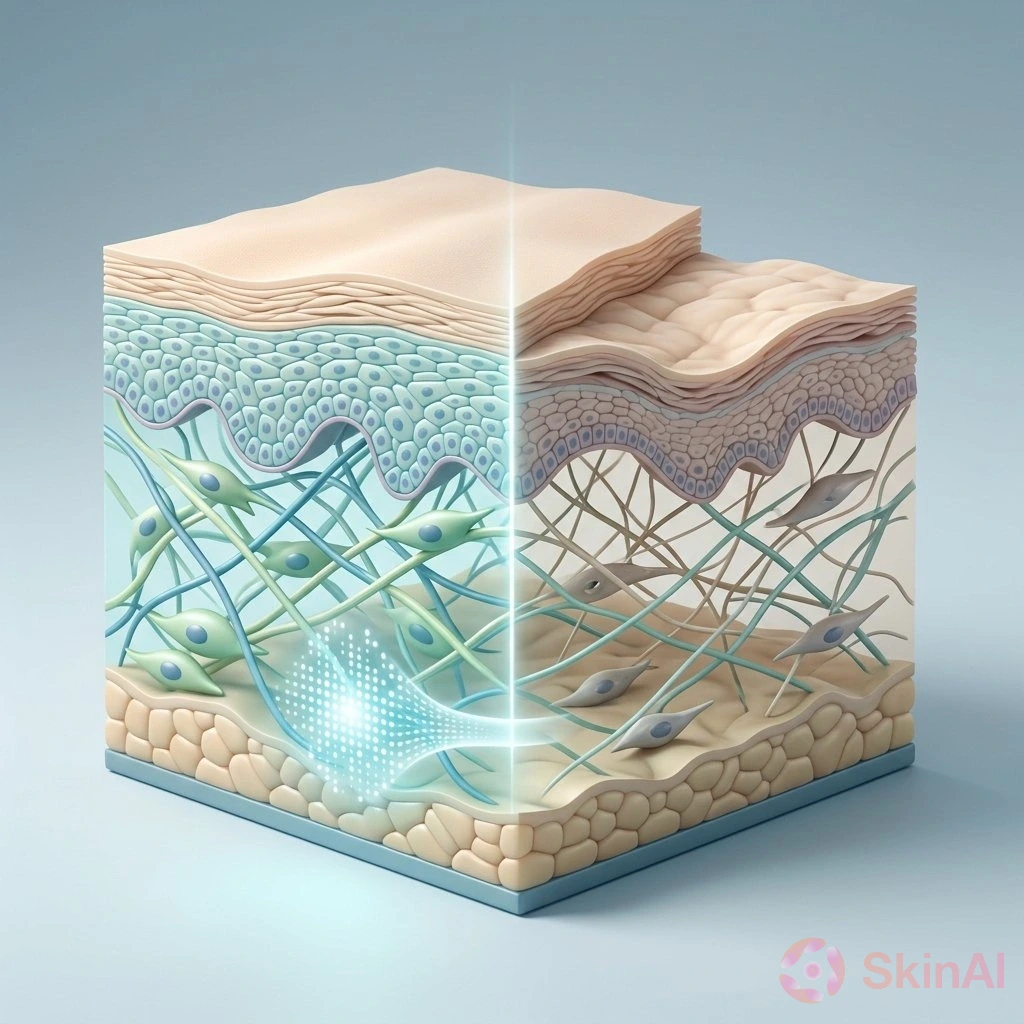
What a “digital twin” could mean for your skin care
Imagine if your doctor could try a medicine on a perfect digital copy of you before prescribing it — not experimenting on you, but running a virtual test on a model that matches your genetics, your skin measurements, your stress patterns, and more.
That’s the idea behind a “digital twin.” It’s not science fiction. It’s a new technology being developed now that could help doctors predict which treatments are most likely to help you. For people with chronic skin conditions who’ve already tried several medicines without success, this could make a big difference.
Quick summary
A digital twin is a living virtual model of a real person that keeps updating as the person’s health and environment change. In dermatology, where the skin is easy to see and measure, digital twins could help doctors compare treatments before trying them on a patient. They can also be paired with lab tools that grow human skin cells on tiny devices, giving both computer predictions and real biology to check those predictions. The technology has promise but faces challenges like data sharing, privacy, regulation, and the need to include diverse people in development.
Where the idea came from
The roots of this concept stretch back to real-world simulations used by engineers. One famous example is how NASA used ground-based simulators to troubleshoot problems on Apollo 13 without touching the spacecraft. Engineers tried fixes in the simulator and then guided the astronauts. That same basic thinking — test fixes on a replica first — is being adapted for health care.
So what exactly is a digital twin?
Think of a digital twin as a digital person who represents you. It’s more than a chart or a picture. A twin combines things like your genes, lab results, the of microbes on your skin (your microbiome), measurements of your skin barrier, data from wearables, and even your environmental exposures. The twin is constantly updated as new information comes in.
Because it’s a model, doctors can run “what if” scenarios on it. For example, they might test how two different biologic medicines could change the course of a skin condition in that specific simulated person, without exposing the real patient to risk or long waits.
Why dermatology is a good fit
The skin is on the outside — it’s easy to see, photograph, and measure. Many chronic skin conditions, like atopic dermatitis (often called eczema), psoriasis, and hidradenitis suppurativa, involve a mix of genetics, immune system activity, environment, and lifestyle. Because individual causes can vary a lot, two people with the same diagnosis may respond very differently to the same medicine.
We already have targeted medicines called biologics that aim at specific parts of the immune system. What we often lack is a good way to know in advance which biologic will help a particular person. Digital twins could help close that gap by predicting likely responses before prescriptions are started. (Source: Akbarialiabad H, Pasdar A, Murrell DF. Digital twins in dermatology, current status, and the road ahead.)
How lab models and digital twins can work together
There’s an exciting pairing happening between digital twins and “skin-on-a-chip” devices. These devices are tiny lab tools lined with living human skin cells that behave like real skin — they show barrier function, immune signals, and inflammation.
When a skin-on-a-chip is combined with a digital twin, they form a feedback loop. The chip produces lab data about how tissue responds to a drug. That data helps tune the twin’s simulations. The twin then predicts outcomes for a particular person, and those predictions can be checked again in the lab. This is useful for testing medicines without relying only on animal models, which don’t always mimic human skin well. It may also open new routes for studying rare skin diseases where patient tissue is limited. (Source: Akbarialiabad H, Murrell DF. A new dawn for orphan diseases in dermatology: the transformative potential of digital twins.)
A practical example
Picture a 34-year-old woman with moderate to severe atopic dermatitis who didn’t improve on dupilumab (brand name Dupixent). She’s nervous about trying another biologic. A digital twin built with her genetic test results, measurements of how much water her skin loses (transepidermal water loss), a transcriptomic profile (which genes are active), and tracking of stress patterns could simulate how she might respond to another drug — for example, tralokinumab (brand name Adbry).
The simulation might show a better response to tralokinumab and even suggest that adding a structured stress-reduction program could improve outcomes further. That gives both the doctor and patient more information to discuss before starting a new treatment.
Where digital twins can help beyond individual care
- Clinical trials: Digital twins can be used as virtual control groups in trials. That can be especially helpful for rare skin conditions where running a traditional trial with placebo controls is difficult or ethically problematic. Using digital twins as virtual controls may reduce the number of people needed in a trial and help speed up research. (Source: Akbarialiabad H, Pasdar A, Murrell DF, et al. Enhancing randomized clinical trials with digital twins.)
- Education: Medical trainees can practice diagnosing and treating simulated patients, helping them learn from complex cases before they see real patients. (Source: Akbarialiabad H, Melin MM, Bunick CG. Digital twins in dermatology education: a systematic review and pilot study framework.)
- Orphan diseases: For very rare conditions, where few people are available for studies, digital twins and on-chip systems may help researchers model treatments and make progress that would otherwise be very slow. (Source: Akbarialiabad H, Murrell DF. A new dawn for orphan diseases in dermatology.)
What’s still standing in the way
This isn’t going to appear in your medical chart overnight. There are real hurdles to solve first:
- Health system data are often siloed, meaning important information is stored in separate places that don’t talk to each other.
- Regulatory rules for using digital twins to guide clinical decisions are still being worked out.
- Continuous collection of biometric data raises privacy and security concerns that need strong protections.
- Digital twins need to be trained on diverse populations. If they’re built mainly from data on certain groups, they can reproduce existing health disparities.
These issues are being discussed in the scientific literature, but they require time, policy changes, and careful design to address properly. (Source: Akbarialiabad H, Pasdar A, Murrell DF. Digital twins in dermatology, current status, and the road ahead.)
Tracking visible skin changes
If you’re monitoring a rash, mole, or other visible change, simple tools like photos, notes about symptoms, and tracking when things get better or worse can be helpful. Digital tools may help you document changes over time and prepare for a dermatologist visit, but they don’t replace a professional exam or diagnosis.
When to see a doctor
Talk with your dermatologist or primary care doctor before making any treatment decisions. If you notice a changing lesion, bleeding, signs of infection (increasing pain, spreading redness, pus), rapid growth, or anything that worries you, seek medical attention promptly.
Where this could go next
You don’t need to act on digital twins today, but it helps to know what’s coming. Over the next decade, digital twin–informed tools may become part of clinical decision support systems that doctors use. Trials may increasingly use virtual controls, and clinicians familiar with these tools will have a voice in how they get used.
Dermatology has always relied on looking carefully at the skin. Digital twins invite the specialty to combine that visual skill with computer-based prediction. That could mean fewer rounds of trial and error for people with stubborn skin conditions, but it will take careful development and oversight to get it right. (Source: Akbarialiabad H, Pasdar A, Murrell DF. Digital twins in dermatology, current status, and the road ahead.)
Information and caution
This article explains a developing technology and does not offer medical advice. Treatment decisions should always be made with your doctor or dermatologist. For serious symptoms or rapidly changing skin problems, seek professional care without delay.
Sources
- Akbarialiabad H, Pasdar A, Murrell DF. Digital twins in dermatology, current status, and the road ahead. doi:10.1038/s41746-024-01220-7 (Source)
- Akbarialiabad H, Pasdar A, Murrell DF, et al. Enhancing randomized clinical trials with digital twins. doi:10.1038/s41540-025-00592-0 (Source)
- Akbarialiabad H, Murrell DF. A new dawn for orphan diseases in dermatology: the transformative potential of digital twins. J Eur Acad Dermatol Venereol. 2024;38(12):2309-2310. doi:10.1111/jdv.20062 (Source)
- Akbarialiabad H, Seyyedi MS, Paydar S, Habibzadeh A, Haghighi A, Kvedar JC. Bridging silicon and carbon worlds with digital twins and on-chip systems in drug discovery. doi:10.1038/s41540-024-00476-9 (Source)
- Akbarialiabad H, Melin MM, Bunick CG. Digital twins in dermatology education: a systematic review and pilot study framework. 2025;145(suppl 8):S23. (Source)