
How Inflammatory Skin Diseases Affect Your Overall Health
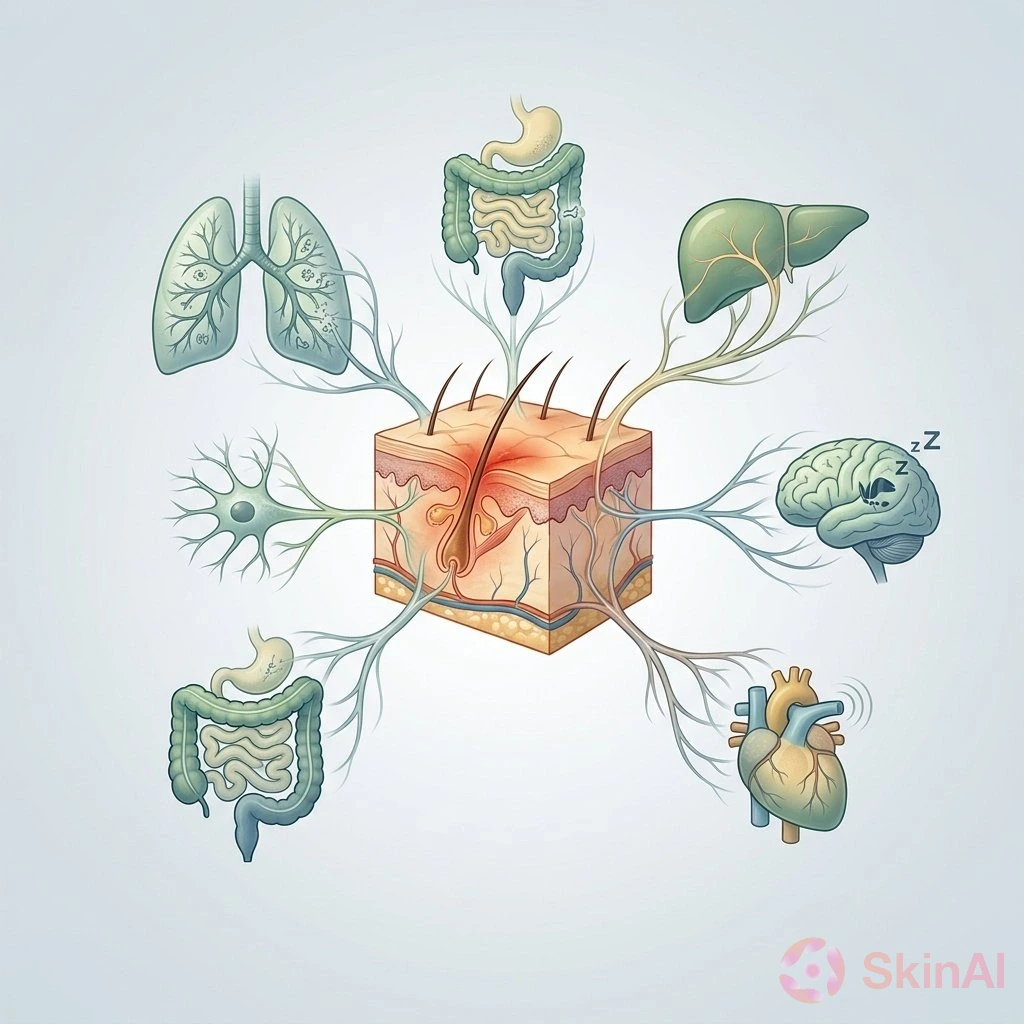
Inflammatory skin conditions can affect more than what appears on the skin. For some people, ongoing inflammation is connected with breathing problems, digestive conditions, metabolic health, sleep difficulties, and emotional well-being.
These connections were the focus of a session at DermNexus 2026: The Inflammatory Disease and Innovations Congress for NP/PAs, held November 21 in Scottsdale, Arizona. The discussion, “Rheum Connection Beyond the Skin: How Treating Inflammation Improves Comorbidities,” brought together Patricia M. Delgado, DNP, AGPCNP, DCNP, PMHNP; Kiranjit Khalsa, MD, MPH; Justin Moser, MD; and Sarabdeep Mann, MD.
The speakers discussed how conditions can share immune pathways, how other health problems may affect treatment choices, and why feeling better involves more than clearer skin. This article summarizes their conference discussion rather than offering individual treatment guidance.
Why skin and breathing conditions can occur together
Atopic dermatitis, the most common form of eczema, is an inflammatory skin condition that can cause itching and irritated skin. Some people with atopic dermatitis also have conditions affecting their lungs, nose, or digestive tract.
The session’s speakers explained that these conditions can share a pattern of immune activity known as type 2 inflammation. It involves problems with the protective barriers that line parts of the body, as well as immune signaling chemicals called cytokines. Three cytokines discussed at the session were interleukin-4, interleukin-13, and interleukin-5, often shortened to IL-4, IL-13, and IL-5.
As the allergy specialist put it during the session, “Inflammation does not stop with one organ.” (Source: DermNexus 2026, “Rheum Connection Beyond the Skin” session)
Alongside atopic dermatitis, some people may have asthma, allergic rhinitis, also known as hay fever, or chronic sinus inflammation with nasal polyps. Nasal polyps are soft growths inside the nose or sinuses.
Another possible condition is eosinophilic esophagitis (EoE), inflammation in the tube that carries food from the mouth to the stomach. It can cause swallowing difficulties and may make food feel stuck.
The speakers also emphasized the day-to-day burden of poorly controlled eczema. Persistent itching can interrupt sleep, make it harder to concentrate, and interfere with everyday activities. Breathing symptoms, recurring nasal problems, concerns related to food, or difficulty swallowing may also be worth discussing during a medical visit.
How targeted treatments may address more than one condition
Some treatments work on specific parts of the immune system. These include biologics, medicines made from living sources that target particular immune signals.
The speakers discussed dupilumab as one example. It blocks signaling from IL-4 and IL-13 by targeting a shared receptor, a structure that helps cells receive those signals.
During the session, they discussed its use for atopic dermatitis, certain cases of asthma, chronic sinus inflammation with nasal polyps, EoE, and chronic spontaneous urticaria, a condition that causes recurring hives without an obvious trigger. For someone who has more than one qualifying condition, a treatment aimed at a shared pathway may help with more than skin symptoms. (Source: DermNexus 2026, “Rheum Connection Beyond the Skin” session)
That does not mean one medicine is right for everyone with these conditions. Treatment choices depend on the evidence and approved uses for each condition, eligibility requirements, and how a person responds. A doctor or dermatologist can discuss which options may be appropriate.
The speakers also discussed limiting the use of systemic corticosteroids, medicines that act throughout the body, when appropriate. These medicines can bring fast relief during a flare, but repeated or long-term use can carry risks, including metabolic problems, weakened bones, high blood pressure, and infections.
For eligible patients, a targeted biologic may help reduce the need for steroids while keeping chronic inflammation under control. The session also stressed an important limit: treating an existing condition does not establish that a biologic will prevent other allergic or atopic conditions from developing later.
The connection between the gut and the skin
The session also explored how skin conditions and digestive diseases may be linked. Researchers have investigated several possible contributors, including changes in the community of microorganisms living in the gut, changes in immune signals, and changes in how much can pass through the intestinal lining.
The speakers highlighted overlapping inflammation in psoriasis, hidradenitis suppurativa, and inflammatory bowel disease. Psoriasis causes inflamed, often scaly patches of skin. Hidradenitis suppurativa causes painful lumps, commonly in areas where skin rubs together. Inflammatory bowel disease, or IBD, involves ongoing inflammation in the digestive tract.
Shared immune pathways do not always mean that the same treatment will have the same effect in every part of the body. The session used medicines called IL-17 inhibitors as an example.
These medicines can be effective for psoriasis. But IL-17 also helps maintain the protective lining of the intestine. In susceptible people, blocking it may worsen existing IBD or be associated with new digestive inflammation. The speakers discussed checking for relevant digestive symptoms and involving a digestive specialist when choosing certain treatments. (Source: DermNexus 2026, “Rheum Connection Beyond the Skin” session)
Atopic dermatitis and EoE also share type 2 inflammatory pathways involving IL-4 and IL-13. Difficulty swallowing, food becoming stuck, or avoiding foods because of swallowing problems may signal a need for further evaluation.
Psoriasis and metabolic liver health
Another topic was metabolic dysfunction-associated steatotic liver disease, or MASLD. It was previously called nonalcoholic fatty liver disease. In MASLD, fat builds up in the liver in connection with metabolic problems.
The speakers discussed an association between psoriasis and this type of liver disease. They emphasized looking at metabolic health as part of the broader picture for people living with chronic inflammation.
Fat buildup can be accompanied by inflammation and, over time, scarring of the liver. In some people, MASLD progresses to a more inflammatory form called metabolic dysfunction-associated steatohepatitis, or MASH.
Depending on a person’s metabolic risk factors and other health findings, a clinician may consider whether further liver evaluation is needed. The discussion also highlighted the importance of considering heart and metabolic health alongside skin symptoms when planning long-term care.
Balancing inflammatory disease treatment and skin cancer care
Skin cancer risk and treatment can make decisions about inflammatory disease more complicated. A medical oncologist who specializes in skin cancer discussed how previous and current treatments may factor into that picture.
The session reviewed differences in skin cancer risk associated with several approaches, including conventional medicines that suppress the immune system, biologics, and older light-treatment regimens. The speakers noted that the total amount of treatment a person has received can matter, particularly with psoralen plus ultraviolet A, or PUVA, a treatment that combines a medicine with UVA light. (Source: DermNexus 2026, “Rheum Connection Beyond the Skin” session)
People with autoimmune conditions who develop advanced skin cancer may face additional choices. Some skin cancers are treated with immune checkpoint inhibitors, medicines that help the immune system attack cancer. Because these medicines activate immune responses, they can also worsen an underlying autoimmune condition.
The speakers described cases involving people with long-standing psoriasis to show how past treatments, current skin disease control, and cancer severity can all affect decisions. They emphasized close communication among dermatologists, cancer specialists, and other members of the care team.
Clearer skin is not the only goal
Chronic skin disease can affect sleep, mood, relationships, confidence, and the ability to take part in daily life. A dermatology and psychiatric nurse practitioner discussed why those effects deserve attention even when the skin looks better.
For example, long-lasting itch is not simply a matter of choosing not to scratch. The presentation described connections between stress, nerve and immune signals, and the itch-scratch cycle. Persistent itch can also involve changes in nerve pathways linked to the sensation of itching and the rewarding feeling of scratching.
The presenter noted that visible improvement does not necessarily erase the emotional burden of living with a chronic condition. Depression or anxiety may continue even after the skin clears. (Source: DermNexus 2026, “Rheum Connection Beyond the Skin” session)
To understand how someone is doing over time, clinicians may use questionnaires such as the Dermatology Life Quality Index, along with screening tools for depression and anxiety. These can help bring concerns to light that might otherwise be missed.
The speakers emphasized that questionnaires should add to a conversation, not replace it. Asking what a person hopes to regain through treatment, whether that is better sleep, more confidence, or the ability to enjoy daily activities, can help define goals that matter to them.
When to seek medical advice
Skin symptoms are only one part of the picture. A doctor or dermatologist can discuss persistent itching, disrupted sleep, breathing or digestive symptoms, and concerns about mood or daily functioning. Treatment decisions should be made with a clinician who understands the person’s health history and other conditions.
Seek professional medical advice about a skin spot or lesion that is changing, bleeding, painful, growing quickly, or showing possible signs of infection. Difficulty swallowing, food getting stuck, or uncertainty about a symptom also deserves medical attention.
This article is for general information and is not a substitute for individualized medical advice.
Sources
- DermNexus 2026: The Inflammatory Disease and Innovations Congress for NP/PAs. “Rheum Connection Beyond the Skin: How Treating Inflammation Improves Comorbidities.” Educational session, November 21, 2026, Scottsdale, Arizona.