
Pure PDGF-BB Safety Sets New Standard in Regenerative Aesthetic Care
Why this matters: a long look at a commonly studied skin-repair ingredient
If you follow skin-care trends, you’ve probably heard about “regenerative” treatments that aim to improve skin quality by stimulating the body’s own repair systems. A recent review by Michael Gold, MD, summarizes two new peer-reviewed articles on one of these ingredients and makes a clear point for providers and patients: the three-decade safety record for this ingredient should be the standard other products are measured against.
A quick plain-language summary
The ingredient is recombinant human platelet-derived growth factor-BB (rhPDGF-BB). It’s been used and studied for about 30 years in wound care and tissue repair. The new review looks at a long history of lab and clinical studies and concludes that rhPDGF-BB acts locally on tissue, has little to no lasting presence in the body, and has not been linked to increased cancer risk in large, long-term analyses. The author argues that newer regenerative products should be held to the same level of evidence before being widely used in aesthetic medicine (Source: Gold MH, Keaney TC, Fitzgerald R., “Setting the standard for peer-reviewed published studies on regenerative products in aesthetic medicine and post-procedure wound care”).
What is rhPDGF-BB and how is it different from fillers?
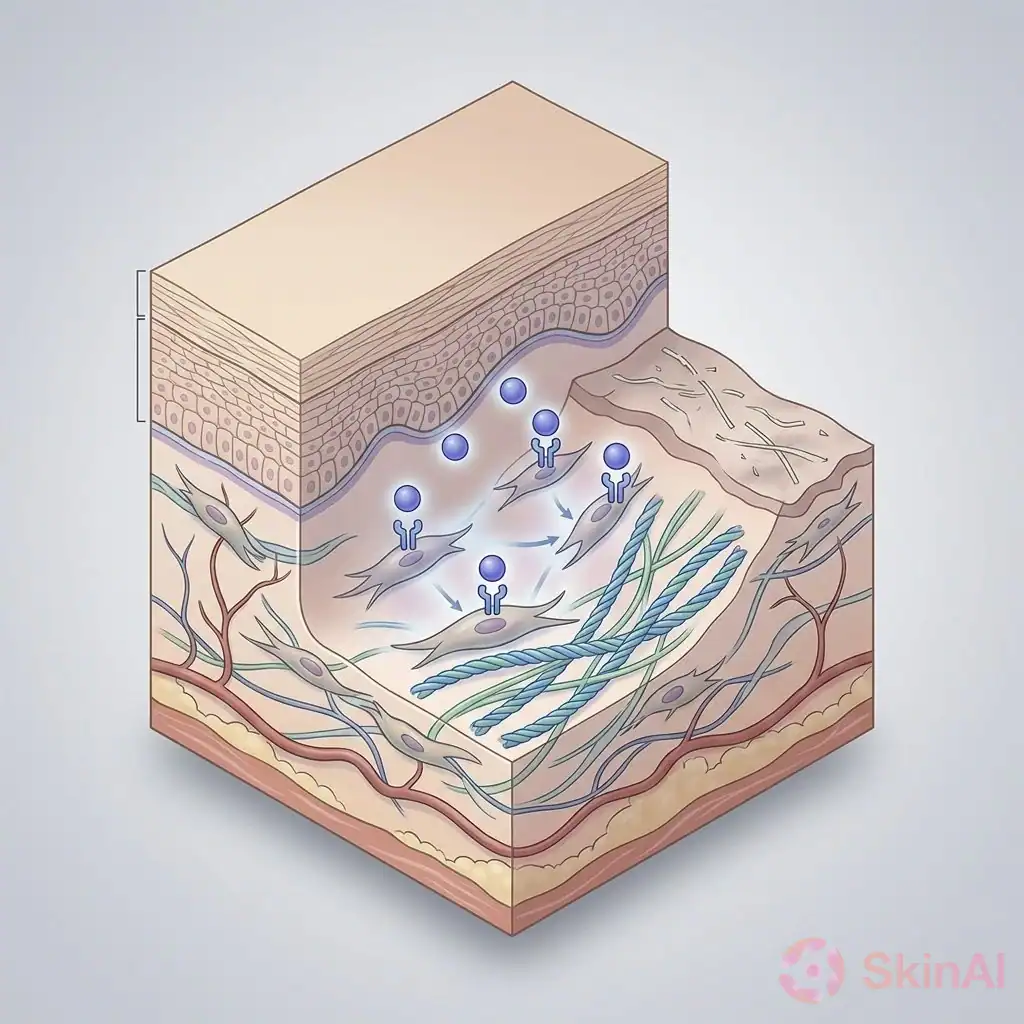
rhPDGF-BB is a lab-made version of a natural growth factor. Growth factors are proteins your body uses to signal cells to repair and build tissue. In skin care, the idea is to encourage your own cells to make more collagen, elastin, and natural hyaluronic acid over time, rather than just adding volume like a dermal filler.
Where fillers mainly add volume right away, bioregenerative agents such as rhPDGF-BB aim to support longer-term structural improvements. That said, “regenerative” products vary widely, and not all have the same level of research behind them.
What the evidence shows about safety
Gold’s review focuses on two recent articles that bring together decades of research on rhPDGF-BB (Source: Hee CK, Slade HB, Lynch SE., “Safety of exogenous recombinant human platelet-derived growth factor-BB (rhPDGF-BB) for medical and cosmetic applications”; Slade HB, Lynch SE, Dickerson JE Jr., “Safety of up to 140 daily applications of recombinant human platelet-derived growth factor (rhPDGF-BB) onto skin wounds: unboxing the evidence”).
Key points from those articles:
- rhPDGF-BB is the active ingredient in four FDA-approved products used for chronic wounds and for helping soft tissue and bone to heal (Source: Gold MH et al.).
- Studies include a wide range of ways the compound was given—creams on the skin, injections, and implants—and often at doses much higher than those used in aesthetic treatments.
- Pharmacokinetic data (how the body handles the compound) show that externally given PDGF-BB works mainly where it’s placed, has a short half-life, and produces very little systemic exposure even at high doses in animals and people.
- Across many preclinical tests, skin irritation, allergic reactions, and general toxicity were not significant problems, regardless of how the compound was given.
- A study of reproductive toxicity in rats that received daily intravenous injections through part of pregnancy reported no treatment-related deaths or meaningful negative outcomes.
- Clinical evidence is extensive: more than 100 randomized controlled trials over 25-plus years, involving roughly 15,000 participants, found similar rates of adverse events in people treated with PDGF and in control groups.
What about cancer risk?
One concern that has come up in the past is whether growth factors could raise the risk of cancer. At one point, the FDA required a boxed warning on pure PDGF-BB products about a theoretical cancer risk. The newer analyses described in the review looked closely at that question.
Long-term, retrospective studies matched patients who had received up to 140 daily topical applications of PDGF-BB with untreated controls. These analyses included more than 13,000 people and followed them for over a decade. They did not find an increased rate of cancer or cancer-related deaths linked to PDGF-BB use. Based on those data, the boxed cancer warning that had been required was removed (Source: Slade HB, Lynch SE, Dickerson JE Jr.).
Why the author thinks this should set a standard
The broader point of the review is a call for higher evidence standards across the regenerative aesthetics market. Many new “bioregenerative” products are becoming available, but not all have gone through the kind of thorough nonclinical testing, pharmacokinetic evaluation, toxicology work, or long-term clinical trials that regulators usually expect for drugs.
The decades-long database for rhPDGF-BB—including lab studies, randomized trials, long-term follow-up, and regulatory review—provides a much deeper safety picture than is available for many newer products. The review’s practical suggestion for clinicians and patients is simple: a well-documented safety profile is a meaningful factor to consider when choosing a regenerative treatment (Source: Gold MH et al.).
What this means for people considering regenerative treatments
If you’re thinking about a regenerative skin treatment, your care team should be able to explain how much research supports the product, what types of studies have been done, and what is known about safety over the long term. Treatments with a well-characterized safety record give both patients and providers more confidence.
Talk with your dermatologist or provider about risks, benefits, and alternatives. They can help you weigh established safety data against newer offerings that may have less evidence behind them.
Tracking changes in your skin
If you’re monitoring visible changes after a treatment, keeping photos and notes over time can help you notice improvements or any new issues. Tools that document changes may help you prepare for a visit with your dermatologist, but they are not a substitute for professional evaluation.
When to see a doctor
See a dermatologist or other medical provider if you notice worrying changes such as a new or changing mole, persistent bleeding, increasing pain, signs of infection (redness, warmth, pus), rapid growth of a lesion, or any other unexpected symptoms after a procedure. For treatment choices, talk with a provider who can explain the evidence and help you decide what’s safest for you.
Disclaimer
This article explains recent research and expert commentary about a specific growth factor used in wound care and some cosmetic treatments. It is not medical advice. Treatment decisions should be made together with a qualified clinician who knows your medical history. For serious or changing skin symptoms, seek prompt medical care.
Sources
- Gold MH, Keaney TC, Fitzgerald R. Setting the standard for peer-reviewed published studies on regenerative products in aesthetic medicine and post-procedure wound care. (Source: Gold MH, Keaney TC, Fitzgerald R.)
- Hee CK, Slade HB, Lynch SE. Safety of exogenous recombinant human platelet-derived growth factor-BB (rhPDGF-BB) for medical and cosmetic applications: a review. (Source: Hee CK, Slade HB, Lynch SE.)
- Slade HB, Lynch SE, Dickerson JE Jr. Safety of up to 140 daily applications of recombinant human platelet-derived growth factor (rhPDGF-BB) onto skin wounds: unboxing the evidence. (Source: Slade HB, Lynch SE, Dickerson JE Jr.)