
Revolutionizing Wound Healing and Skin Health with ECM Injectables
Why this matters
New injectable treatments are being studied that don’t just add volume to the skin. Instead, they aim to rebuild the tissue’s natural support system, which could help with wound healing and with some of the skin changes people notice after large weight loss.
What the story is
This article summarizes a recent conversation with Miles Harrison and Brian Pilcher, PhD, from Conexeu Sciences on the podcast The Cutaneous Connection. They talked about an investigational approach using an extracellular matrix-based (ECM) material that the company says may help restore the tissue scaffold that supports healthy skin. The company reports early research and a 12-month proof-of-concept study, but the work is still investigational and details are pending peer review (Source: Conexeu Sciences interview on The Cutaneous Connection podcast).
What is the extracellular matrix (ECM)?
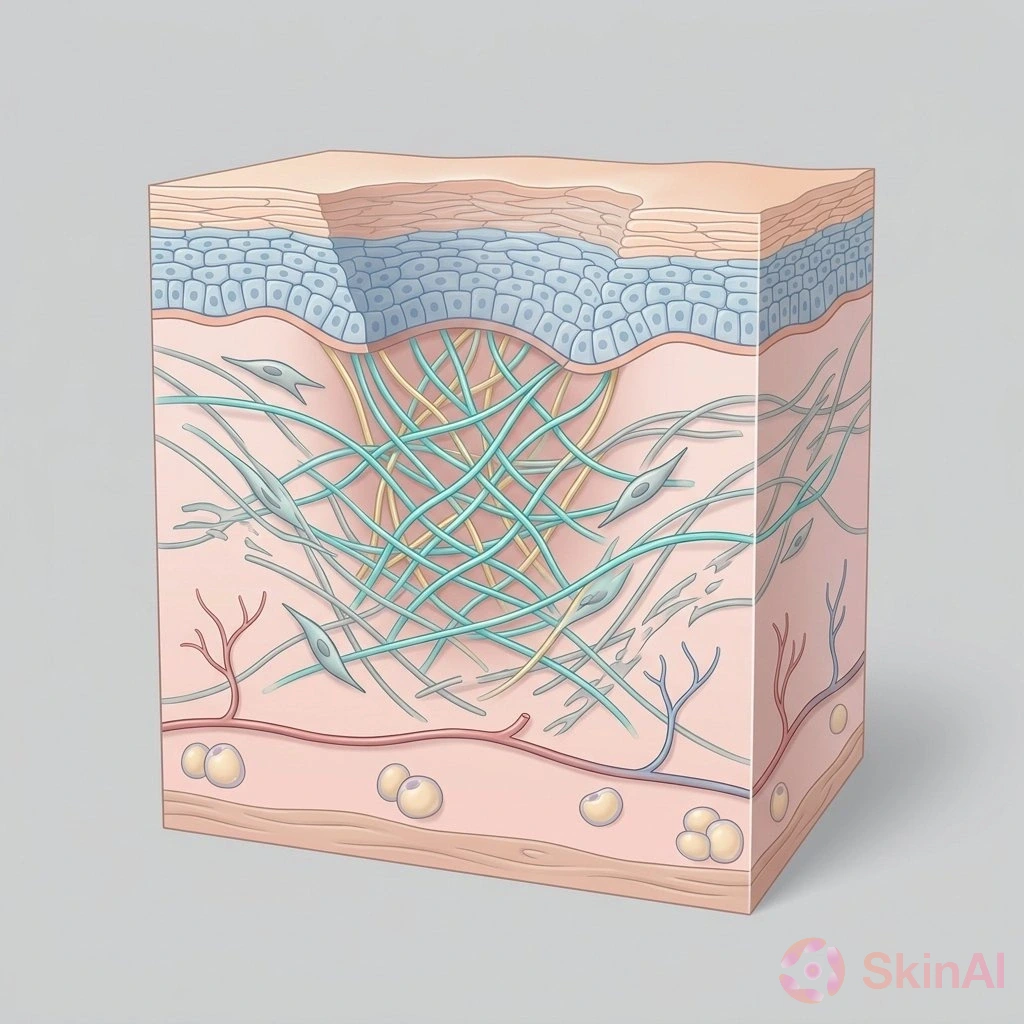
Extracellular matrix (ECM) is the name for the network of proteins and other molecules that sit between cells and give tissues structure and support. Think of it like the scaffolding in a building: when it’s healthy, cells can move in, grow, and repair damage. When it’s damaged or thinned, skin can look and feel thinner, looser, or less resilient.
How the investigational ECM injectables are supposed to work
According to the company, their product is a thermosensitive ECM material that is prepared at the clinic and injected as a liquid. At body temperature it turns into a localized gel and is intended to act as a scaffold for the body’s natural repair processes. Unlike common dermal fillers (like hyaluronic acid) that mainly restore volume and contour, this approach aims to create an environment that supports cell migration, tissue ingrowth, and remodeling (Source: Conexeu Sciences interview on The Cutaneous Connection podcast).
Why start with wound care?
Conexeu is pursuing regulatory clearance in wound care first through the U.S. Food and Drug Administration’s 510(k) pathway for Class II devices. The company says building a commercial and regulatory foundation in wound healing makes sense because wound biology and tissue repair are central to dermatology, especially after surgeries like Mohs surgery. If approved and successful in wound care, the company reports it may later explore other uses, such as in medical aesthetics (Source: Conexeu Sciences interview on The Cutaneous Connection podcast).
How this could relate to aesthetic concerns
The executives discussed growing interest in regenerative treatments in aesthetics. One reason is that some people are experiencing rapid and significant weight loss while taking GLP-1 receptor agonists (medications used for weight loss and diabetes). Rapid weight loss can remove facial fat but may also affect the ECM, changing the overall quality of the tissue. The company suggests that restoring or supporting the ECM might address tissue-quality issues that traditional fillers don’t fully fix (Source: Conexeu Sciences interview on The Cutaneous Connection podcast).
What the research shows so far
Pilcher said the technology builds on more than a decade of research in regenerative medicine and tissue engineering and that it remains investigational. The company completed a 12-month proof-of-concept study looking at tissue remodeling, persistence, inflammatory response, and mechanical properties. Detailed results have not yet been released because they are pending peer review. That means the findings are preliminary and not yet independently verified (Source: Conexeu Sciences interview on The Cutaneous Connection podcast).
What this means for patients
These ECM-based injectables are a different idea from fillers. They are intended to support the tissue’s structure so the body’s own repair processes can work better. If proven safe and effective, they might be used alongside existing aesthetic treatments to improve underlying tissue health. But at this stage, the approach is experimental and not an established treatment option.
When to talk with your doctor
If you’re thinking about treatments because of skin changes after weight loss, surgery, or injury, talk with a dermatologist or plastic surgeon. They can explain options and what is approved, investigational, or not recommended. If you notice fast changes in a mole, a new sore that won’t heal, increasing pain, bleeding, signs of infection, or rapid tissue changes, seek medical care promptly.
Keeping track of skin changes
It can help to photograph and note when you first see new changes in your skin. Simple records may make it easier to describe what’s happening to your clinician and to spot patterns over time.
Short disclaimer
This article reports on a company interview and describes investigational research. The material discussed is not medical advice and is not an endorsement of any product. Treatment decisions should be made with your clinician. For serious or rapidly changing symptoms, contact a healthcare professional.
Sources
- Conexeu Sciences interview on The Cutaneous Connection podcast (Miles Harrison and Brian Pilcher, PhD). The company reports a 12-month proof-of-concept study; detailed findings pending peer review.
- Original article by Eileen Cheever, MPAS, PA-C, and Shannon Heaning (source material summarized and rewritten for patient readers).